
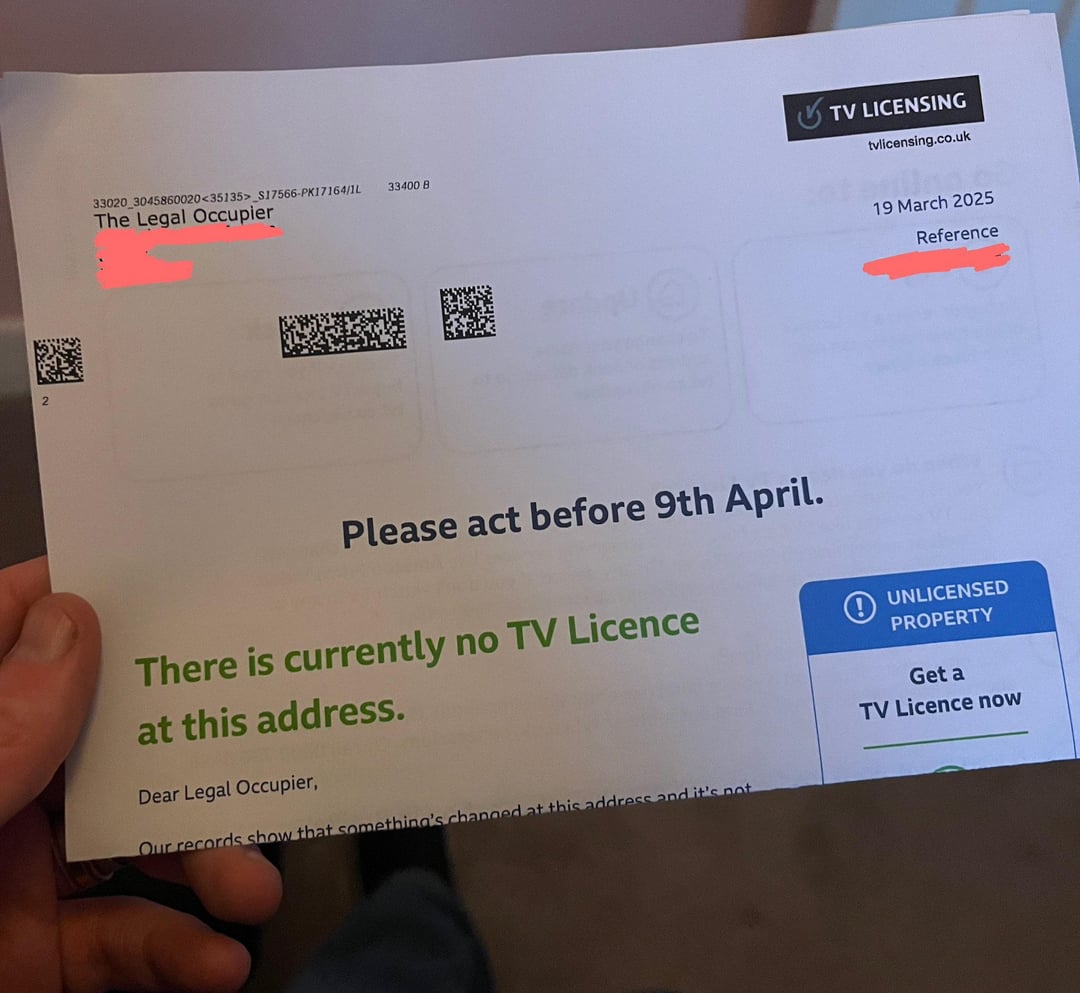
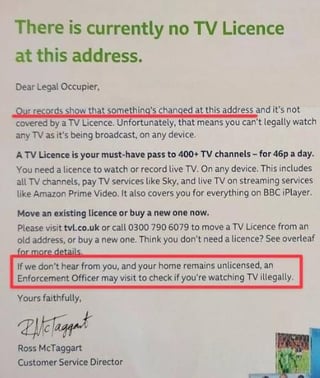
In the United Kingdom and the British Islands, any household watching or recording television transmissions at the same time they are being broadcast is required by law to hold a television licence. This applies regardless of transmission method, including terrestrial, satellite, cable, or for BBC iPlayer internet streaming. The television licence is the instrument used to raise revenue to fund the BBC and S4C.
Businesses, hospitals, schools and a range of other organisations are also required by law to hold television licences to watch and record live television broadcasts.
Since 1 April 2024, the annual cost has been £169.50 for a colour licence and £57.00 for a black and white licence (with a 50% discount for the blind). Income from the licence is primarily used to fund the television, radio and online services of the BBC. The total income from licence fees was £3.83 billion in 2017–18, of which £655.3 million or 17.1% was provided by the government through concessions for those over the age of 75 (this subsidy has now been phased out). Thus, the licence fee made up the bulk (75.7%) of the BBC's total income of £5.0627 billion in 2017–2018.
Posted by External-Noise-4832
5 Comments
Knew this when I lived in the US. Not new information. Remember US TV telling us we didn’t have to pay a TV tax, aren’t we wonderful propagandists?!?
1984 got it wrong, they make us buy our own monitor.
Oy you got a loicense for that?
Never paid it, never will…
…that is until that announced the scrapping of the licence is planned, for a general tax. TV or not, you’re paying for the BBC.
I’m not pay 15 pounds a month to watch some tired channel 4 programming.
Yeah it is state owned and funded news. It used to be common in the world.