
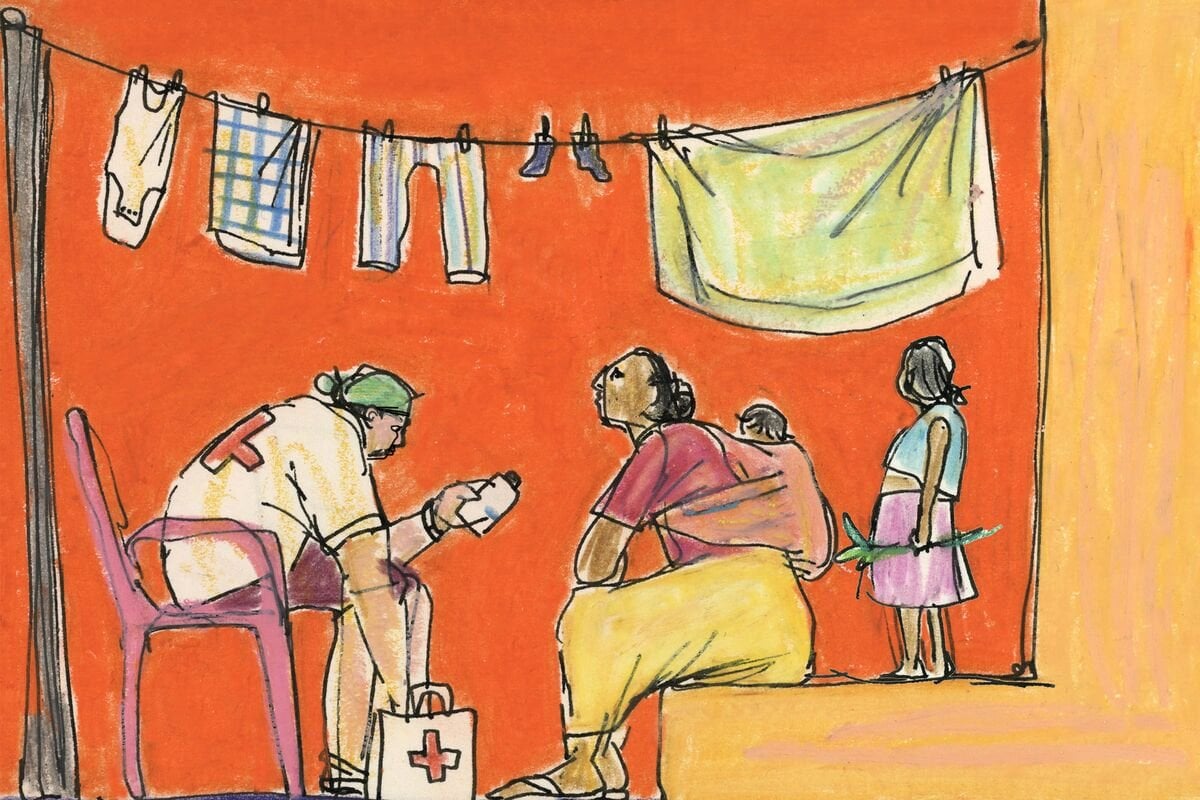
Asia was winning the fight against malaria. Then Trump returned | Medical workers were tantalizingly close to eradicating malaria in much of Southeast Asia. But US cuts to foreign aid have put progress at risk
Posted by ONETRILLIONAMERICANS
Asia was winning the fight against malaria. Then Trump returned | Medical workers were tantalizingly close to eradicating malaria in much of Southeast Asia. But US cuts to foreign aid have put progress at risk
Posted by ONETRILLIONAMERICANS
2 Comments
> Dyna Doum has toiled for years to eliminate malaria from his native Cambodia. As the lead consultant for a program sponsored by the US Agency for International Development (USAID), he crisscrossed rivers and trekked through mountain forests to bring mosquito nets, medicines and testing kits to vulnerable communities.
> In late January, ahead of a meeting in the capital Phnom Penh, Doum prepared PowerPoint slides to update officials on his progress. But just as the meeting was set to begin, he received an urgent email telling him to scrap the presentation: The US had issued a stop-work order for USAID. Colleagues in the field were told to return to base, and Doum swiftly found himself out of a job.
“We were in the last mile of malaria elimination in Cambodia,” said Doum, 35. “Imagine an engine is running at 100 miles per hour and suddenly stops. Only panic is left to fill the void.”
> The World Health Organization is tantalizingly close to achieving its goal of eradicating malaria by 2030 in much of the Greater Mekong — a vast, impoverished region that includes Cambodia, China’s Yunnan province, Laos, Myanmar, Thailand and Vietnam. But officials say progress in the region and worldwide is now at risk after US President Donald Trump ordered a spending review and 90-day pause on foreign aid. The administration has since slashed 83% of contracts, throwing the global aid sector into chaos. What remains of USAID will be folded into the State Department.
> The impact in the Greater Mekong has been immediate.
> Hospitals at several refugee camps along the Thailand-Myanmar border are shuttered. Doum says he knows of more than 100 NGOs that have closed in Cambodia alone. Amid uncertainty over procurement contracts, more than 2 million locally produced mosquito nets are stacked in warehouses instead of being dispatched. And with programs standing at a funding precipice, officials fear operations will be permanently halted, undoing decades of work if the disease is allowed to bounce back.
> “We want to make sure all this progress doesn’t get lost,” said Sarthak Das, chief executive officer of the Asia Pacific Leaders Malaria Alliance, which was formed in 2013. “It’s the worst time to stop, because we’re getting really close in most of the region.”
!ping HEALTH-POLICY
Malaria could easily be like smallpox, an ancient disease with a high body count referred to in the past tense aside from highly improbable lab accidents.