
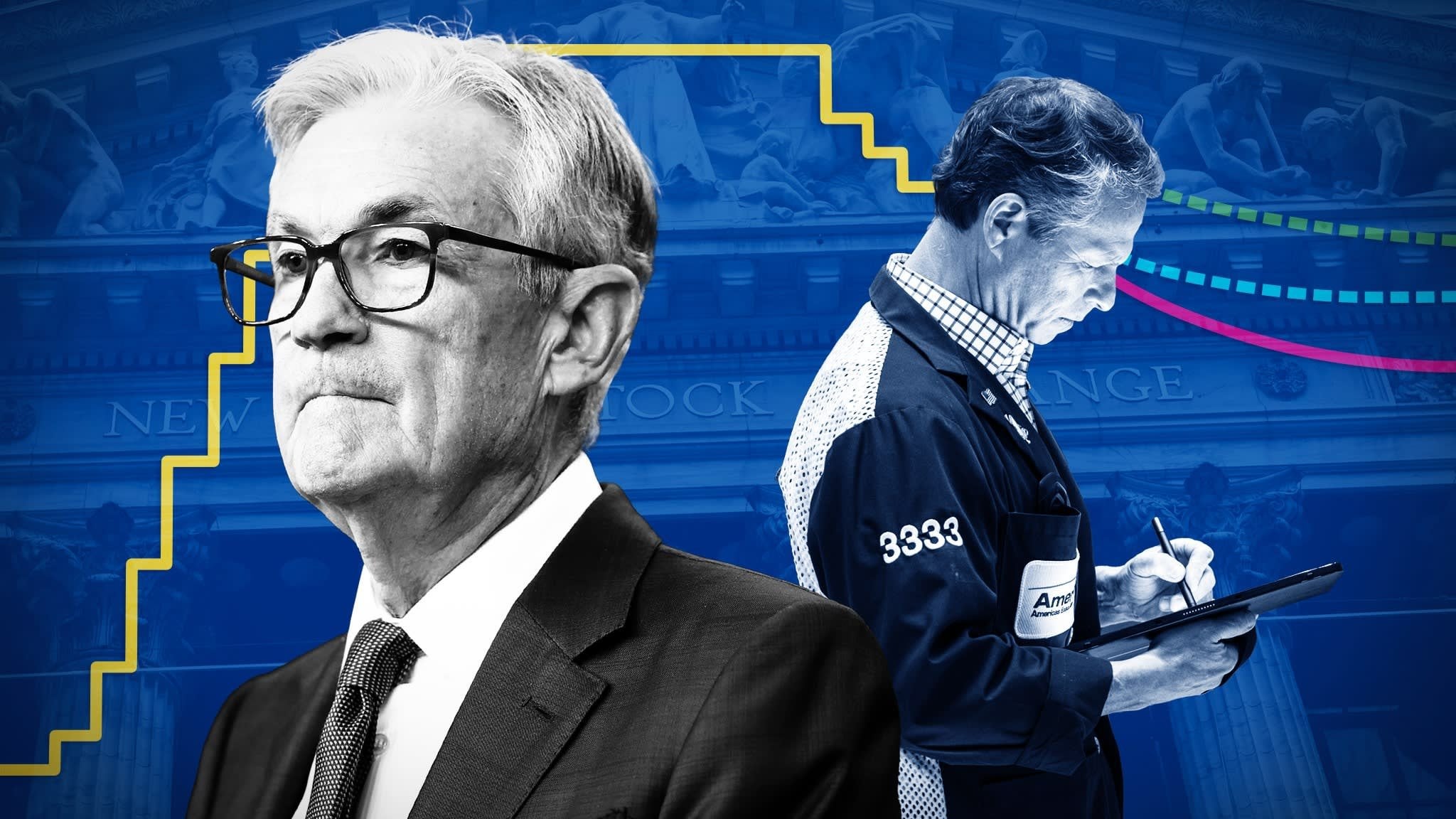
Jay Powell’s tariff dilemma: defend the economy or contain inflation | Donald Trump’s trade war has put the Federal Reserve in an awkward spot
Posted by ONETRILLIONAMERICANS
Jay Powell’s tariff dilemma: defend the economy or contain inflation | Donald Trump’s trade war has put the Federal Reserve in an awkward spot
Posted by ONETRILLIONAMERICANS
2 Comments
> Donald Trump’s tariffs have shocked global markets — and left the US Federal Reserve with a thorny problem: cut interest rates to help prevent a sharp economic slowdown, or keep them high to pre-empt a new burst of inflation.
> The market bias is towards cuts. After the plunge across equity markets following the president announced his “liberation day” tariffs, traders are now betting that the Fed will reduce rates four or five times this year — up from three before Trump’s big reveal.
> The message from Fed chair Jay Powell, however, was more hawkish for rates. The tariffs would have a “persistent” impact on US inflation, he said on Friday, which would make it harder for the central bank to begin easing.
> It is a divergence that could partly define the US economy this year. Wall Street banks are already grappling with the problem as they revise up their targets for inflation this year, but trim back their predictions for growth — even warning the US could tumble into recession if Trump does not pull back from the brink on tariffs.
> That implies action from the Fed to lower rates. Trump agrees.
> Shortly before Powell spoke on Friday — and with the S&P in the throes of a brisk sell-off — the president said on Truth Social that it would be “a PERFECT time” for the chair to slash borrowing costs. “He is always ‘late,’ but he could now change his image, and quickly,” the president said. “CUT INTEREST RATES, JEROME, AND STOP PLAYING POLITICS!”
> Many economists think the problem is less clear-cut. At 2.5 per cent, personal consumption expenditures inflation remains above the Fed’s 2 per cent goal — and officials expect the tariffs to quicken the pace again.
> “The Fed is in an exceptionally difficult position right now,” said Sarah House, senior economist at Wells Fargo. She expected the central bank to keep rates at 4.25 per cent to 4.5 per cent “for as long as possible”.
> cut interest rates to help prevent a sharp economic slowdown, or keep them high to pre-empt a new burst of inflation.
Maybe I am saying this because I am resentful but letting the voters suffer the consequences of their choice while allowing the overall economy to chug along seems like a better option than mask the problem to the voters while the global economy goes to the shitter.