> Lisbon Mayor Carlos Moedas said the private sector can play an important role in increasing the supply of affordable housing in the Portuguese capital, where home prices have surged in recent years.
>“Today in Lisbon, 12% of the population live in municipal housing,” Moedas said in an interview on Thursday. “It’s not enough. The private sector has to help us. We’re basically also enticing the private sector to public-private partnerships. There’s no magic bullet. It’s a balance of measures that you have to use.”
> The mayor said one possible idea would involve having developers reserve part of a project they build — for example 30% or 40% — for housing with controlled rents.
>**An explosion in short-term rental units and foreign property buyers have been blamed for surging home prices in Lisbon, making the city center no longer affordable for many local families. Social housing accounts for just 2% of the total housing stock in Portugal — among the lowest levels in the European Union.**
> In the short term, the town hall helps with paying rent, including for policemen and teachers, Moedas said, adding that construction cycles take two to three years. Meanwhile, Lisbon invested in 2,400 housing units in three years, of which half were newly built and the rest were refurbished. More than €560 million ($623 million) in EU funds is being invested in Lisbon until 2027.
> The mayor said tourism represents about 20% of Lisbon’s economy and 25% of jobs.
>“Tourism is very important, but we have to regulate tourism,” Moedas said. “You have to diversify tourism around the city in different ways. The problem with tourism is that people concentrate themselves always in the same part of town.”
>Moedas said Lisbon has created a “cluster” of contemporary art museums along the River Tagus and further from the city center, and it capped short-term rentals in some parts of the city. Lisbon is also expanding its network of bike lanes.
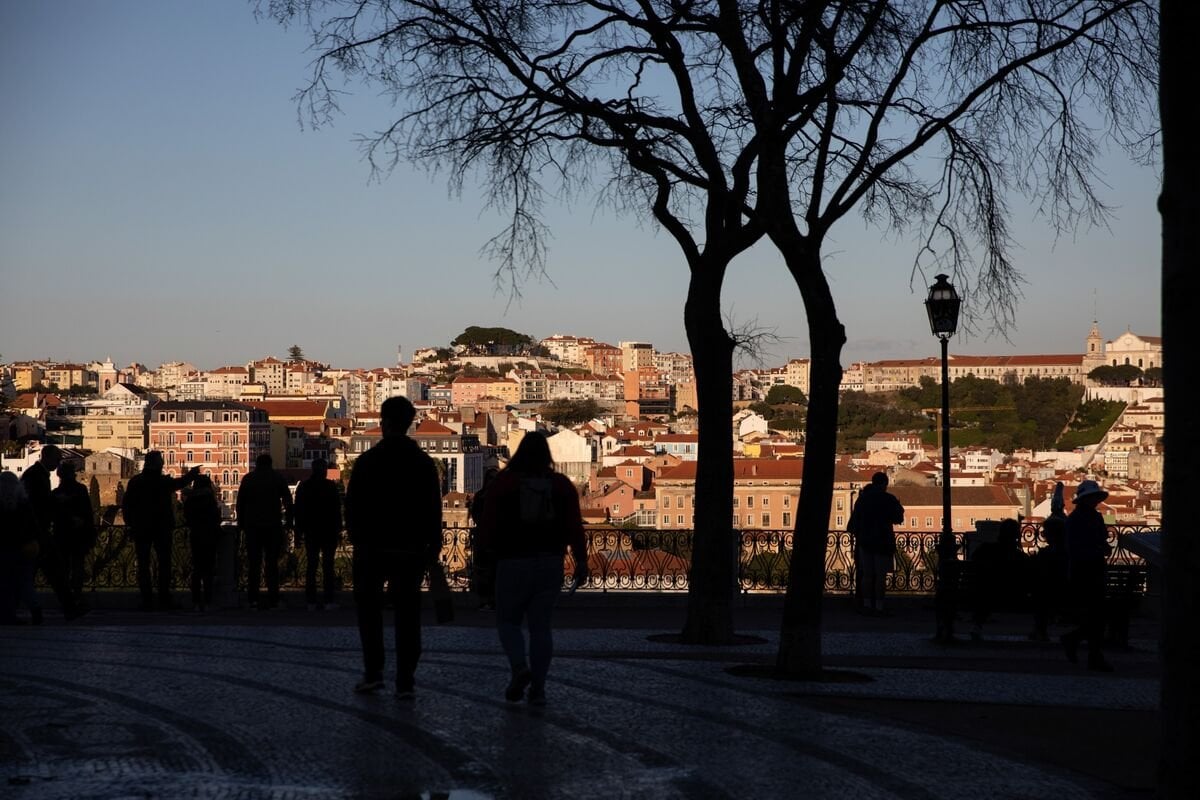
>The Portuguese capital has a resident population of about 550,000. About 1 million people come into the city every day and it gets about 38,000 to 40,000 tourists a day, he said. “We have to be careful not to have overtourism. I don’t think there’s overtourism,” he added.
Maximilianne on
Lisbon has a good thing going for it. Everyday the train leaves Sintra, picking up workers to go to the city of Lisbon, and once it arrives in Lisbon it picks up all the tourists who want to go to Sintra. And this reverses in the afternoon

2 Comments
> Lisbon Mayor Carlos Moedas said the private sector can play an important role in increasing the supply of affordable housing in the Portuguese capital, where home prices have surged in recent years.
>“Today in Lisbon, 12% of the population live in municipal housing,” Moedas said in an interview on Thursday. “It’s not enough. The private sector has to help us. We’re basically also enticing the private sector to public-private partnerships. There’s no magic bullet. It’s a balance of measures that you have to use.”
> The mayor said one possible idea would involve having developers reserve part of a project they build — for example 30% or 40% — for housing with controlled rents.
>**An explosion in short-term rental units and foreign property buyers have been blamed for surging home prices in Lisbon, making the city center no longer affordable for many local families. Social housing accounts for just 2% of the total housing stock in Portugal — among the lowest levels in the European Union.**
> In the short term, the town hall helps with paying rent, including for policemen and teachers, Moedas said, adding that construction cycles take two to three years. Meanwhile, Lisbon invested in 2,400 housing units in three years, of which half were newly built and the rest were refurbished. More than €560 million ($623 million) in EU funds is being invested in Lisbon until 2027.
> The mayor said tourism represents about 20% of Lisbon’s economy and 25% of jobs.
>“Tourism is very important, but we have to regulate tourism,” Moedas said. “You have to diversify tourism around the city in different ways. The problem with tourism is that people concentrate themselves always in the same part of town.”
>Moedas said Lisbon has created a “cluster” of contemporary art museums along the River Tagus and further from the city center, and it capped short-term rentals in some parts of the city. Lisbon is also expanding its network of bike lanes.
>The Portuguese capital has a resident population of about 550,000. About 1 million people come into the city every day and it gets about 38,000 to 40,000 tourists a day, he said. “We have to be careful not to have overtourism. I don’t think there’s overtourism,” he added.
Lisbon has a good thing going for it. Everyday the train leaves Sintra, picking up workers to go to the city of Lisbon, and once it arrives in Lisbon it picks up all the tourists who want to go to Sintra. And this reverses in the afternoon