
Britain’s government has entered the steel industry with no plan | Even its strongest argument, national security, needs closer scrutiny
Posted by ONETRILLIONAMERICANS
Britain’s government has entered the steel industry with no plan | Even its strongest argument, national security, needs closer scrutiny
Posted by ONETRILLIONAMERICANS
2 Comments
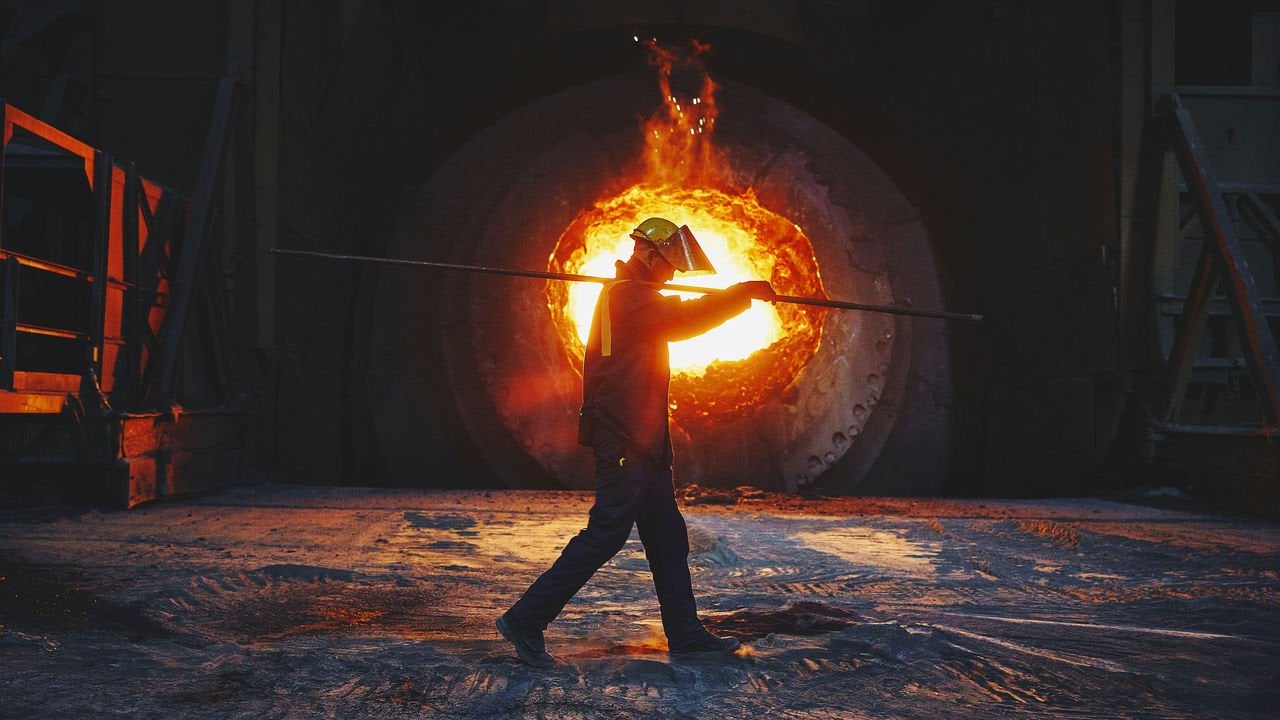
> THE TONE has been breathless and nostalgic. On April 12th MPs were recalled from their Easter recess, a move typically reserved for wars and other national crises, to prevent the closure of the country’s last remaining blast furnaces, operated by British Steel, nowadays a Chinese-owned firm. There were stirring speeches about the country’s industrial heritage and excitable accusations of foreign sabotage. At one point the Royal Navy was “on alert” to escort fuel shipments. By April 15th Jonathan Reynolds, the business secretary, who had gone to direct action from the Scunthorpe steelworks, could reassure a restless nation that he had “secured the raw materials to save British Steel”.
> In all this what was harder to find was a clear rationale. It was obvious that the Labour government, which won back voters in towns like Scunthorpe at the last election and likes to talk up the prospects of an industrial revival, was caught between a rock and a steel-hard place. The plant’s closure would have brought thousands of job losses; MPs on all sides insisted that it would “threaten national security”. Yet the government has leapt into a sector that has been in decline for five decades, and looks ever less competitive, without much of a plan. That is worrying for taxpayers, and raises questions about its priorities.
> The urgent state intervention followed failed negotiations with the plant’s Chinese owner, Jingye. Nearly two years of tense rescue talks unravelled last month when Jingye rejected £500m ($650m) of state funding to help the plant switch to greener production. The company, which bought British Steel out of insolvency in 2020, says the blast furnaces are no longer viable: it claims the Scunthorpe site is losing around £700,000 a day, despite £1.2bn of investment. From iron pellets to coking coal, essential supplies needed to keep the blast furnaces going were due to run out imminently. Ministers accuse Jingye of acting to hasten that outcome. Instead, they granted themselves sweeping powers over the site; experts now see full nationalisation as the likely result.
> British steel producers have faced recurring problems for years. High energy prices have made them less competitive—a problem that has worsened recently because the country is particularly exposed to high gas prices (see chart). Heavily subsidised steel from China, which accounts for more than half of the world’s production, is more carbon-intensive. But it is cheap and plentiful. While other countries have thrown money at their steelworks, using subsidies and energy-price controls to prop up struggling producers, those in Britain have been left more vulnerable, and thus prone to underinvestment and low productivity. America’s 25% tariff on steel imports, announced by Donald Trump in February, has compounded the problem.
> The national-security case for rescuing Scunthorpe’s blast furnaces is not the slam-dunk many MPs seem to have assumed. Most of the steel used by Britain’s defence industry is already imported, including steel for submarine hulls and thin-plate shipbuilding, which British mills no longer produce at sufficient quality. Nor are Britain’s steelworks self-sufficient: they rely on imports of coal and iron ore from countries like Australia, Brazil, South Africa and Sweden, and have done for years. In the period leading up to the second world war, Britain sourced large quantities of iron from Sweden to make weapons.
> It is true that the plant’s closure would have made Britain the only G7 country unable to produce primary steel (ie, directly from raw materials such as iron and coke). Military planners may worry whether, in a conflict where steel production was highly relevant, allies would divert steel to Britain for its particular production needs. Yet other smaller countries, including Denmark and Ireland, rely on imports; Britain could diversify its supply chains and strike advance-purchasing agreements. Electric arc furnaces, using recycled scrap steel, can nowadays produce high-grade steels: one at Rotherham supplies the steel for aircraft landing gear, for example. It is worth asking if primary steel is indeed the most significant potential bottleneck compared with other pressing military priorities.
> Mr Reynolds also argues that the steel industry can have an “enormous role” in driving growth. Yet the notion that propping up an ailing sector will somehow boost Britain’s productivity is bizarre. Britain does need to build lots of houses, railways and wind turbines. But that can be done using metals from elsewhere, which are typically cheaper.
> If the government wants an industrial strategy that boosts sectors where Britain has advantages, steel is not an obvious place to start, says Giles Wilkes, a former business-department adviser. Already, the government has committed £2.5bn to the industry, on top of the £500m the last government gave to a plant in Port Talbot. The risk is that steel becomes a financial black hole, with ministers compelled to throw good money after bad, or force other firms to “buy British”.
> Despite such concerns, there was near-complete consensus over the effective nationalisation—from the Liberal Democrats and the Conservatives to Reform UK. Several MPs accused Jingye of deliberate sabotage, and argued for tighter restrictions on Chinese ownership of critical infrastructure. So far, there is little evidence to back up the charge. Jingye appears to have been poorly run, but its rapid exit looks more likely to have been driven by heavy losses and Mr Trump’s tariffs than by a concerted strategy to degrade Britain’s industrial capacity. British governments have already limited Chinese involvement in nuclear power and telecoms, but the current government is likely to continue to try to woo investment elsewhere.
!ping UK&FOREIGN-POLICY&CONTAINERS
British chauvinism and national insecurity pushing a government towards policies that are economically counter-productive?!