
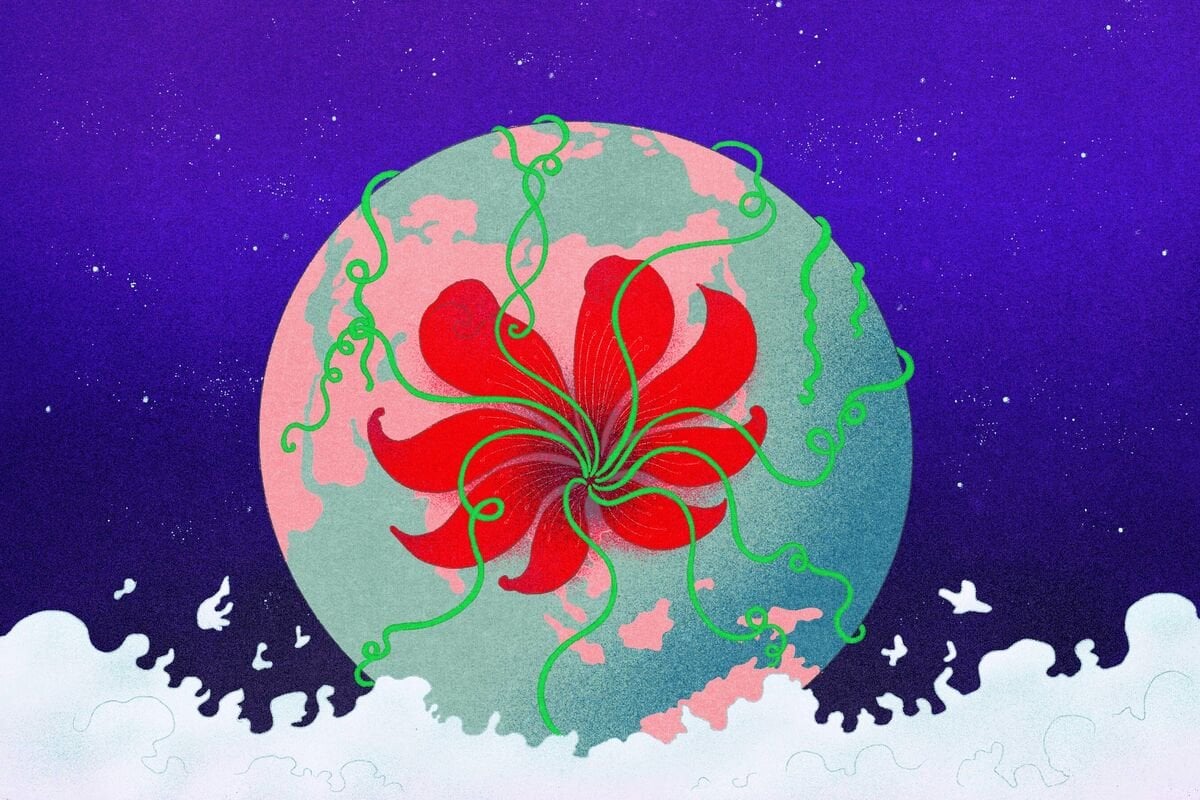
Cutting off Chinese Companies risks a US policy own goal | US efforts to kneecap China can undermine both American competitiveness and the very national security that measures like the Huawei ban aim to protect
Posted by ONETRILLIONAMERICANS
Cutting off Chinese Companies risks a US policy own goal | US efforts to kneecap China can undermine both American competitiveness and the very national security that measures like the Huawei ban aim to protect
Posted by ONETRILLIONAMERICANS
2 Comments
# “Pure blood”
> Before the US blacklisting, Huawei had become the world’s largest telecommunications equipment maker, and the largest manufacturer of smartphones globally. After it was stripped of access to US technology, Huawei worked on developing HarmonyOS, its own operating system that closely resembled Google’s Android. By 2024, the Chinese company had taken another step with the launch of HarmonyOS Next, dubbed “Pure Blood” by fans because it is built entirely in-house.
> Today, Harmony is only offered in China, where it already runs on 1 billion devices, from smartphones to cars and home appliances. The operating system comes pre-installed on Huawei phones and PCs, and has been running on Huawei laptops in China since its license to run Microsoft Windows expired earlier this month. In March, BMW announced a partnership with Huawei to integrate HarmonyOS Next into new electric vehicles set to roll out in China next year. And thanks in part to Harmony OS, Huawei recently dethroned Apple Inc. as China’s leading smartphone-maker by sales.
# Huawei’s expansionism
> Huawei is not satisfied with winning at home — the firm now hopes to challenge the global dominance of Android and Apple iOS. Huawei Chairman Eric Xu has said the company wants HarmonyOS to become “a third mobile operating system for the world” and last year outlined plans to build up its app ecosystem in China before “gradually pushing it out” to other countries.
> If the company succeeds, Harmony could become a credible challenge to Android, iOS and Windows. While the battle for supremacy in semiconductors and AI has received more attention, the race to become the dominant mobile operating system has big implications beyond smartphones given the proliferation of connected devices. The spread of Harmony outside China would also be a boon for China’s position in AI. Huawei’s mobile assistant app, Xiaoyi, uses DeepSeek; its personal computers also come loaded with DeepSeek large language model applications.
# An American own goal
> All of this should give American officials pause. The Trump administration wants the US to “dominate new technologies,” Vice President JD Vance told the American Dynamism Summit last month. At the Paris AI Action Summit in February, Vance said that the US plans to maintain its lead in AI by controlling all components, including “advanced semiconductor design, frontier algorithms, and, of course, transformational applications.”
> There is also a risk that wider adoption of HarmonyOS could result in users outside of China finding themselves subject to Chinese government restrictions on apps and content, in effect extending the reach of the Great Firewall. While Huawei has not yet started offering HarmonyOS outside of China, in 2021 Huawei internet equipment called middleboxes were found to be blocking news and other websites in at least 18 countries (up from seven countries when researchers first began tracking in 2019).
> Wider global adoption of HarmonyOS would also undermine US efforts to strengthen data security by eliminating Huawei equipment from network infrastructure around the world. Under the “Rip and Replace” initiative, American officials launched a campaign to convince other countries to excise Huawei hardware from their telecom infrastructure, citing the company’s history of cyber vulnerabilities. HarmonyOS’s success in markets outside of China would introduce a new set of data security risks as Huawei laptops, wearables, cars, home appliances and phones — all seamlessly integrated — would be running on top of networks where billions of dollars had been spent to remove Huawei equipment.
# The big picture
> The lessons here go well beyond a single Chinese company. American officials view the rise of Chinese tech as an existential threat to US national security, and see maintaining a lead over China as an objective distinct from countering espionage. **Curbing Chinese firms, they reason, will ensure that Beijing does not gain strategic advantages in technology. But the Huawei example ought to be a clear indication of the limits of policies that restrict China, and how those policies can spur Chinese firms to innovate and grow.**
> Similarly, the US’s recently announced export controls on Nvidia’s H20 chips could cause China near-term pain, but are likely to accelerate the country’s own AI chip capabilities. Huawei is already stepping in to fill the vacuum, with plans to ship its Ascend 910C AI chip as soon as next month.
!ping CONTAINERS&CHINA
I don’t understand what the proponents of these measures expected to happen.
Huawei is a company with deep technical skill in a country with 1.4 billion people and that graduates a ridiculous amount of STEM people. Did they expect all of them to give up and go back work in a factory making plastic toys?
The huawei ban also finally pushed Chinese companies to invest in a full Chinese stack, ironically something that the CCP tried to achieve for years without success.