>As part of the investigation, ICIJ coordinated reporters across five continents to interview targets and analyze their cases. ICIJ also reviewed a 2004 Chinese police textbook and confidential guidelines for domestic security officers dating to 2013. The reporters then compared the tactics described in the internal documents with the experiences of the 105 targets, as well as with secretly recorded police interrogations, and phone calls and text messages between 11 security officers in China and nine targets overseas. The comparison shows the tactics recently deployed against the subjects mirrored the guidelines on how to control individuals labeled as domestic security threats.
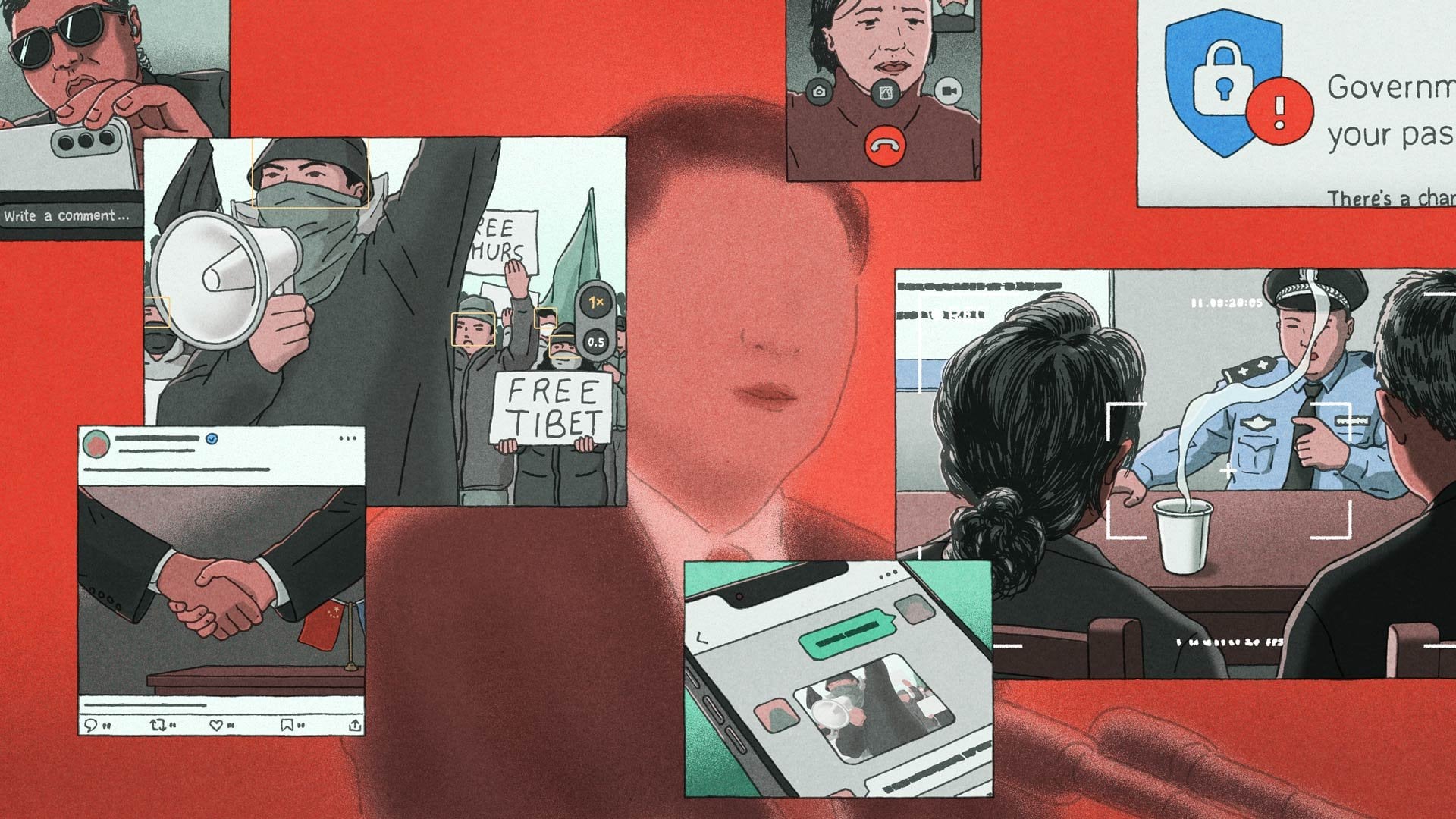
>Half of the targets interviewed by ICIJ and its media partners said the harassment extended to family members back home, who suffered intimidation and were interrogated by police or state security officials one or more times. Several victims told ICIJ that their family members in China or Hong Kong were harassed by police shortly after they had participated in protests or public events overseas. Sixty said they believed they had been followed or were targets of surveillance or spying by Chinese officials or their proxies; 27 said they were victims of an online smear campaign, and 19 said they had received suspicious messages or experienced hacking attempts, including by state actors. Some said their bank accounts in China and Hong Kong had been frozen. Officers from both the Ministry of Public Security and the Ministry of State Security — two of the Chinese agencies with intelligence capacity — were responsible for intimidating some of the targets and their families, the testimonies show. Twenty-two people said they received physical threats or had been assaulted by civilian CCP supporters.
>Most of those interviewed by ICIJ and its partners said they had not reported state-sponsored threats to the authorities in their adopted countries, explaining that they feared retaliation from China or didn’t have faith in authorities’ ability to help. Of those who had filed a report, several said police did not follow up on their case or told them that they couldn’t do anything because there was no evidence of a crime.
>“Only when they see my dead body will they act,” said Nuria Zyden, a Dublin-based Uyghur, referring to the police’s response after she reported being followed by three Chinese men.
>The China Targets investigation also draws on extradition records; confidential Interpol files; private communication between United Nations Human Rights Council officers and the Chinese delegation; and court filings, intelligence reports and government records from 34 countries.
>Under Xi’s regime, the investigation found, the U.N. compound in Geneva has become a hostile environment where dissidents and minorities seeking to protest Beijing’s policies face harassment and intimidation from nongovernmental organizations aligned with the Chinese government. Reporters found that Chinese authorities also used Interpol to pursue not just criminals but also dissidents, businesspeople and Uyghur rights advocates, in apparent violation of the organization’s rules.
>Taken together, the evidence reveals a coordinated and systematic effort by the Chinese government to neutralize dissent in all its forms by individuals the world over.

2 Comments
Article link: [https://www.icij.org/investigations/china-targets/china-transnational-repression-dissent-around-world/](https://www.icij.org/investigations/china-targets/china-transnational-repression-dissent-around-world/).
>As part of the investigation, ICIJ coordinated reporters across five continents to interview targets and analyze their cases. ICIJ also reviewed a 2004 Chinese police textbook and confidential guidelines for domestic security officers dating to 2013. The reporters then compared the tactics described in the internal documents with the experiences of the 105 targets, as well as with secretly recorded police interrogations, and phone calls and text messages between 11 security officers in China and nine targets overseas. The comparison shows the tactics recently deployed against the subjects mirrored the guidelines on how to control individuals labeled as domestic security threats.
>Half of the targets interviewed by ICIJ and its media partners said the harassment extended to family members back home, who suffered intimidation and were interrogated by police or state security officials one or more times. Several victims told ICIJ that their family members in China or Hong Kong were harassed by police shortly after they had participated in protests or public events overseas. Sixty said they believed they had been followed or were targets of surveillance or spying by Chinese officials or their proxies; 27 said they were victims of an online smear campaign, and 19 said they had received suspicious messages or experienced hacking attempts, including by state actors. Some said their bank accounts in China and Hong Kong had been frozen. Officers from both the Ministry of Public Security and the Ministry of State Security — two of the Chinese agencies with intelligence capacity — were responsible for intimidating some of the targets and their families, the testimonies show. Twenty-two people said they received physical threats or had been assaulted by civilian CCP supporters.
>Most of those interviewed by ICIJ and its partners said they had not reported state-sponsored threats to the authorities in their adopted countries, explaining that they feared retaliation from China or didn’t have faith in authorities’ ability to help. Of those who had filed a report, several said police did not follow up on their case or told them that they couldn’t do anything because there was no evidence of a crime.
>“Only when they see my dead body will they act,” said Nuria Zyden, a Dublin-based Uyghur, referring to the police’s response after she reported being followed by three Chinese men.
>The China Targets investigation also draws on extradition records; confidential Interpol files; private communication between United Nations Human Rights Council officers and the Chinese delegation; and court filings, intelligence reports and government records from 34 countries.
>Under Xi’s regime, the investigation found, the U.N. compound in Geneva has become a hostile environment where dissidents and minorities seeking to protest Beijing’s policies face harassment and intimidation from nongovernmental organizations aligned with the Chinese government. Reporters found that Chinese authorities also used Interpol to pursue not just criminals but also dissidents, businesspeople and Uyghur rights advocates, in apparent violation of the organization’s rules.
>Taken together, the evidence reveals a coordinated and systematic effort by the Chinese government to neutralize dissent in all its forms by individuals the world over.
!ping Democracy&Foreign-policy
Don’t tell Reddit this.