
How China became cool: Western livestreamers and Chinese video games have burnished the country’s image
Posted by WildestDreams_
How China became cool: Western livestreamers and Chinese video games have burnished the country’s image
Posted by WildestDreams_
3 Comments
Article:
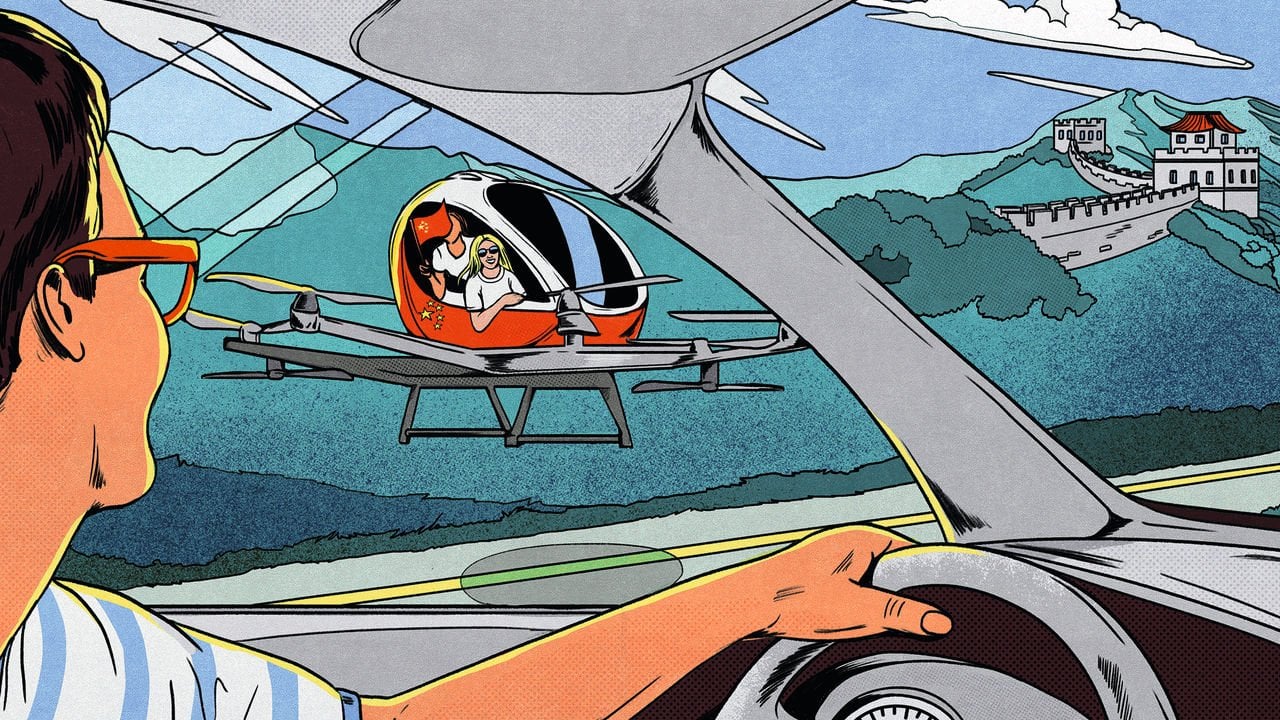
The leaders of the Communist Party might be surprised to find they are indebted to a bouncy 20-year-old livestreamer from Ohio called Darren Watkins junior. He goes by the screen name IShowSpeed and has in one visit done more for China’s image abroad than any amount of turgid party propaganda. On a two-week trip in March and April he showed his 38m followers the country’s rich history (with a backflip on the Great Wall), friendly people (he joked with China’s finest Donald Trump impersonator) and advanced technology (he danced with a humanoid robot, got a KFC meal delivered by drone, and tried out a flying taxi). As he drove into a lake in Shenzhen, safe within an amphibious James-Bond-style electric suv, Mr Watkins could not believe what was going on. “Oh my God, this car is not sinking…China got it, these Chinese cars got it!” Or as he says frequently throughout his visit, “China’s different, bro.”
It’s the kind of enthusiasm that Chinese leaders have long wanted to inspire in foreigners. The party has tried to cultivate “soft power”, that gets a country what it wants without using “hard” coercion or military force. It has long criticised what it calls the “anti-China” narrative in Western media. In 2013 the Politburo said soft power was essential to the “Chinese dream of national rejuvenation”. This was no easy task. China’s propaganda falls flat overseas, where many are wary of its authoritarian past (and present).
Increasingly, though, more people, especially younger ones, seem willing to look past China’s ugly side. That is not thanks to party spin doctors. Mr Watkins is one of a parade of foreign vloggers posting on their trips since China re-opened after covid. Chinese firms have bleeding edge technology and cultural exports. And the country’s image has been helped by a slump in America’s popularity courtesy of president Donald Trump. On May 15th there was a sense that the People’s Daily, the mouthpiece of the Communist Party, could not quite believe it was publishing an article entitled “How did China become cool?”
A decade ago China was spending $10bn a year attempting to boost its image overseas, according to one American scholar. The sum may now be higher. Officials have set up 500 “Confucius Institutes” in foreign universities that offer Mandarin tuition and cultural programmes. Chinese state-run media churn out positive stories on Western social media. Hundreds of foreign journalists are invited to China each year, where they are shown highlights such as its impressive high-speed rail network.
But these top-down efforts have been eclipsed by bottom-up innovations. DeepSeek, an artificial-intelligence star, made headlines in December when it announced models that were much cheaper to train and nearly as effective as Western ones. Chinese electric vehicles are being snapped up by overseas buyers, and Chinese consumer drones have been world-leading for years. Now cultural products are gaining fans overseas. China watched with envy as South Korean K-pop took off around the world in the 2010s. Chinese music and television remain niche interests outside the Mandarin-speaking world but the country is becoming a big hitter in gaming. Four of the ten highest-grossing mobile games of 2024 were made in China, such as Genshin Impact, a role-playing adventure which rakes in over $1bn a year. Last year a Chinese company released Black Myth Wukong, the country’s first blockbuster video game. Featuring the mischievous Monkey King, it is steeped in Chinese myths and folktales. Some 30% of its 25m players are reportedly from outside the country.
The media the world consumes is increasingly shaped by China, too. TikTok, a short-video app owned by Bytedance, is downloaded more than any other social app worldwide. In January half a million Americans flocked to RedNote, another Chinese social media app known in China as Xiaohongshu (“Little Red Book”), after TikTok was briefly banned in their country (the ban has since been put on hold). Viewers in several other countries, such as Mexico and Indonesia, have also embraced Chinese “micro-dramas”, minute-long episodes designed to be watched on mobile phones.
Several polls suggest that China’s popularity hit a low point during the covid-19 pandemic but then turned a corner. Every year Brand Finance, a consultancy, asks 100,000 respondents worldwide what they think of different countries’ reputation and influence. The results put China’s “brand” at eighth in the world in 2021 and just second this year, behind America. Polls by the Alliance of Democracies Foundation, an ngo in Denmark, show a steady increase in global opinion of China since 2022, with its “net perception rating” rising from -4% that year to +14% in the latest survey, which was published in May. America’s dropped from +22% to -5% just in the past year. A recent poll by Pew, a pollster, showed that even in America, where China is widely disliked, opinion of the country has warmed a little in the past year. Young people, in particular, are softer on China.
China’s Asian neighbours tend to be more sceptical. Many have territorial disputes with China and worry about its military spending. In Europe, there are “hard limits” to how popular China can become because of its lack of democracy and poor human rights record, reckons Andrew Chubb, of Lancaster University. And plenty of critics of Communist Party policies towards, for instance, the Uyghurs in Xinjiang, say the current enthusiasm whitewashes the party’s authoritarianism. Still, China’s government seems confident that, if people pay a visit, they will like it, wherever they are from. Officials are scrambling to get tourists back after numbers slumped during the covid-19 pandemic. Last year it scrapped visa restrictions for citizens from 38 (mainly European) countries to visit for up to a month. Some 30m foreign tourists visited China in 2024, nearly 80% more than the year before (but still less than the pre-covid peak).
The trickiest task for China’s propagandists is to let the country’s appealing side speak for itself, says Shaoyu Yuan, of Rutgers University in New Jersey. That is “uncomfortable for a system that’s built on message discipline and control,” he says. Last year a group of 70 students from Duke University visited China on a study trip. They were pestered by state-run media pressuring them to say nice things about China, according to an online account by one disgruntled student. A camera crew, she recalled, “taught me to recite a poem in Mandarin that included the line ‘I love China’.” As any teenager could tell you, China would be much cooler if it did not try so hard.
The coolest parts of Chinese culture were decimated by the cultural revolution and its taken a long time to recover
>Increasingly, though, more people, especially younger ones, seem willing to look past China’s ugly side. **That is not thanks to party spin doctors.**
Good to emphasise this, as the rest of the article shows. It’s way more difficult to just propaganda your way to fame like Russia does. Russia itself is still the most disliked great power, and let’s be real Chinese government propaganda is like 10 times less effective than Russia’s, they’re super bad at this.
I’m sure lots of people here will be pearl-clutching, but part of the benefit of this far more authentic boost to image is that it ties sympathy to China not to the government but to the country and society. Of course the Party saturates its influence in the latter but there’s an easier separation there.