The President of France, Emmanuel Macron, recently made an opening keynote address at the Shangri-La Dialogue in Singapore, becoming the first head of state from the Nuclear Five (the United States, Russia, China, the UK, and France) to speak at this prestigious forum. In this speech, he advocated for strategic ambiguity and strategic autonomy for Europe.
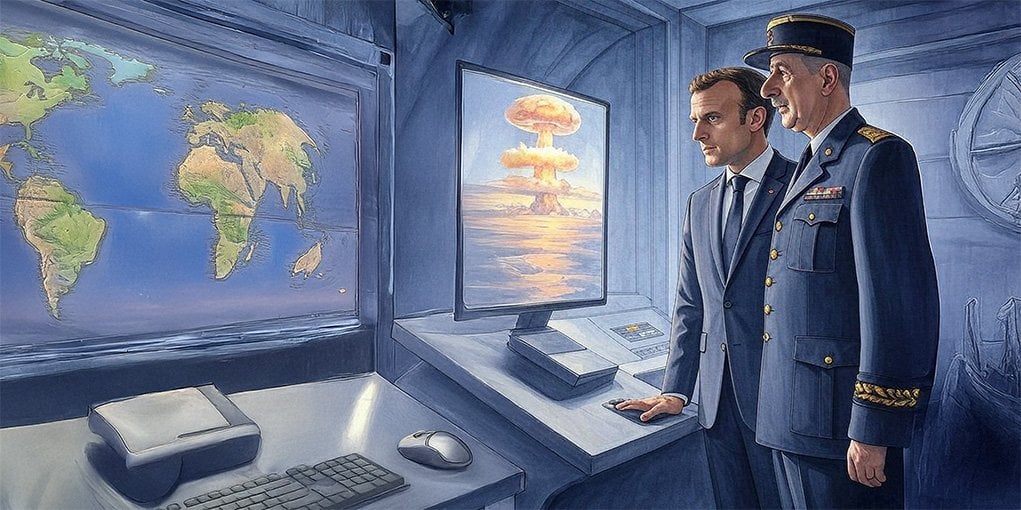
Strategic ambiguity relates to nuclear deterrence; basically, you keep your enemies guessing with regard to your response conditions. The rationale is that if they know which actions will exactly trigger a nuclear response, they can exploit that by acting just below the threshold, such as through cyberattacks, limited military incursions, or other provocations. Strategic ambiguity is intended so that adversaries always account for the worst-case scenario. In the Indo-Pacific region, France still maintains 7,000 troops and a naval base in Tahiti, but there is fear that China is trying to encroach upon New Caledonia with its strategic nickel reserve. In the Indo-Pacific region, Macron’s strategic ambiguity is intended to preserve the balance between the US, China, and others, ensuring that no actor feels confident enough to test the limits.
The most interesting point of the article concerns strategic autonomy. To achieve this, Europe needs to reduce its reliance on the United States as the provider of security. Europe has recently woken up and boosted its defense spending, but raising defense spending to 5% of GDP would have profound economic and political implications. According to a projection cited in the article, an increase to 5% of GDP in military spending by 2034 would lead to an almost 90% increase in real (inflation-adjusted) annual spending compared to current levels. This would necessitate cuts to social programs, infrastructure, and other priorities, which could fuel domestic backlash.
Strategic autonomy also means derisking from China and reducing energy reliance on Russia; Macron acknowledged these challenges in his speech. Derisking from China requires reducing Europe’s dependence on Chinese supply chains, particularly in critical sectors like semiconductors and rare earth minerals. However, decoupling requires massive investment as well as diversification of trade partners; decoupling is costly and time-intensive. As an example, building a European semiconductor industry to rival China’s would require billions in subsidies and years of development, all while facing potential Chinese retaliations, such as in the form of trade barriers or restrictions on rare earth exports.
Reducing energy reliance on Russia also remains a challenge for Europe. While the EU’s share of gas imports from Russia was reduced to 19% in 2024, a rebound in imports that year shows the difficulty of fully decoupling. Russia’s “shadow fleet” continues to supply oil to Europe. Europe would need to accelerate the energy transition to renewables and the diversification of suppliers, but the economic costs, including higher energy prices, could further fuel public discontent.
In short, achieving strategic autonomy for Europe is a gargantuan and very challenging task. I think what the article should have also addressed is that Europe needs to secure its internal front first before it is able to achieve strategic autonomy. Far-right populists are surging all across the continent. Europe did breathe a sigh of relief when Simion lost the presidential election in Romania, but Georgescu would definitely have won had the Constitutional Court not cancelled the election. Farage’s Reform is leading the polls in the UK. Despite Marine Le Pen being banned from running, President Jordan Bardella remains a possibility in 2027. The AfD, for the first time, became the largest party in the polls after Friedrich Merz announced massive investment in defense; many CDU voters felt betrayed because they thought they voted for fiscal conservatism. The backlash goes both ways: it also fuels discontent among the left, who felt betrayed because they were told for years that the state had no money to spend on climate policies. It led to the rise of Die Linke, which is opposed to both militarization and military aid to Ukraine. The more money spent on achieving strategic autonomy, the more it would fuel populist backlash in Europe, and this is the major pickle that Europe—and particularly Macron—finds itself in right now. Macron’s seemingly preferred successor, Gabriel Attal, is not doing so well in a matchup against Le Pen or Bardella.

1 Comment
Submission Statement
The President of France, Emmanuel Macron, recently made an opening keynote address at the Shangri-La Dialogue in Singapore, becoming the first head of state from the Nuclear Five (the United States, Russia, China, the UK, and France) to speak at this prestigious forum. In this speech, he advocated for strategic ambiguity and strategic autonomy for Europe.
Strategic ambiguity relates to nuclear deterrence; basically, you keep your enemies guessing with regard to your response conditions. The rationale is that if they know which actions will exactly trigger a nuclear response, they can exploit that by acting just below the threshold, such as through cyberattacks, limited military incursions, or other provocations. Strategic ambiguity is intended so that adversaries always account for the worst-case scenario. In the Indo-Pacific region, France still maintains 7,000 troops and a naval base in Tahiti, but there is fear that China is trying to encroach upon New Caledonia with its strategic nickel reserve. In the Indo-Pacific region, Macron’s strategic ambiguity is intended to preserve the balance between the US, China, and others, ensuring that no actor feels confident enough to test the limits.
The most interesting point of the article concerns strategic autonomy. To achieve this, Europe needs to reduce its reliance on the United States as the provider of security. Europe has recently woken up and boosted its defense spending, but raising defense spending to 5% of GDP would have profound economic and political implications. According to a projection cited in the article, an increase to 5% of GDP in military spending by 2034 would lead to an almost 90% increase in real (inflation-adjusted) annual spending compared to current levels. This would necessitate cuts to social programs, infrastructure, and other priorities, which could fuel domestic backlash.
Strategic autonomy also means derisking from China and reducing energy reliance on Russia; Macron acknowledged these challenges in his speech. Derisking from China requires reducing Europe’s dependence on Chinese supply chains, particularly in critical sectors like semiconductors and rare earth minerals. However, decoupling requires massive investment as well as diversification of trade partners; decoupling is costly and time-intensive. As an example, building a European semiconductor industry to rival China’s would require billions in subsidies and years of development, all while facing potential Chinese retaliations, such as in the form of trade barriers or restrictions on rare earth exports.
Reducing energy reliance on Russia also remains a challenge for Europe. While the EU’s share of gas imports from Russia was reduced to 19% in 2024, a rebound in imports that year shows the difficulty of fully decoupling. Russia’s “shadow fleet” continues to supply oil to Europe. Europe would need to accelerate the energy transition to renewables and the diversification of suppliers, but the economic costs, including higher energy prices, could further fuel public discontent.
In short, achieving strategic autonomy for Europe is a gargantuan and very challenging task. I think what the article should have also addressed is that Europe needs to secure its internal front first before it is able to achieve strategic autonomy. Far-right populists are surging all across the continent. Europe did breathe a sigh of relief when Simion lost the presidential election in Romania, but Georgescu would definitely have won had the Constitutional Court not cancelled the election. Farage’s Reform is leading the polls in the UK. Despite Marine Le Pen being banned from running, President Jordan Bardella remains a possibility in 2027. The AfD, for the first time, became the largest party in the polls after Friedrich Merz announced massive investment in defense; many CDU voters felt betrayed because they thought they voted for fiscal conservatism. The backlash goes both ways: it also fuels discontent among the left, who felt betrayed because they were told for years that the state had no money to spend on climate policies. It led to the rise of Die Linke, which is opposed to both militarization and military aid to Ukraine. The more money spent on achieving strategic autonomy, the more it would fuel populist backlash in Europe, and this is the major pickle that Europe—and particularly Macron—finds itself in right now. Macron’s seemingly preferred successor, Gabriel Attal, is not doing so well in a matchup against Le Pen or Bardella.