
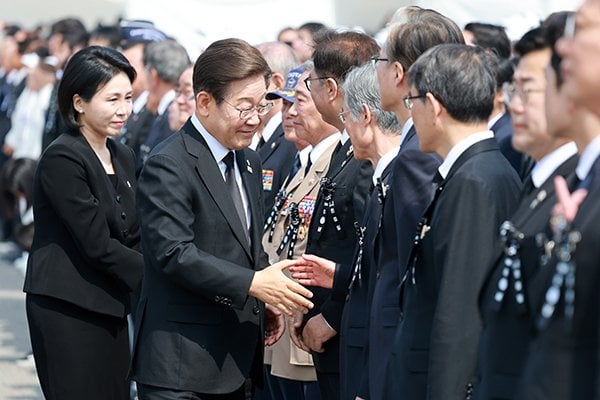
With the launch of the Lee Jae-myung administration, sweeping changes are anticipated across South Korea’s political, economic, and social spheres, as amendments to the Commercial Act, Capital Markets Act, and Labor Relations Act—along with the passage of three special prosecutor (independent counsel) laws—are expected to trigger a wave of legal and institutional reform.
On June 5, the ruling Democratic Party (DPK) reintroduced the Commercial Act amendment bill that had previously been vetoed by the Yoon Suk-yeol administration. The new version contains even stronger measures than the previous draft, including the activation of cumulative voting for large listed companies and the phased expansion of separate elections for audit committee members. The DPK’s Stock Market Revitalization Task Force stated, “We are reintroducing the amendment bill to reflect the public sentiment confirmed through the election.”
The reintroduced Commercial Act amendment includes provisions such as:
– fiduciary duty of directors toward shareholders
– changing outside directors to fully independent directors
– strengthening cumulative voting rights for large listed companies
– expanding separate elections for audit committee members
– enhancing the use of electronic shareholder meetings
– implementing a “3% rule” (limiting the voting rights of the largest shareholder and related parties to 3% when appointing audit committee members)
The 3% rule was not included in the previous amendment bill. The new bill also accelerates implementation: all measures, except for the electronic shareholder meeting provisions, will take effect immediately upon promulgation by the President.
The DPK also plans to concurrently push for amendments to the Capital Markets Act. Proposed changes include:
– tightening delisting criteria
– strengthening requirements for paid-in capital increases and issuance of convertible bonds (CBs)
In addition, other high-priority legislative efforts include:
– the so-called Yellow Envelope Act (amendments to the Trade Union and Labor Relations Adjustment Act that strengthens organized labor)
– the Broadcasting Act amendment ( More independence to public broadcasters and protection to press freedom )
– the Grain Management Act amendment ( More subsidy to struggling rice farmers )
Discussions are also underway regarding the possible introduction of a 4.5-day workweek and two new laws aimed at regulating online platforms: the Online Platform Fairness Act and the Online Platform Monopoly Regulation Act. A senior executive at a major conglomerate commented, “If all of these bills pass and are implemented, the corporate governance and labor relations landscape for large companies could be shaken to the core.” Meanwhile, an executive at a major securities firm said, “South Korea’s capital market, which has long been constrained by the meddling of small numbers of big shareholder (Chaebols), could finally evolve into a more shareholder-friendly environment and achieve a proper upgrade.”
Separately, three major special prosecutor bills targeting the previous Yoon Suk-yeol administration—the Insurrection Special Prosecutor Act, the Kim Keon-hee Special Prosecutor Act, and the Sergeant Chae Special Prosecutor Act—were passed at the National Assembly plenary session on June 5. This will launch the largest special investigation effort in the country’s history. The three special prosecutor teams will include up to 120 prosecutors and a combined maximum staff of 577, including investigators.
By comparison, the 2016–2017 State Affairs Manipulation special prosecutor investigation—triggered by the collapse of the Park Geun-hye administration and the rise of the Moon Jae-in government—involved only 20 dispatched prosecutors. The Insurrection Special Prosecutor will cover a broad scope, including 11 allegations related to former President Yoon Suk-yeol’s declaration of December 3 Martial Law, as well as alleged acts of insurrection, treasonous acts of inviting foreign powers, and military rebellion. In effect, nearly all major officials and politicians from the previous administration could face investigation.
The selection process for the three special prosecutors will involve nominations from both the Democratic Party (1 nominee) and the National Innovation Party (formerly led by Cho Kuk), the largest opposition party outside the main parliamentary bloc, with the President making the final appointment.
Within legal circles, some are already saying that a “soft revolution” has begun, while in political circles, concerns are mounting about potential “political purges” and the “collapse of the conservative political establishment.”
Posted by Freewhale98
3 Comments
I am glad they are taking the insurrection with the gravitas it deserves.
For them authoritarianism is in living memory and they perfectly understand how fragile and precious democracy actually is.
It doesn’t matter if it was doomed to fail and accomplished nithing but ridicule, if you let it go you are just inviting a smarter and more competent autocrat to try again in the future.
This is what president buttigieg needs to do in 2029
Why target only rice farmers?