>Andrew Bailey defends the payments for deposits that arose from quantitative easing as important for financial stability
>The Bank of England has no plans to stop paying interest on lenders’ deposits, despite having been accused by Reform UK of “unnecessarily wasting tens of billions of pounds of taxpayers’ money”.
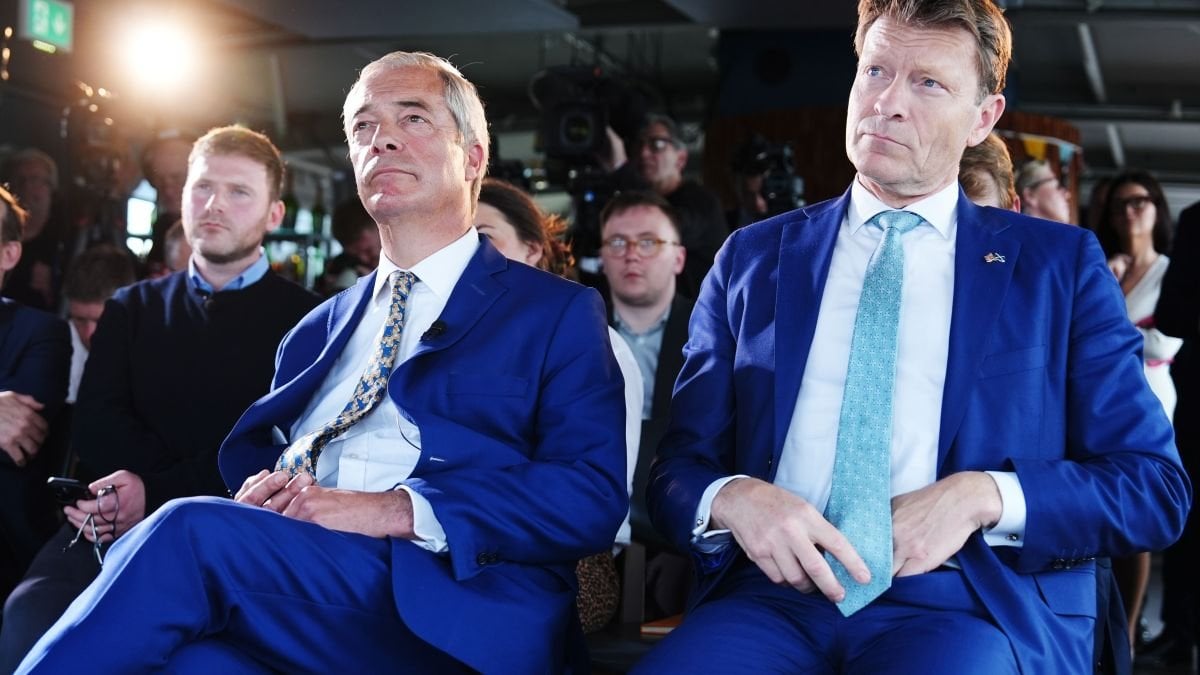
>Richard Tice, deputy leader of the party, wrote to Andrew Bailey, the governor of the Bank of England, over the weekend, claiming that the Bank was prioritising the “enriching of City institutions” at the expense of the public.
>Under the Bank’s quantitative easing (QE) programme, which lasted from 2009 to 2021, about £895 billion was created by buying bonds from commercial lenders, which then deposited the money they received at the central bank. Interest is paid on these reserves, which stand at about £700 billion, at the base rate of 4.25 per cent.
>Reform wants the Bank to do away with these interest payments. **Other advocates of cutting reserve remuneration in the UK include Gordon Brown, the former prime minister, and two former deputy governors of the Bank, Sir Paul Tucker and Sir Charlie Bean.**
>Some, including Gertjan Vlieghe, a former member of the monetary policy committee, have said that to stop paying the full interest rate could be tantamount to a debt default.
>But Tice, in his letter, said “that is simply untrue”, and added: “This money was created out of thin air by the Treasury and the Bank of England to support the economy during two periods of acute national stress over the past 18 years. It was never the property of City institutions. It is no coincidence that commercial bank profits have soared as interest rates rose as the Bank of England paid out tens of billions of this voluntary interest. These institutions cannot believe their luck.”
>When rates were low, the Bank’s gain from QE amounted to £124 billion, which was transferred to the Treasury. Now that borrowing costs have risen it is suffering losses, which are also being borne by the Treasury. Meanwhile, commercial lenders are enjoying a windfall. Four of Britain’s big high street banks — Barclays, Lloyds Banking Group, NatWest and Santander UK — disclosed last year that the interest they earned on reserves totalled about £9.2 billion in 2023.
>Reform has estimated that scrapping interest on central bank reserves could save up to £35 billion a year, which would fund a “Great British tax cut”.
>A spokesman for the Bank of England said “the governor set out the Bank’s views on this matter to the Treasury select committee [last week]”. Bailey said paying the full interest rate encouraged mainstream banks to hold some of their reserves with the Bank of England, which has “financial stability benefits”.
>Any changes to interest payments, he argued, would incentivise banks to move their reserves away from the central bank and into UK government bonds, meaning “any presumed benefit to the public purse from reducing interest payments in this way would … be illusory”.
>The big banks are also against any changes. A spokesman for UK Finance, the industry trade association, said any moves to lower reserve remuneration would have “real consequences for the UK economy and likely lead to consumers and businesses facing higher banking costs”.
>Many of those calling for an overhaul claim that the present system, which was introduced in 2006, is an exception rather than the norm in central banking. During the inflationary wars of the 1980s, big central banks paid no interest on commercial bank reserves.
>A tiered reserve system, adopted by the European Central Bank in 2023, is one idea being proposed. The ECB pays no interest on the portion of money that lenders are required to keep at the bank as a minimum reserve. There is no minimum reserve requirement with the Bank of England.
Ah yes if you make stupid stuff up yes that makes sense.
Invisible825 on
Does Reform UK truly believe that the Bank of England can just stop paying interest to creditors and investors, and save billions per year in “free money” without any negative consequences? And a key part of their economic plan is to use this “free money” to fund billions in tax cuts?
As the article points out, this would basically be equivalent to the British Government just defaulting on all its debts, declaring bankruptcy. This would annihilate the entire British economy. Why would anybody loan or invest in the UK after?
It would be bad enough if this was just irresponsible populist messaging on their part, but the article seems to describe it as a sincere belief among the Reform UK party, and a key part of their economic plan, which is even worse.
RTSBasebuilder on
Semi-regular reminder that for all his shit-talk about the Elites and whatnot, and his pint-at-the-pub act, Nigey over here was a prefect of Dulwich College. Yep, he’s a public schoolboy prefect. I bet you my savings account that he knows what flogging is – if you substitute the “lo” with an “a”
And for all his British Nationalism, **he never held a British-owned job once in his life**. Not Lloyds, not Barclays:
1982–1986, Drexel Burnham Lambert, the American junk bond empire was his first job. For all the talk of decline and the destruction of the red wall and the destruction of Sheffield, Rotherham, Stoke and all that, Farage was Thatcher’s personal hatchetman.
1986–1994, Crédit Lyonnais Rouse, the French State-linked bank. Working in commodities.
1992, Leaves the Tory Party because of Maastricht, citing *Brussels overreach*.
1993, Joins the Anti-Federalist League. Becomes co-founder of UKIP, while Still working for Crédit Lyonnais. No resignation, no declared conflict of interest, no public separation from the institution most aligned with the Europe he supposedly reviles.
1994, Hops from French state finance to Refco, American. Still *zero* British financial institutions on his CV. Not one.
1999, Becomes MEP. Paid in euros. Benefits from the same Brussels machine he claims to loathe.
2003, Joins Natixis Metals. French again. No public record that he ever left. No Hansard. No Commons register. No Brussels resignation. No electoral commission paperwork. Nothing. No statement he had left, resigned or terminated his contract. For all I know or care, he might still be getting paid in Euros, courtesy of La Defence.
LordVader568 on
Now they just need to add Liz Truss to their ranks.
No-Kiwi-1868 on
And half of Britain will buy this in, but not forgive Starmer because they don’t see immediate results (I’m not defending him, but people really do hold him to a very high standard not expected from Farage)
At this point everyone’s just taking the piss man.

8 Comments
>Andrew Bailey defends the payments for deposits that arose from quantitative easing as important for financial stability
>The Bank of England has no plans to stop paying interest on lenders’ deposits, despite having been accused by Reform UK of “unnecessarily wasting tens of billions of pounds of taxpayers’ money”.
>Richard Tice, deputy leader of the party, wrote to Andrew Bailey, the governor of the Bank of England, over the weekend, claiming that the Bank was prioritising the “enriching of City institutions” at the expense of the public.
>Under the Bank’s quantitative easing (QE) programme, which lasted from 2009 to 2021, about £895 billion was created by buying bonds from commercial lenders, which then deposited the money they received at the central bank. Interest is paid on these reserves, which stand at about £700 billion, at the base rate of 4.25 per cent.
>Reform wants the Bank to do away with these interest payments. **Other advocates of cutting reserve remuneration in the UK include Gordon Brown, the former prime minister, and two former deputy governors of the Bank, Sir Paul Tucker and Sir Charlie Bean.**
>Some, including Gertjan Vlieghe, a former member of the monetary policy committee, have said that to stop paying the full interest rate could be tantamount to a debt default.
>But Tice, in his letter, said “that is simply untrue”, and added: “This money was created out of thin air by the Treasury and the Bank of England to support the economy during two periods of acute national stress over the past 18 years. It was never the property of City institutions. It is no coincidence that commercial bank profits have soared as interest rates rose as the Bank of England paid out tens of billions of this voluntary interest. These institutions cannot believe their luck.”
>When rates were low, the Bank’s gain from QE amounted to £124 billion, which was transferred to the Treasury. Now that borrowing costs have risen it is suffering losses, which are also being borne by the Treasury. Meanwhile, commercial lenders are enjoying a windfall. Four of Britain’s big high street banks — Barclays, Lloyds Banking Group, NatWest and Santander UK — disclosed last year that the interest they earned on reserves totalled about £9.2 billion in 2023.
>Reform has estimated that scrapping interest on central bank reserves could save up to £35 billion a year, which would fund a “Great British tax cut”.
>A spokesman for the Bank of England said “the governor set out the Bank’s views on this matter to the Treasury select committee [last week]”. Bailey said paying the full interest rate encouraged mainstream banks to hold some of their reserves with the Bank of England, which has “financial stability benefits”.
>Any changes to interest payments, he argued, would incentivise banks to move their reserves away from the central bank and into UK government bonds, meaning “any presumed benefit to the public purse from reducing interest payments in this way would … be illusory”.
>The big banks are also against any changes. A spokesman for UK Finance, the industry trade association, said any moves to lower reserve remuneration would have “real consequences for the UK economy and likely lead to consumers and businesses facing higher banking costs”.
>Many of those calling for an overhaul claim that the present system, which was introduced in 2006, is an exception rather than the norm in central banking. During the inflationary wars of the 1980s, big central banks paid no interest on commercial bank reserves.
>A tiered reserve system, adopted by the European Central Bank in 2023, is one idea being proposed. The ECB pays no interest on the portion of money that lenders are required to keep at the bank as a minimum reserve. There is no minimum reserve requirement with the Bank of England.
Huh?
https://preview.redd.it/120p6scjvw5f1.jpeg?width=852&format=pjpg&auto=webp&s=6e39f48cfca1fe63b5889f0c500ebc7ed4585145
Ah yes if you make stupid stuff up yes that makes sense.
Does Reform UK truly believe that the Bank of England can just stop paying interest to creditors and investors, and save billions per year in “free money” without any negative consequences? And a key part of their economic plan is to use this “free money” to fund billions in tax cuts?
As the article points out, this would basically be equivalent to the British Government just defaulting on all its debts, declaring bankruptcy. This would annihilate the entire British economy. Why would anybody loan or invest in the UK after?
It would be bad enough if this was just irresponsible populist messaging on their part, but the article seems to describe it as a sincere belief among the Reform UK party, and a key part of their economic plan, which is even worse.
Semi-regular reminder that for all his shit-talk about the Elites and whatnot, and his pint-at-the-pub act, Nigey over here was a prefect of Dulwich College. Yep, he’s a public schoolboy prefect. I bet you my savings account that he knows what flogging is – if you substitute the “lo” with an “a”
And for all his British Nationalism, **he never held a British-owned job once in his life**. Not Lloyds, not Barclays:
1982–1986, Drexel Burnham Lambert, the American junk bond empire was his first job. For all the talk of decline and the destruction of the red wall and the destruction of Sheffield, Rotherham, Stoke and all that, Farage was Thatcher’s personal hatchetman.
1986–1994, Crédit Lyonnais Rouse, the French State-linked bank. Working in commodities.
1992, Leaves the Tory Party because of Maastricht, citing *Brussels overreach*.
1993, Joins the Anti-Federalist League. Becomes co-founder of UKIP, while Still working for Crédit Lyonnais. No resignation, no declared conflict of interest, no public separation from the institution most aligned with the Europe he supposedly reviles.
1994, Hops from French state finance to Refco, American. Still *zero* British financial institutions on his CV. Not one.
1999, Becomes MEP. Paid in euros. Benefits from the same Brussels machine he claims to loathe.
2003, Joins Natixis Metals. French again. No public record that he ever left. No Hansard. No Commons register. No Brussels resignation. No electoral commission paperwork. Nothing. No statement he had left, resigned or terminated his contract. For all I know or care, he might still be getting paid in Euros, courtesy of La Defence.
Now they just need to add Liz Truss to their ranks.
And half of Britain will buy this in, but not forgive Starmer because they don’t see immediate results (I’m not defending him, but people really do hold him to a very high standard not expected from Farage)
At this point everyone’s just taking the piss man.