## Suspected overdoses in Toronto’s public libraries up 529% between 2022 and 2023
# —
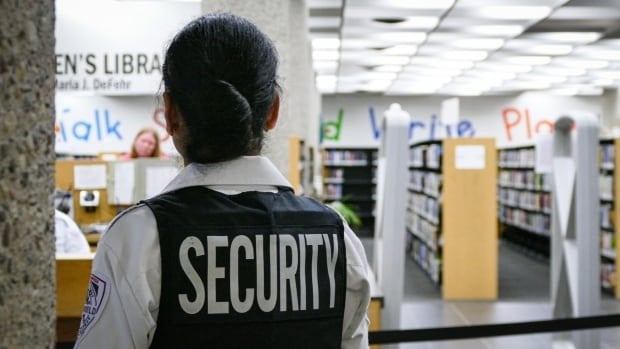
>Once seen as oases of calm and quiet, libraries across Canada are becoming increasingly chaotic – even dangerous – with staff often ending up on the front lines of crisis.
>
>Data obtained by CBC News shows there’s been a dramatic rise in recent years in the number of security incidents — things like physical assaults, suspected overdoses, and thefts — at public libraries in Canada’s major cities.
>
>CBC News obtained data from 11 public library systems across Canada, spanning several years.
>
>Toronto Public Library (TPL) experienced the largest spike between 2022 and 2023: in 2023, the library had 2,334 incidents, up from 1,362 the year before — a 71 per cent jump, the data shows. TPL also reported a 529 per cent increase in the number of suspected overdoses between 2022 and 2023.
>
>”These increases are most significant at branches located in the downtown core of Toronto, and reflect broader societal issues that are playing out across our communities, including in our public spaces,” a TPL spokesperson said in a statement.
>
>While Toronto’s data is staggering, the same trend is playing out elsewhere.
>
>The Winnipeg Public Library experienced a 21 per cent increase in the number of incidents between 2022 and 2023. Meanwhile, Vancouver Public Library saw a 14 per cent increase, according to its tracking. Only Calgary’s incident count remained the same per patron visits from 2022 to 2023. Mississauga’s rates declined notably from previous years, in part because the system’s main branch was closed for renovations between March 2021 and February of this year.
>
>[…]
>
>”There is a crisis on the streets of Toronto and the streets in all the communities across Canada,” said Siobhan Stevenson, a University of Toronto professor in library and information sciences.
>
>[…]
## ‘On high alert all the time,’ says Toronto librarian
>CBC spoke to several librarians across the country to better understand how these statistics play out in real life. One librarian working at a branch in the Toronto Public Library system, who CBC News is not identifying because of the risk of repercussions on the job, said that there’s a sense that staff in the most affected branches have to be “on high alert all the time.”
>
>”Sometimes you’re like, ‘Oh my gosh, I didn’t expect to be calling 911 every week,'” she said.
>
>[…]
>
>These incidents mirror what’s happening in many places across the country.
>
>Earlier this year, three security guards at a downtown library in Edmonton received minor cuts while removing someone with a knife from a library bathroom. Following a fatal stabbing in Winnipeg in 2022, the Millennium library introduced metal detectors and additional security guards to cope with rising security incidents. Ottawa Public Library recently asked for $3-million to pay for more security guards.
>
>”People are like, ‘What? At a library?’ Yes, at a library. And if it’s happening at a library, it’s everywhere,” said [Siobhan] Stevenson [U of T professor in library and information services].
>
>In her own research, Stevenson has spoken to hundreds of librarians and library staff about their experiences. In one survey, 527 library workers from four large library systems participated and a whopping 97 per cent said they had experienced some form or violence or incivility on the job.
## Smaller communities affected, too
>While large urban centres are particularly affected, smaller communities are also feeling the brewing crisis.
>
>”We’ve probably called the police more in the last two years than we have in the previous five,” said Chantelle Taylor, deputy director of Cumberland Public Libraries in Amherst, Nova Scotia.
>
>[…]
>
>Experts and library staff point to the widespread lack of funding for social programs as part of the problem; libraries are often the only free places where everyone, including a city’s more vulnerable population, are welcome to escape hot or freezing weather, access the internet and use public washrooms.
>
>In fact, social media platforms like TikTok are teeming with comments about how public libraries act as a “lifeline” for many.
>
>[…]
>
>But library staff can only be expected to do so much, Stevenson said.
>
>”This is not a library problem. This is a political problem. This is a social problem. And to get past it, we need the political will to change our thinking around how we fund or how we want to fund social services,” Stevenson said.
>
>”The problem is that there’s just a lot of these vulnerable people, and the library really probably isn’t the best solution.”
>
>Already, some libraries in Ontario have brought in social workers to support library staff, and universities in the United States have started offering a combined degree in library studies and social work. But the way to meaningfully fix the situation, Stevenson said, is for cities and provinces to reinvest in social programs that keep Canada’s most vulnerable people housed and cared for.
ForlornKumquat on
Once again, the homeless ruin a good thing for everyone else.
Numerous-Cicada3841 on
Libraries have increasingly been the hangout spot for homeless people. There’s a library near my city’s downtown that is stunning. Floor to ceiling glass windows. Beautiful bookcases. Nice selection. The city (read: taxpayers) spent a lot of money on it.
And yet the front is filled with homeless people that accost people that walk by. They do drugs in the bathrooms. And have no respect for the library, the patrons, or the staff. The library is just another victim of the public spaces we have conceded to this small group of people that have been allowed carte blanche on taxpayer funded gathering spots.

3 Comments
Summary:
## Suspected overdoses in Toronto’s public libraries up 529% between 2022 and 2023
# —
>Once seen as oases of calm and quiet, libraries across Canada are becoming increasingly chaotic – even dangerous – with staff often ending up on the front lines of crisis.
>
>Data obtained by CBC News shows there’s been a dramatic rise in recent years in the number of security incidents — things like physical assaults, suspected overdoses, and thefts — at public libraries in Canada’s major cities.
>
>CBC News obtained data from 11 public library systems across Canada, spanning several years.
>
>Toronto Public Library (TPL) experienced the largest spike between 2022 and 2023: in 2023, the library had 2,334 incidents, up from 1,362 the year before — a 71 per cent jump, the data shows. TPL also reported a 529 per cent increase in the number of suspected overdoses between 2022 and 2023.
>
>”These increases are most significant at branches located in the downtown core of Toronto, and reflect broader societal issues that are playing out across our communities, including in our public spaces,” a TPL spokesperson said in a statement.
>
>While Toronto’s data is staggering, the same trend is playing out elsewhere.
>
>The Winnipeg Public Library experienced a 21 per cent increase in the number of incidents between 2022 and 2023. Meanwhile, Vancouver Public Library saw a 14 per cent increase, according to its tracking. Only Calgary’s incident count remained the same per patron visits from 2022 to 2023. Mississauga’s rates declined notably from previous years, in part because the system’s main branch was closed for renovations between March 2021 and February of this year.
>
>[…]
>
>”There is a crisis on the streets of Toronto and the streets in all the communities across Canada,” said Siobhan Stevenson, a University of Toronto professor in library and information sciences.
>
>[…]
## ‘On high alert all the time,’ says Toronto librarian
>CBC spoke to several librarians across the country to better understand how these statistics play out in real life. One librarian working at a branch in the Toronto Public Library system, who CBC News is not identifying because of the risk of repercussions on the job, said that there’s a sense that staff in the most affected branches have to be “on high alert all the time.”
>
>”Sometimes you’re like, ‘Oh my gosh, I didn’t expect to be calling 911 every week,'” she said.
>
>[…]
>
>These incidents mirror what’s happening in many places across the country.
>
>Earlier this year, three security guards at a downtown library in Edmonton received minor cuts while removing someone with a knife from a library bathroom. Following a fatal stabbing in Winnipeg in 2022, the Millennium library introduced metal detectors and additional security guards to cope with rising security incidents. Ottawa Public Library recently asked for $3-million to pay for more security guards.
>
>”People are like, ‘What? At a library?’ Yes, at a library. And if it’s happening at a library, it’s everywhere,” said [Siobhan] Stevenson [U of T professor in library and information services].
>
>In her own research, Stevenson has spoken to hundreds of librarians and library staff about their experiences. In one survey, 527 library workers from four large library systems participated and a whopping 97 per cent said they had experienced some form or violence or incivility on the job.
## Smaller communities affected, too
>While large urban centres are particularly affected, smaller communities are also feeling the brewing crisis.
>
>”We’ve probably called the police more in the last two years than we have in the previous five,” said Chantelle Taylor, deputy director of Cumberland Public Libraries in Amherst, Nova Scotia.
>
>[…]
>
>Experts and library staff point to the widespread lack of funding for social programs as part of the problem; libraries are often the only free places where everyone, including a city’s more vulnerable population, are welcome to escape hot or freezing weather, access the internet and use public washrooms.
>
>In fact, social media platforms like TikTok are teeming with comments about how public libraries act as a “lifeline” for many.
>
>[…]
>
>But library staff can only be expected to do so much, Stevenson said.
>
>”This is not a library problem. This is a political problem. This is a social problem. And to get past it, we need the political will to change our thinking around how we fund or how we want to fund social services,” Stevenson said.
>
>”The problem is that there’s just a lot of these vulnerable people, and the library really probably isn’t the best solution.”
>
>Already, some libraries in Ontario have brought in social workers to support library staff, and universities in the United States have started offering a combined degree in library studies and social work. But the way to meaningfully fix the situation, Stevenson said, is for cities and provinces to reinvest in social programs that keep Canada’s most vulnerable people housed and cared for.
Once again, the homeless ruin a good thing for everyone else.
Libraries have increasingly been the hangout spot for homeless people. There’s a library near my city’s downtown that is stunning. Floor to ceiling glass windows. Beautiful bookcases. Nice selection. The city (read: taxpayers) spent a lot of money on it.
And yet the front is filled with homeless people that accost people that walk by. They do drugs in the bathrooms. And have no respect for the library, the patrons, or the staff. The library is just another victim of the public spaces we have conceded to this small group of people that have been allowed carte blanche on taxpayer funded gathering spots.