
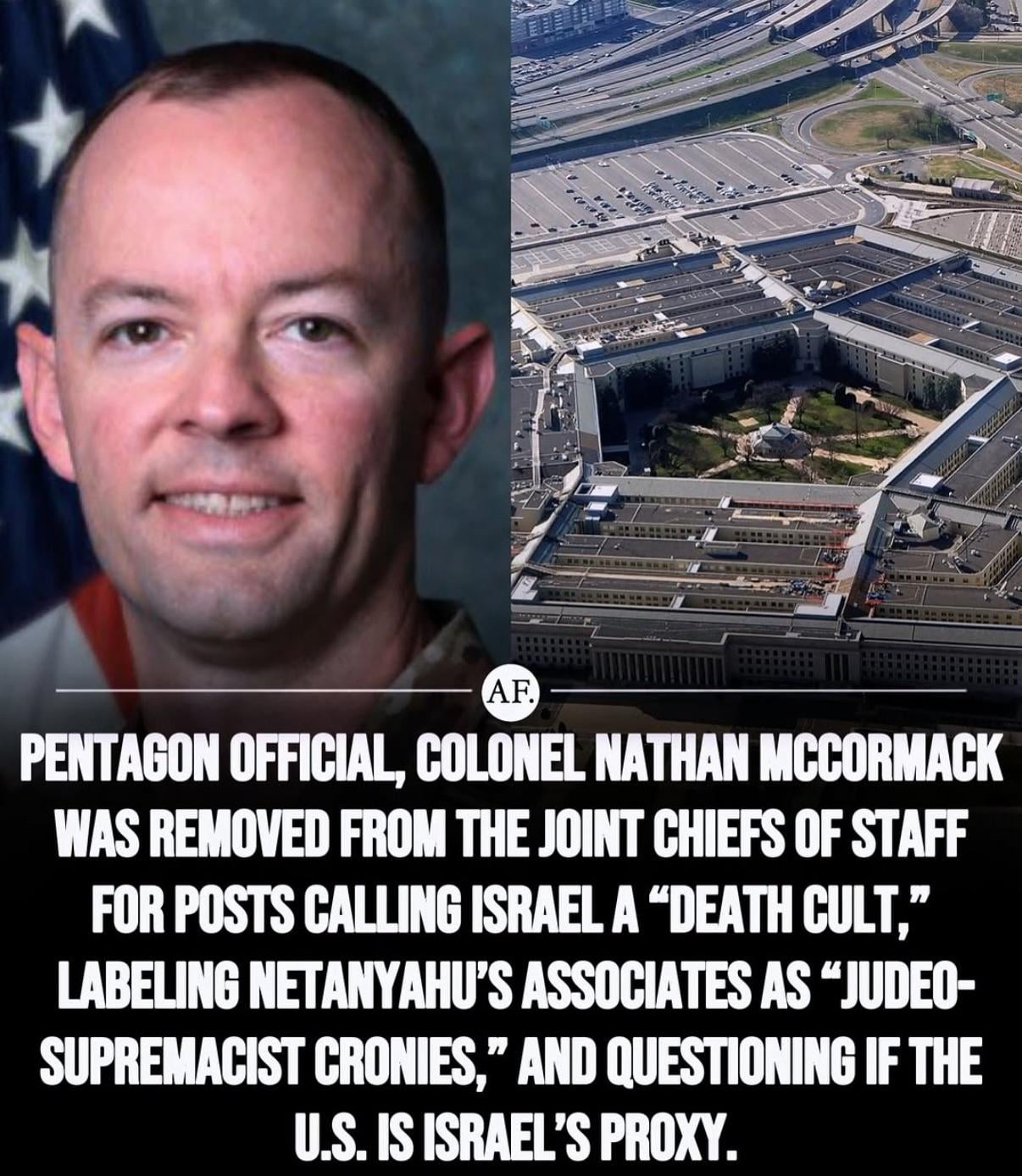
Col. Nathan McCormack was reportedly removed from the Joint Chiefs of Staff after making controversial social media posts criticizing Israel, labeling its government a “death cult” and questioning the U.S.-Israel relationship. Whether you agree with his language or not, his removal raises serious questions: Are U.S. military personnel not allowed to criticize foreign governments, or is there a specific red line when it comes to Israel? Why does criticism of one particular ally seem to result in swift, career-ending consequences? This incident touches on freedom of speech, foreign influence, and the ever-sensitive subject of U.S.-Israel ties. What aren’t we being told?
Posted by fuckshawn1
6 Comments
SS: Col. Nathan McCormack was removed from the Joint Chiefs of Staff after calling Israel a “death cult” and questioning if the U.S. is its proxy. Why does criticism of Israel lead to immediate career consequences while other nations are fair game? What aren’t we being told?
Compromised administration.
I like his choice of words.
This was posted a few days ago and I called it out as BS then. There are only a couple really shady websites reporting this and none of them actually give any sources for it. I can also find no evidence that “Colonel Nathan McCormack” is a real person or held any position in the Pentagon.
In the military, there is a chain of command. Questioning the chain of command and/or criticizing superiors, particularly publically, is a violation of Article 89 of the UCMJ.
Interesting, maybe it’s propaganda to threaten other officials from speaking out.