
Hello r/neoliberal,
TL;DR
This is Ringo from American Purpose. For months, I have been working on an investigative story about a conspiracy theory that spread like wildfire throughout Sweden's immigrant community and across the Arab world with the help of media networks such as Al Jazeera.
This is an exceptionally long story, but any section with an * can be skipped.
How a Child Kidnapping Conspiracy in Sweden Harmed Its Immigrants and Damaged Its Social Services
Imagine you are a Syrian refugee. You're a parent, and in a single moment, your peaceful home becomes a warzone. Soldiers storm in with no regard for life. You witness horror after horror, neighbors burying their children, mothers screaming into the void. You dream only of saving your own children from conscription, from violence, from the unthinkable. You want them to grow up with school books, soccer balls, and laughter, not with having to worry if death is around the corner.
So you make the most painful decision of your life, to leave the land of your ancestors, your community, everything you've ever known. You say goodbye, not knowing if you’ll ever return.
You arrive in a refugee camp. It’s safer, but still bleak, broken schools, constant danger, no future. Then you hear that Sweden, a country far to the north, is offering a new beginning. Hope flickers.
You cross the Mediterranean’s deadly waters, trek through Europe with your children, guarding them from traffickers and thieves. Finally, you make it. In Sweden, your children enroll in school, you begin learning the language, and you dare to imagine a normal life.
Then one day, a knock on the door. It’s the police accompanied by social workers. They say you’re an unfit parent. They’re taking your children immediately.
After surviving war, after fleeing tyranny to protect your family, it wasn’t a dictator or a warlord who finally took your children. It was the very society you trusted most, the one that promised you freedom and peace. Swedish and Arab values on parenthood are ultimately different, but everything is done out of love for your child. It’s the ultimate betrayal.
Then you learn that your children will be placed in foster care or taken to an orphanage under a law called the Law on Care of Young Persons or more commonly known as the LVU or in Swedish, Lag med särskilda bestämmelser om vård av unga.
That is where the fear really sets in. Sure, you probably ignore the Islamist conspiracies surrounding Swedish Social Services, but then you remember the incident surrounding Mohamed el-Amin, a powerful and seemingly kind businessman who ran an orphanage for the purpose of sexually abusing young children. Sure, maybe that fear could be dismissed as something that happens in a country like Egypt, but definitely not in a developed rich country and then you remember that something similar happened with Jeffrey Epstein in the United States.
This is what Diab Al Talal, a Syrian refugee and father of five children residing in Northern Sweden told the world. In a viral video, he and his wife cried in the snow as they begged anyone who would listen to their story. He even went so far and said “I wish I had stayed under the bombs in Syria with my family…here I am living a real nightmare.”
It was not long until commentators and internet influencers quickly picked up this story. In a call to the popular Egyptian Islamist show, Shoun Islamiya hosted by Mustafa Shalrawi, a woman from Gothenburg by the name of Zeinab Ltaif detailed how 10 children of immigrant background were taken away by the Swedish Social Services. She also detailed how the Social Services would take away children who joked or lied about being beaten up by their parents and if their daughter would not engage in sexual debauchery, the state would put up the child for adoption because this is “repression.” She made unverified statements such as “Social services kidnap Muslim children who are then raped and abused in treatment centers.” Additional narratives promoted by Islamists was that Sweden was placing Muslim children with Christian families with the intent to destroy Islam.
While these stories went viral across the Arab world and among immigrant communities in Sweden, many of these stories are either outright false or highly misleading. In the case of Diab al Talal, court and state documents obtained by myself showed that Diab was being disingenuous in his reporting as he neglected to tell others that these documents revealed that he would regularly beat his wife and kids, neglected their health to the point they were malnourished, were not given proper clothing to deal with the winter cold, and constantly arrived to school without proper hygienic care. Additionally, all of Diab’s children, when asked by social workers if they wish to see their father, refused to do so. Upon closer inspection, it becomes apparent that Diab is simply using the LVU campaign to cover for his shortcomings as a father.
However a closer look at the evidence reveals a more nuanced picture. While initial data suggests higher intervention rates among children of foreign-born parents, further analysis shows that when socioeconomic factors are taken into account, families from Muslim-majority countries are not more likely to face LVU interventions. In fact, Somali, Syrian, and Iraqi parents without economic hardships were less likely than native Swedes to experience such interventions in comparable situations.
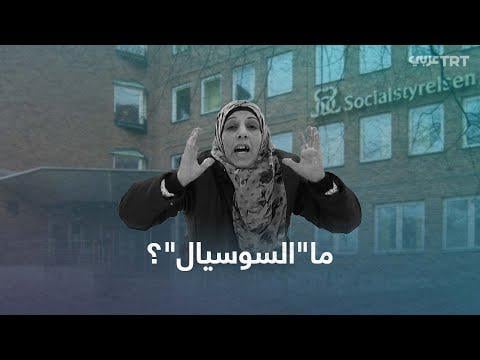
Despite the clear evidence, this did not stop many major media outlets ranging from Al Jazeera to TRT World to pick up this story by repeating the misleading narrative regarding Diab Al Talal and the LVU kidnapping children. Al Jazeera even produced a 3 part documentary series interviewing many parents who lost custody of their children which was heavily marketed in Sweden.
The focus on the geopolitical dynamics, Islamist disinformation, the ethics of the Swedish Social Services, and the role of Arab media in this incident has been high. Throughout much of the investigations, debates, and discussions of the social services has neglected a much needed element which is the focus on children themselves, an aspect that many actors have neglected in their efforts to push an agenda.
The Origins of Children’s Rights in Sweden*
In 1902, Sweden became one of the first countries in the world to pass a child welfare act called the Law on the Treatment of Neglected and Delinquent Children which sought to protect children from “moral neglect” and delinquency which mostly included alcoholism, prostitution, and poverty. What made this law revolutionary is that if the neglect of a child was significant enough, the state has the authority to intervene and remove the child from their family and place them into foster care, medical institutions, or reform schools.
Many variations of this law were passed in Sweden with a focus on the well being of the child, especially with their exposure towards poverty, drugs, alcohol, and sexual abuse. In 1980, Sweden passed the Social Services Act which expanded the scale and capability of its famous welfare state, but also attaching a liberal humanistic value of welfare to every citizen. In addition, all forms of corporal punishment on children were outlawed.
Under this new law, entire social service departments were devoted to ensuring that rights of the children were safeguarded with an entire state apparatus of investigative services, foster homes, and social workers in place. This was revolutionary for its time as it was considered unthinkable that children were capable of having the same rights often reserved for adults
This has been quite surprising and even radical even by European standards. This was most evident in 2011 when an Italian by the name of Giovanni Colasante was vacationing in Sweden. During an outing, his 12-year-old son reportedly threw a tantrum and refused to enter a restaurant to which Colasante responded by slapping him and pulling his hair. In a country like Italy, especially in the south such a scene is hardly abnormal, but in Sweden, it was considered a crime. Colasante ended up spending 3 nights in jail and had to pay a fine of $990.
While this case was quite controversial during its time, 65 countries have now banned all forms of child corporal punishment as of 2025.
Child Intervention Statistics*
Demographic statistics are difficult to acquire due to Sweden’s strict laws on collecting ethnic data in government and police reports. However in 2024, the Social Services released a study outlining LVU interventions by national background between 1990 to 2022.
In this study, it showed that 1.1% of all children born to two Swedish born parents were placed under LVU care while children of two foreign born parents were placed at 2.6%.
At an initial glance, it appears that the suspicions are indeed true that the Swedish Social Services are placing children of immigrant background at a higher rate than native born Swedes. However in this study, when adjusted for hazardous factors such as poor socioeconomic positioning, the data changes significantly, it shows that children of Muslim majority countries are not more likely to be taken into care. Somali, Syrian and Iraqi parents in particular that were free from socioeconomic hazards were half or 75% less likely to experience an LVU intervention in a similar situation.
In a Swedish context, this is perhaps not too surprising given Sweden’s history of alleviating poverty as a moral virtue, as poverty is often linked to crime, abuse, and illness.
There is also additional context according to Birgitta Persdotter of Karlstadt University. She added that parents who seek voluntary help from Swedish Social Services are at less risk of having an LVU intervention than those who refuse voluntary assistance.
What Went Wrong?
While Sweden has one of the most generous welfare states to parents in the world and has officially been a multicultural state since 1975, integration has not always been easy.
“In our Eastern society, raising a child is a community effort. The father, the mother, the uncle, the aunt, the grandparents, the religious leader and even the local shopkeeper, everyone plays a role. For example, if your child is seen smoking a cigarette, the shopkeeper might tell the father, and the child could be disciplined, sometimes even based on a neighbor’s word.” says Farouk Aldabag, a cognitive psychologist born in Iraq who helps refugee families, “Meanwhile, in Europe, the child is raised with a focus on privacy, freedom, and being allowed not to make mistakes but to act out their childhood.”
As with many immigrant families, parents set in their ways often have trouble integrating into their new homes and often form enclaves with people from their home country rather than with the majority population.
Many newly arrived immigrants and refugees take a mandatory course called Samhällsorientering or “Civic Orientation” which is 80 hours. In these courses, parents are taught the foundations of Swedish society, what does “child” mean and what does “wife” mean. These concepts in the Arab world are viewed quite differently. During this time, the Social Services provide an allowance of around 3,000 dollars a month for the first two years. This is given as a grant where participants are not expected to work, but to learn the language, understand the values, and to integrate into Swedish society.
Farouk taught many of these courses.
“This course teaches laws, regulations, parenting, relationships, education, employment, how to deal with state institutions, how to get a driver’s license, even the final part of the course teaches about death. Not how to die, of course, but about burial—what rights a person has from birth to burial.”
These classes have been quite successful in integrating many newly arrived immigrants. Unfortunately, many fall through the cracks. Many of those who come to Sweden under this program see the financial support not as a grant, but as a form of income and refuse to integrate.
This is the moment where Third Culture kids with one foot back in their ancestral home and one foot in their new homeland start to experience a contradiction.
“What usually happens is that children adapt to society very quickly. They learn the language fast…what you end up seeing is a shift in the family structure.” notes Farouk, “In our countries, the family hierarchy looks like this: at the top is the father, then the mother, then the children.
But in Sweden, after some time, that structure flips. Once the children enter society and learn the language, they become the ones who lead the family.The father might need to call the power company or the health clinic but doesn’t speak the language, so he asks the child for help. He might even rely on the child to speak with the Social Services representative to request social aid.”
This is the moment when children undergo what is called “adultification,” a psychological phenomena “where the child begins to take initiative away from the adults.”
“What ends up happening is that the child starts noticing major mistakes the parent is making—mistakes that violate the law.
At school, they hear things like: “Your dad doesn’t have the right to hit you.” “You have the right to speak up.” “You have a right to receive benefits.” “You have a right to play sports.”
Many immigrant parents who come to Europe don’t realize how much the entire family dynamic has changed.
They think that only they are changing, but in fact, the whole structure is shifting.”
When an immigrant child who is caught between the world of their country of origin of their parents and their new homeland where their parents have no familiarity with, combined with undertaking tasks meant for adults while many of their native peers are living lives most children do, it becomes common for the child to start experiencing emotional detachment from their family, especially if the parents are abusive and neglect. As Farouk notes:
“You’ll see the child begin to trust the teacher.
They accept advice from the school counselor.
They trust people outside the family.
And they start sharing family problems with those people.
That’s when Social Services gets involved.
They assess that this family needs intervention.
So when there’s violence or neglect, the children may be separated from the parents.
This is done through what’s known as the “LVU law.”
The LVU*
The LVU, the acronym in which the entire controversy is about, is known as the “Compulsory care of children in accordance with Swedish Act” in English. To many, this law and process is the pride of Sweden where children under the worst circumstances are able to be taken away from abusive parents ranging from the worst forms of physical beatings, sexual abuse, and exposure to drugs and alcohol. To others, especially within the immigrant community, it is associated with the kidnapping of their own children where they will be raised by strangers who do not share any of the same values as them.
While the narrative promoted by individuals such as Zeinab Ltaif and the barber, George Touma with the theft of children on meticulous grounds such as light hearted jokes gone wrong, the process of the LVU is meticulous, extensive, and costly for the Swedish state to engage in with foster care being used as a last resort.
The LVU itself is quite long and technical, but there are generally 6 steps involved in this.
The first stage of the LVU starts with an investigation by the Social Services when a child’s health or development is at serious risk due to abuse, neglect, substance abuse. From there, various voluntary services are deployed to try to mend the problem. This includes family counseling and treatment programs or professional support workers who visit the home regularly to help with routines, supervision, or crisis management. Or voluntary placement can be utilized without the LVU through relatives which is referred to as kinship care.
If none of the voluntary measures are able to ensure the well being of the child, the LVU is deployed into effect.
The second stage involves the Social Welfare Committee where if they agree compulsory care is needed, they apply to the Administrative Court for an LVU order are children and parents alike are provided with publicly funded lawyer.
If the child is in immediate danger, authorities can remove the child before court approval and the court must approve this emergency decision within days.
The third stage involves an administrative court hearing where they determine if the grounds for LVU will be met. From here, if the court determines that LVU conditions are warranted, it grants compulsory care allowing social services to take over the child's care. From here, parents have the right to appeal the decision.
In the fourth stage, the child is placed in foster care or a residential home. Parents lose decision-making power but keep legal status as guardians (unless custody is transferred later). The placement is reviewed every 6 months.
From here, legal counsel, interpreters, and translated documents are provided. Additionally, parents usually have the right to contact/visitation, unless restricted and both parties can appeal decisions, including contact limitations.
In the fifth stage, LVU care can end from here if the child turns 18, or 21 depending on specific cases, if the situation of the parents and child improves, or if parents or child request and court agrees to end care. From here, social services aim for reunification if the safety of the child can be guaranteed.
The final stage is reserved for the most severe cases where child unification with the parent cannot be safely guaranteed. If a child has lived in the same foster home for 3 years, authorities must consider transferring custody to the foster parents. From here, guardianship of the child is transferred to foster parents.
How the LVU Plays Itself In Practice
In Sweden, all forms of abuse, physical and otherwise, are prohibited by Swedish law. Teachers and parents are not allowed to use any form of physical discipline onto their children, regardless of their reasoning. This includes verbal abuse, physical abuse, financial abuse, social abuse, and sexual abuse.
All of these are considered abuse, but the state is not waiting for the slightest misstep to snatch a child away because not all forms of child abuse are the same. Also, as anyone who is a parent would know, children often lie to others and to their parents. That is why the investigative process followed by multiple court hearings and the ability to appeal are significant to the LVU.
As a result, it is only after confirmation that authorities proceed with an investigation.
“If it’s abuse, there will be visible signs—bruises, red or blue marks on the hands or face.If it’s neglect, you’ll see the child show up in freezing weather—minus 12 or 13 degrees Celsius, Wearing old, soaked shoes, a thin jacket, shivering with cold.The state will consider this neglect. They’ll open an investigation.” says Farouk,
“About 90% of what’s called Social Services Investigations take place in this context. They last about three months. During that time, ideally, the parents should cooperate and communicate with the Social Services caseworker.They should say: ‘We understand. You care about us, about our children.’
But what usually happens is the opposite.The parents confront the system, they clash with the staff, and when that happens, the caseworker is obligated to protect themselves and issue an order to separate the child from the parents. That’s when the real problem begins.”
The abuse that requires a severe level of intervention is not minimal, it is often quite dramatic. For example, a father who took his child’s hand and stuck it to an electric stove. In another case, a father took chili powder and applied it to his child’s genitals.
Samirah's Marriage
Samirah (her real identity is anonymous for her protection) and mother of 8 children underwent an abusive marriage. During this marriage, Samirah suffered regular beatings and sexual assault from her husband’s drunken rage and was constantly giving birth to many children for the sole purpose of obtaining welfare money from the Swedish Social Services. Due to health complications of giving birth, Samirah suffered from a torn uterus which made pregnancy dangerous. Despite this however, her husband refused to allow her to take any form of birth control and forced her to give birth to children that were beyond the financial means of a Syrian refugee, especially of a father who is an unemployed alcoholic.
In Sweden, Samirah’s husband had trouble integrating. He was constantly getting into fights with the neighbors and not paying back debts to shopkeepers caused him to become socially isolated within his community. Perhaps it was not surprising that Samirah also was also kept in near complete isolation and expected her to take care of the kids while he did little to assist. She was not allowed to have a phone or communicate with the outside world, except when he allowed her to talk to her mother or sister and only for a limited time. It was only when a social worker noticed she did not own a phone that her husband, upon pressure from the social services, granted her an old button phone which did not have any internet access. Samirah eventually got ahold of a smartphone when a social worker alerted her husband that she needs a phone to communicate and to be able to do banking. Despite this, her husband monitored her phone and only allowed her to communicate with her family once every two weeks for 10 minutes.
Samirah’s kids did not fare much better under her husband’s watch. Her children were not allowed to have friends, bring anyone over, and their speech was constantly monitored. “If they were asked a question at school, they were too afraid to answer, worried he’d punish them for saying the wrong thing. They had no personalities, just like me.” It was not long until Samirah’s kids were having trouble at school, especially from bullying.
Eventually, the abuse became too much for Samirah to bear and she went against all the advice she was told about the Social Services and finally contacted them, alerting them that her children were in danger and she could not be around her husband any longer. She was scared, she was told many horrible things about the Social Services such as, “You’re no better than the other women who went to social services. They took their kids and complained about their husbands, and then social services raped the women and the children, and in the end they abandoned the mother and kept the children.”
However, Samirah’s kids were not kidnapped nor were they abused. They were immediately placed into a secondary home and she was asked whether she wishes to separate from her husband or if the conflict between the two would eventually calm down. She chose the latter. Initially, there appeared to be improvement with her husband profusely saying comments such as “Come back, things will get better. I realized your value.”
Eventually, Samirah and her children returned to her husband and home under the supervision of the Social Services, but upon the revelation that the husband’s alcoholism and abuse became even worse, Samirah ran away with her children to the Social Services and they provided an apartment for her within 2 days. Little relief could be felt as the husband discovered her new apartment and started demanding to see his children, stealing the welfare money meant to raise the children, and soon enough, forcefully made himself at home in Samirah’s new apartment. Eventually Samirah filed for divorce and her husband responded by beating her according to court documents obtained by myself.
Samirah and the LVU
At this point, a Chapter 11, Section 5 LVU investigation was in place for Samirah and her children as the situation deteriorated to the point where their safety and integrity was in significant danger. The constant beatings, fights, alcoholic rages, and financial abuse was severe enough that the Swedish state believed it warranted outside intervention.
Contrary to what Samirah was told by her husband about the LVU, this process was not the start of a nightmare, but quite the opposite.
“The procedures were very, very easy. First of all, I don’t speak the language, so social services always provided a translator—always. The interaction with them was very comfortable. You’ll never meet a staff member who frowns at you. They treat you so kindly that it honestly felt like I was sitting with friends. They give you a huge sense of relief. They constantly encouraged me to speak openly and not to hide anything—so they could help me properly. They would tell me, ‘Say what you need, we’re here to help you with whatever you require.’”
From here, Samirah and her children were placed in protective custody by the Social Services and were transferred to a shelter. It was at this moment that Samirah and her children could breathe a sigh of relief and start anew without worrying about their alcoholic father.
However, the damage was already done.
“My children were in a very bad psychological state, especially my two older daughters. Right now, they refuse to leave the house, even to go to school. They’re scared of people. One of them told me, “I don’t want to get married. Why did dad do this to us? Why is our life like this? Why did we have to go through all of this? They’re terrified to even go outside. They’re afraid of seeing their father. They’re afraid of people. They see everyone outside as being like him.”
Fortunately for the children, they have been able to receive mental treatment to move on from the experiences living under the father.
Eventually, the LVU investigation involving Samirah, her husband, and her 8 children was concluded. The investigation concluded that the LVU Act would not be employed as they deemed Samirah to be a suitable parent and denied her husband custody of the children as his alcoholism, tendency violence, and constant conflicts with neighbors was deemed unsuitable to raise his children.
After this ordeal, Samirah has been grateful to the Swedish Social Services for their assistance.
“If I were in an Arab country with eight children even if I were living with my family, who would take care of us? Who would feed us, house us, and protect us from judgment and shame? No one. As a divorced woman with eight kids, society would look down on me.
But here in Sweden, I’m treated like a human being. My Swedish neighbors are respectful and kind. They understand my situation. They see me as a strong woman—a mother raising eight kids. They say, ‘Wow, you’re incredible.’”
When asked about other women who suffered as she has, Samirah replied to me by saying,“Don’t be afraid. When you stay silent—especially if you have children—you’re not just giving up your own rights. You’re also risking theirs. These children are your responsibility..social services were my lifeline. They saved me. They’re a lifeline for anyone in my position. The key is to be honest with them, transparent, and to follow their guidance. If you do, you’ll find a way forward.”
And what about the role of Islam? Did the Social Services try to destroy the Islamic faith as the Islamists purport? Samirah’s experience as a devout Muslim woman says otherwise.
“I have never faced any problems because of my religious beliefs. On the contrary, in Sweden you have a wide space to practice your religion as long as you don’t break the law. There is nothing in Swedish law that contradicts religion.”
And what of her children? Are they detached from their faith?
“My children are learning their religious teachings and love them because they were not forced to do so. Instead, they learned them freely and had the freedom to choose. I have no objection at all—in fact, it makes me proud of myself that I was able to give my children a positive understanding of their religion, and that they see me as a role model.
I truly hope that everyone can live together peacefully in Sweden. It’s a beautiful country that offers what suits all cultures, but we must embrace sound human nature so we can raise a generation that is healthy in mind and thought—not a Muslim generation with backward and misguided ideas.”
Samirah’s children's devotion to their faith is not just purported by her, it was also noticed in a BBiC report obtained by me, where it was noted that one of Samirah’s daughters “wants to be like her mother, an exemplary Muslim woman.”
Samirah’s husband was convicted of assault and four offences against a child’s personal integrity and sentenced to a 6 month prison sentence and pay a fee to the Crime Victim Fund. However, because he did not have the means to pay the fee, the Swedish state had to bear the payment. While Samirah is now free from her husband’s abuse, he has been relentless in his harassment towards Samirah and his daughters by sending them crude messages such as these texts below.
Listen, you shameless whore, you who fell from the filth of filth. May God pour His wrath upon your eight children.
O God, afflict them with disabilities and incurable diseases. O God, scatter them and make them turn on each other in conflict. O God, do not grant them success, do not bless them, and do not count them among the Muslims.
Listen, you filthy whore and shameless woman.
You fell in a trap and people won’t forgive you.
Farouk Aldabag took in a family and children. Then one of your men raped his grown daughter.
A Story of No Winners
The real tragedy in this story is that there are no clear winners, only victims caught in the crossfire of fear, misunderstanding, and disinformation. Among the first casualties are the vulnerable families who, terrified by rumors, avoid seeking help from social services out of fear their children will be taken away.
“Most of what the social services do has nothing to do with taking children. It's more about aiding society,” says Inas Hamdan. “One part is economic aid. So they are the ones that if you get sick and are incapable of working, after your job security and job insurance runs out, nobody should be unhoused or out on the street. It can also be a parent with substance abuse or a parent with anger issues or a parent with depression or an illness.”
These services are meant to catch families before they fall apart. When parents face compounding challenges, mental health struggles, addiction, housing instability, intervention can prevent crises rather than punish them.
Samirah’s former husband is a painful example of what happens when that help isn’t sought. As his alcoholism and psychological distress deepened, he alienated his neighbors and abused his wife to the point that he ultimately lost contact with his children. Had he reached out for support early on, there’s even a chance he would not have preserved his friendships, but even save his marriage and his relationship with his children.
The second victim in all of this are immigrant women such as Samirah. For years, women in domestic abuse situations like Samirah’s have hesitated to seek help from Swedish social services, deterred by misinformation campaigns alleging that the state kidnaps immigrant children. Samirah explains:
“I know other women who are in similar situations. Even after they saw me take that step and succeed, they’re still afraid. Many mention the online campaigns—especially the one led by Diab Al Talal, who went on social media claiming his children were taken without cause. That kind of fear spreads quickly. They say, ‘Why would I risk it? Better to endure the abuse, so long as I can keep my children with me.’
In fact, I think we, the immigrants, have harmed ourselves the most. We've made it harder for social services and the Swedish state to support us properly.”
The fear of seeking assistance is not just related to women trapped in domestic abuse, it even extends to something as simple as medical services.
"There are women who contact me and say that they have acute health problems, but that they don't dare to go to the doctor because they are afraid that doctors will take their children. It sounds absurd from our side, but it's a true fear they have," says Nina Rokan Brandelius, a member of the Moderate Party and worker on the social welfare committee.
Unexpected side effects have been noticed as well. Due to the fear many parents have of social service workers regarding the discipline of children, many parents in turn are afraid of establishing boundaries with their children. For example, if a child wants an expensive gift such as an iPhone or iPad, parents are afraid to say no because they are worried their child could go to teachers or social workers and claim they are neglected. This is also worrying for the upbringing of children as a child who was spoiled throughout their childhood will face difficulties such as understanding boundaries, empathizing with others, and being able to properly socialize with others. While social services will involve themselves in many matters, according to Lupita Svensson, a social work professor at Lund University told us in an interview, “If you speak to the social services, they will say, no way, we don't get involved in families because the parents are saying no to the child for an iPhone or an iPad”
Social workers have also found themselves under unnecessary stress as well. Many social workers have reported quitting due to the pressure applied by the LVU campaign which is worrying for Sweden’s Socialstyrelsen as there is significant underemployment in that sector. Social workers have been met with skepticism, verbal abuse, and uncooperation from those they often seek to help. This is what happened to Rachida Bouizgarne, a former Swedish social worker who ran an emergency home for children. Her home address and social security number have been spread on social media, with calls to attack her. On Tiktok, she has been called a "Jew" and a "traitor" by channels with tens of thousands of followers. Opponents have threatened to set fire to her home. Because of these threats, she stopped working as a social worker.
In another incident a social service worker involved in children’s welfare by the name of “Sophia” (not her real name) received false reports that she was abusing her children while on vacation.
Dr. Lupita Svensson reported that one of her former students of Arab descent and Arabic speaker who is now a social worker reported encountering difficulties in assisting immigrants due to many immigrants believing that the only thing social services is doing is kidnapping children.
Beyond the private challenges of family life and the added burdens of migration, many immigrants now fear a growing political backlash. Farouk Aldabag warns that the fallout has reached national politics:
“The Sweden Democrats are exploiting these stories to push anti-immigration policies. Residency permits are delayed, and there’s even talk of revoking citizenship—something that would never be suggested for native-born Swedes.”
However, the biggest victim in this entire story are the children themselves. A childhood is the most formative years and often sets the stage for the child’s life. Too often, it is not the social services acting too hastily, but often too slowly when the damage to the child’s psyche has already been done.
But perhaps more tragically, while much of the controversy around the LVU has been about children, very little attention was given to children and solely to parents who used the LVU narrative to cover up their misdeeds.
As of now, the Swedish Social Services are focusing on the future. In a statement to us, the Social Services said:
“In the municipalities we have visited over the years, we understand that the disinformation campaign has been challenging but also provided opportunities for development. We encounter a positive attitude towards developing the work to increase trust and confidence, both in meetings with individual children and parents and in outreach work towards parents and children and the citizens of the municipality in general.”
Posted by AmericanPurposeMag
1 Comment
This was one of the wildest stories I have worked on. When we think of child kidnapping conspiracies, we often think of Q-Anon but this one was not wildly available in English.
There is a lot I did not include such as all the social media figures, most interestingly a Syrian Christian barber who has fled to Australia, a Lebanese clan operating a gang in Gothenburg, and the various court cases from the Al Jazeera documentary.
However, this has arguably done more harm than Q-Anon because in Sweden, it ended up harming the Social Services who help vulnerable immigrant communities and it has prevented abused women and children from being able to seek the help they desperately need.
Feel free to ask any questions and I am more than happy to answer.