
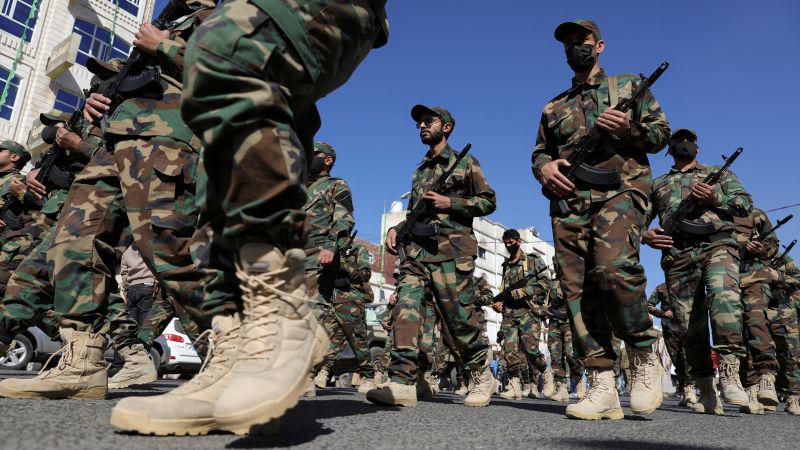
Iran’s armed proxies are ramping up pressure on key points in the Middle East as Tehran attempts to rebuild its regional influence, eroded by almost two years of a destructive Israeli military campaign.
Tehran’s Houthi allies in Yemen ended months of calm in the Red Sea last week with strikes on two commercial ships travelling in the critical waterway. Proxies in Iraq are suspected of disrupting oil production in the Kurdish region, and shipments of hundreds of rockets bound for Hezbollah in Lebanon have been intercepted by Syrian forces over the past months.
The increasing activity by the proxies reflects Iran’s determination to continue supporting a network of disruptive armed groups – long seen as essential to Tehran’s deterrence strategy, despite their failure to deter recent Israeli and American attacks on Iranian soil – ahead of possible talks with Washington to reach a new nuclear deal. But so far, neither the United States nor Iran appears to be willing to make major compromises.
“Iran was never going to stop resupplying their groups,” said Michael Knights, a senior fellow at The Washington Institute specializing in the military and security affairs of Iraq, Iran and the Gulf states.
“They might not be able to send this much or regularly – more stuff might get intercepted – but if you’re the (Iranian) Revolutionary Guards’ Quds Force right now, what you’re trying to show is ‘we still exist, we’re intact, nothing has changed.’”
Posted by John3262005
1 Comment
Hezbollah isn’t disarming anytime soon.