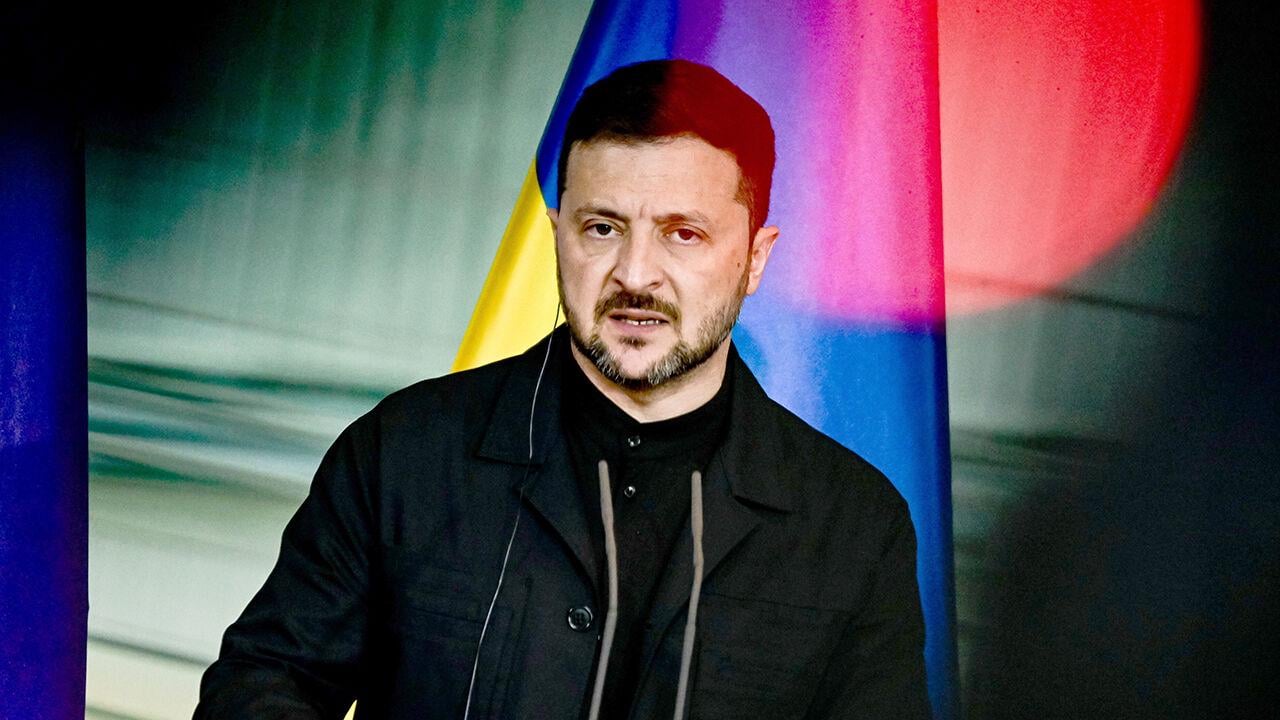
>UKRAINE’S WAR effort depends not only on courage and weapons, but on trust: the trust of its own citizens, and that of its Western backers. That compact is now at risk. On July 22nd the Rada, Ukraine’s parliament, passed a bill that would place the country’s two main anti-corruption bodies—NABU, which investigates wrongdoing, and SAPO, which prosecutes it—under the control of the presidency. This was not the work of rogue MPs. It was orchestrated from the top by President Volodymyr Zelensky and his all-powerful chief of staff, Andriy Yermak. It passed with large numbers of votes from the president’s own Servant of the People party. The law is a direct threat to the international support that has sustained Ukraine through the war. At home, it has drawn the first anti-Zelensky protests since the invasion.
>The new law grants sweeping powers to Ukraine’s prosecutor-general, a presidential appointee who reports directly to the president’s office, to reassign, interfere with or even kill off corruption investigations. No case will now be safe if it steps on the wrong toes. The justification offered—that the agencies have been penetrated by pro-Russians—is unsubstantiated and looks like a pretence. What this bill really does is roll back a decade of democratic reform and reassert presidential control over institutions that were painstakingly designed to be independent. It guts the institutional autonomy that has been one of Ukraine’s most impressive domestic achievements since the Revolution of Dignity in 2014.
>The Economist has long argued that victory for Ukraine is not necessarily a matter of expelling Russian troops from the territory they have seized, a goal that now looks impossible. Rather, it must mean the emergence of a prosperous, stable, democratic state, anchored in liberal values, governed by the rule of law, and firmly on the path to joining the European Union and, if possible, NATO. The creation of the two anti-corruption agencies was central to that effort. The vision behind it is part of what keeps arms flowing and budgets funded. It helps persuade voters in Europe and America to bear the cost.
>But voters’ patience is not infinite. In much of the West, support for Ukraine is fraying. After three and a half years of war, with no end in sight, leaders are struggling to justify the scale of the commitment—particularly as America under Donald Trump does less and Europe consequently needs to do more. If Ukraine begins to resemble the corrupt, autocratic system it once sought to escape, then Western politicians will find it harder to argue that the cause is worth defending. Russia does not have to win on the battlefield; it can win by destroying Ukraine from within. Just look at Georgia, once a darling of the West, but now a supine client state of the Kremlin.
>The West bears some responsibility for all this. Its leaders lionised Mr Zelensky, whose heroism changed the early course of the war, and that has led them to turn a blind eye to his growing list of failings. The new law was not passed in a vacuum, but followed the harassment of anti-corruption campaigners and the dubious use of “sanctions”, including asset freezes and travel bans, against the government’s political enemies, including Mr Zelensky’s own predecessor as president. Ukraine’s friends have not done enough to call him out over such lapses.
>With indecent haste, Mr Zelensky signed the new measure on the same day that it was tabled and passed by the Rada. But it is not just a bad law: it is a huge strategic blunder. It makes Ukraine look more like the enemy it is fighting and less like the country it aspires to become. It weakens the moral case for Western solidarity just as that solidarity is entering a more fragile phase. If the president values his people’s European future, he must quickly kill the bill that he has just so ill-advisedly signed before it kills the idea of a democratic Ukraine. ■
gilead117 on
The most telling thing about this is that it’s not some temporary measure that will last the duration of the war, but a permanent attack on government accountability.
During war states often have to pull back on some civil liberties, especially if the war is an existential threat to the nation. During the US Civil War Lincoln suspended habeas corpus and subjected protestors to martial law, but this was not a permanent measure. This is nothing but a blatant and corrupt power grab on the part of Zelensky.

2 Comments
>UKRAINE’S WAR effort depends not only on courage and weapons, but on trust: the trust of its own citizens, and that of its Western backers. That compact is now at risk. On July 22nd the Rada, Ukraine’s parliament, passed a bill that would place the country’s two main anti-corruption bodies—NABU, which investigates wrongdoing, and SAPO, which prosecutes it—under the control of the presidency. This was not the work of rogue MPs. It was orchestrated from the top by President Volodymyr Zelensky and his all-powerful chief of staff, Andriy Yermak. It passed with large numbers of votes from the president’s own Servant of the People party. The law is a direct threat to the international support that has sustained Ukraine through the war. At home, it has drawn the first anti-Zelensky protests since the invasion.
>The new law grants sweeping powers to Ukraine’s prosecutor-general, a presidential appointee who reports directly to the president’s office, to reassign, interfere with or even kill off corruption investigations. No case will now be safe if it steps on the wrong toes. The justification offered—that the agencies have been penetrated by pro-Russians—is unsubstantiated and looks like a pretence. What this bill really does is roll back a decade of democratic reform and reassert presidential control over institutions that were painstakingly designed to be independent. It guts the institutional autonomy that has been one of Ukraine’s most impressive domestic achievements since the Revolution of Dignity in 2014.
>The Economist has long argued that victory for Ukraine is not necessarily a matter of expelling Russian troops from the territory they have seized, a goal that now looks impossible. Rather, it must mean the emergence of a prosperous, stable, democratic state, anchored in liberal values, governed by the rule of law, and firmly on the path to joining the European Union and, if possible, NATO. The creation of the two anti-corruption agencies was central to that effort. The vision behind it is part of what keeps arms flowing and budgets funded. It helps persuade voters in Europe and America to bear the cost.
>But voters’ patience is not infinite. In much of the West, support for Ukraine is fraying. After three and a half years of war, with no end in sight, leaders are struggling to justify the scale of the commitment—particularly as America under Donald Trump does less and Europe consequently needs to do more. If Ukraine begins to resemble the corrupt, autocratic system it once sought to escape, then Western politicians will find it harder to argue that the cause is worth defending. Russia does not have to win on the battlefield; it can win by destroying Ukraine from within. Just look at Georgia, once a darling of the West, but now a supine client state of the Kremlin.
>The West bears some responsibility for all this. Its leaders lionised Mr Zelensky, whose heroism changed the early course of the war, and that has led them to turn a blind eye to his growing list of failings. The new law was not passed in a vacuum, but followed the harassment of anti-corruption campaigners and the dubious use of “sanctions”, including asset freezes and travel bans, against the government’s political enemies, including Mr Zelensky’s own predecessor as president. Ukraine’s friends have not done enough to call him out over such lapses.
>With indecent haste, Mr Zelensky signed the new measure on the same day that it was tabled and passed by the Rada. But it is not just a bad law: it is a huge strategic blunder. It makes Ukraine look more like the enemy it is fighting and less like the country it aspires to become. It weakens the moral case for Western solidarity just as that solidarity is entering a more fragile phase. If the president values his people’s European future, he must quickly kill the bill that he has just so ill-advisedly signed before it kills the idea of a democratic Ukraine. ■
The most telling thing about this is that it’s not some temporary measure that will last the duration of the war, but a permanent attack on government accountability.
During war states often have to pull back on some civil liberties, especially if the war is an existential threat to the nation. During the US Civil War Lincoln suspended habeas corpus and subjected protestors to martial law, but this was not a permanent measure. This is nothing but a blatant and corrupt power grab on the part of Zelensky.