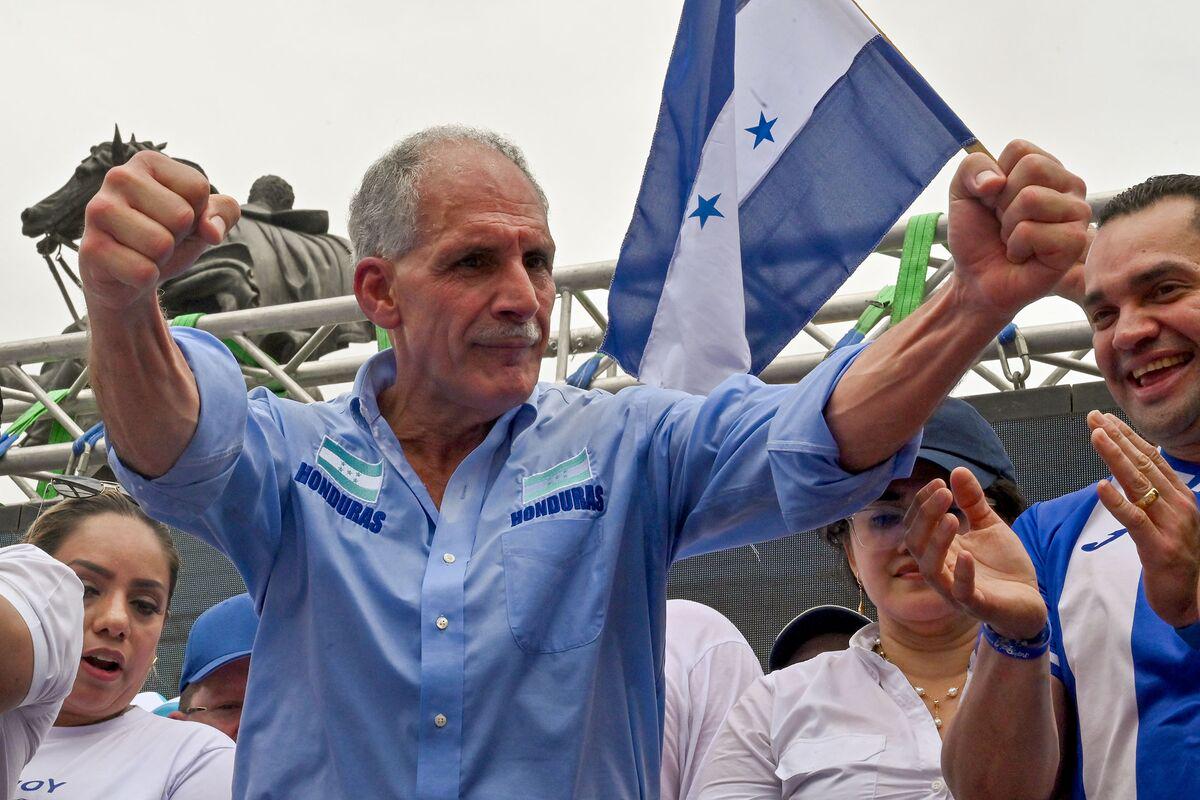
>Honduran opposition presidential candidate Nasry Asfura vowed to forge closer ties with the US, restore relations with Taiwan and capitalize on the skills of returning migrants to revitalize the economy.
>The markedly pro-US platform of the conservative presidential hopeful would undo the leftist policies of incumbent president Xiomara Castro, reinforcing a right-wing lurch across Latin America. Rather than condemn the Trump administration’s deportations of migrants as Castro has done, Asfura is promoting a full-throated embrace in the name of economic opportunity.
>Asfura, a former mayor of the Honduran capital Tegucigalpa who lost to Castro in the 2021 presidential race, said migrants come home with skills in construction and agriculture in addition to capital to start their own businesses.
>“I am not wishing for our countrymen to be deported, but there is an opportunity here,” Asfura said in an interview from Washington, DC, where he met with investors, think tanks and congressional staffers. “They return with capital and significant work experience, and they are a powerful source of small and medium business owners.”
>Asfura pledged to slash regulations to allow returning migrants to speed up registration of new businesses and ease their access to credit. His administration would also encourage foreign private investment in large infrastructure projects that would leverage their talents.
>“We have to find ways to generate opportunities for them,” Asfura said.
>His government would seek to attract US multinationals to upgrade ports on the Central American country’s Caribbean and Pacific coasts, build a railway system to connect them and expand highways to boost the volume of global trade that transits Honduras, he said. Among his proposed investment projects are a regional gas pipeline and other infrastructure to diversify the energy mix away from bunker fuel.
>Asfura would seek to cap US trade tariffs on Honduras at 10%, which he said is a level low enough to remain competitive over countries like Mexico and Brazil, where Trump is threatening a 50% tariff.
>In line with his Trump-adjacent policies, Asfura would move Honduras closer to Taiwan at the expense of China. The Castro administration established diplomatic relations with Beijing in 2023, cutting off ties with Taipei. Asfura promised to review the agreements the government signed with China and said the country was “100 times better off” when it had relations with Taiwan, receiving more aid and trade than it does from China.
>“I have a clear triangle in mind: the United States, Israel and Taiwan,” Asfura said. “With that triangle of friendly countries, we can build a great team that will create solutions for the country.”
>The Honduran economy is forecast to grow 3.3% this year and 3.4% in 2026, according to the International Monetary Fund. The Castro government signed an $850 million program with the IMF in 2023 and completed the program’s third review in June. Moody’s affirmed the country’s credit rating this month at B1 with a stable outlook, citing reduced public debt.
>The Central American country will hold its presidential election on November 30 and the candidate with the most votes will win. Castro is not eligible for reelection. Her leftist Libre party nominated defense minister and former finance minister Rixi Moncada as its candidate. Sportscaster Salvador Nasralla, a centrist former vice president and the runner-up in the 2017 elections, is also competing to succeed Castro.

1 Comment
>Honduran opposition presidential candidate Nasry Asfura vowed to forge closer ties with the US, restore relations with Taiwan and capitalize on the skills of returning migrants to revitalize the economy.
>The markedly pro-US platform of the conservative presidential hopeful would undo the leftist policies of incumbent president Xiomara Castro, reinforcing a right-wing lurch across Latin America. Rather than condemn the Trump administration’s deportations of migrants as Castro has done, Asfura is promoting a full-throated embrace in the name of economic opportunity.
>Asfura, a former mayor of the Honduran capital Tegucigalpa who lost to Castro in the 2021 presidential race, said migrants come home with skills in construction and agriculture in addition to capital to start their own businesses.
>“I am not wishing for our countrymen to be deported, but there is an opportunity here,” Asfura said in an interview from Washington, DC, where he met with investors, think tanks and congressional staffers. “They return with capital and significant work experience, and they are a powerful source of small and medium business owners.”
>Asfura pledged to slash regulations to allow returning migrants to speed up registration of new businesses and ease their access to credit. His administration would also encourage foreign private investment in large infrastructure projects that would leverage their talents.
>“We have to find ways to generate opportunities for them,” Asfura said.
>His government would seek to attract US multinationals to upgrade ports on the Central American country’s Caribbean and Pacific coasts, build a railway system to connect them and expand highways to boost the volume of global trade that transits Honduras, he said. Among his proposed investment projects are a regional gas pipeline and other infrastructure to diversify the energy mix away from bunker fuel.
>Asfura would seek to cap US trade tariffs on Honduras at 10%, which he said is a level low enough to remain competitive over countries like Mexico and Brazil, where Trump is threatening a 50% tariff.
>In line with his Trump-adjacent policies, Asfura would move Honduras closer to Taiwan at the expense of China. The Castro administration established diplomatic relations with Beijing in 2023, cutting off ties with Taipei. Asfura promised to review the agreements the government signed with China and said the country was “100 times better off” when it had relations with Taiwan, receiving more aid and trade than it does from China.
>“I have a clear triangle in mind: the United States, Israel and Taiwan,” Asfura said. “With that triangle of friendly countries, we can build a great team that will create solutions for the country.”
>The Honduran economy is forecast to grow 3.3% this year and 3.4% in 2026, according to the International Monetary Fund. The Castro government signed an $850 million program with the IMF in 2023 and completed the program’s third review in June. Moody’s affirmed the country’s credit rating this month at B1 with a stable outlook, citing reduced public debt.
>The Central American country will hold its presidential election on November 30 and the candidate with the most votes will win. Castro is not eligible for reelection. Her leftist Libre party nominated defense minister and former finance minister Rixi Moncada as its candidate. Sportscaster Salvador Nasralla, a centrist former vice president and the runner-up in the 2017 elections, is also competing to succeed Castro.