
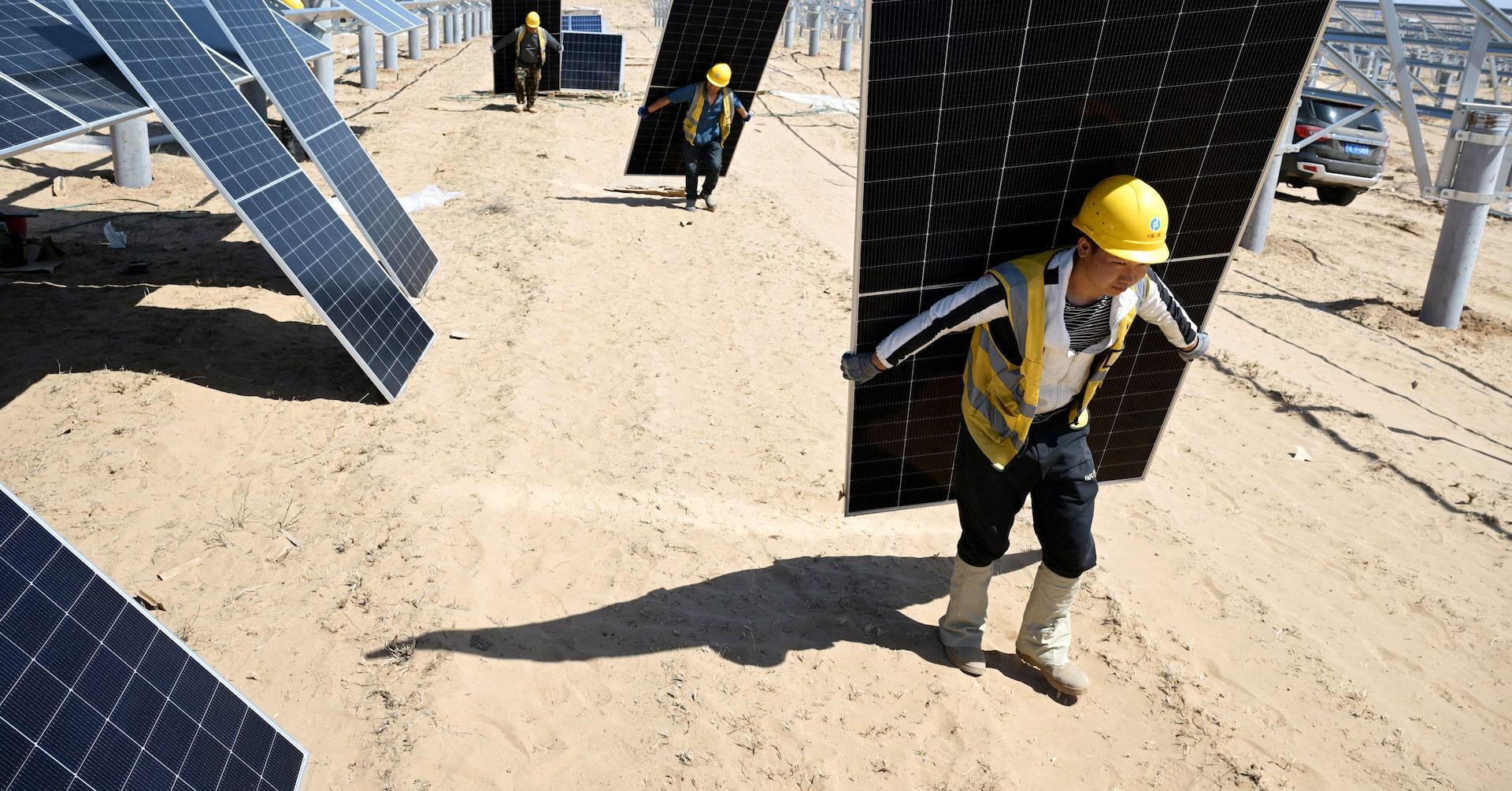
China's biggest solar firms shed nearly one-third of their workforces last year. The job cuts illustrate the pain from the vicious price wars being fought across Chinese industries, including solar and electric vehicles, as they grapple with overcapacity and tepid demand. The world produces twice as many solar panels each year as it uses, with most of them manufactured in China.
Analysts say the previously unreported job losses were likely a mix of layoffs and attrition due to cuts to pay and hours as companies sought to stem losses. Layoffs are politically sensitive in China, where Beijing views employment as key to social stability. Longi Green Energy, Trina Solar , Jinko Solar, JA Solar, and Tongwei, collectively shed some 87,000 staff, or 31% of their workforces on average last year, according to a Reuters review of employment figures in public filings. Other than a 5% cut acknowledged by Longi last year, none of the firms mentioned above have announced any job cuts or responded to questions from Reuters.
The industry has been facing a downturn since the end of 2023," said Cheng Wang, an analyst at Morningstar. "In 2024, it actually got worse. In 2025, it looks like it's getting even worse."Since 2024, more than 40 solar firms have delisted, gone bankrupt or been acquired, according to a presentation by the photovoltaic industry association in July.
While analysts say it is unclear whether job cuts continued this year, Beijing is increasingly signalling it intends to intervene to cut capacity, sending polysilicon prices soaring nearly 70% in July while solar panel prices have increased more modestly.Major polysilicon producer GCL told Reuters on Thursday that top producers plan to set up an OPEC-like entity to control prices and supply.
Officials in eastern China's Anhui province, a manufacturing hub, told solar company executives in June to stop adding new manufacturing and shut production lines operating at under 30% capacity, according to two industry sources who declined to be identified due to the sensitivity of the matter.
But many provincial governments are likely to be reluctant to crack down hard on overcapacity, analysts say. These officials are scored on jobs and economic growth and are loathe to see local champions sacrificed to meet someone else's target. Trina Solar's chairman told an industry conference in June that new projects had begun this year despite the NDRC calling for a halt in February. The foot-dragging reflects the scale of the cull required. Jefferies analyst Alan Lau estimated at least 20-30% of manufacturing capacity would have to be eliminated for companies to return to profitability.
Posted by -Maestral-