
The second Trump administration is reportedly considering ways to bypass existing U.S. laws that restrict the construction of military vessels to domestic shipyards, so that American warships can instead be built in allied countries like South Korea. The Jones Act and Byrnes–Tollefson Act both require that U.S. merchant ships and naval vessels be constructed within the United States. Although these laws cannot easily be repealed, workarounds using executive orders by President Trump have long been discussed, and now the U.S. and South Korea appear poised to formalize discussions on this issue.
According to the South Korean government on the 28th, the Defense Acquisition Program Administration (DAPA) will convene a working group meeting with the U.S. Navy in mid-next month to discuss regulatory easing to enable bilateral cooperation in shipbuilding. The focus will be on specific measures that could be incorporated into executive orders or administrative directives, rather than amending the Jones or Byrnes–Tollefson Acts directly.
This working group follows a meeting on the 8th in Washington, D.C., between Kang Hwan-seok, Deputy Commissioner of DAPA, and Jason Porter, U.S. Assistant Secretary of the Navy for Research, Development, and Acquisition. After the meeting, DAPA announced that “both countries recognized the need to ease regulations, such as by amending the Byrnes–Tollefson Act, to expand cooperation in shipbuilding and MRO (maintenance, repair, and overhaul).”
DAPA also explained that it proposed several cooperative models to the U.S. Navy, including producing and delivering block modules of naval vessels in Korea and then conducting final assembly in the U.S., so that South Korea’s shipbuilding industry could contribute to sustaining and enhancing U.S. naval power.
The Jones Act requires that all ships and naval vessels operating between U.S. ports be built in the United States and crewed by Americans. The Byrnes–Tollefson Act likewise prohibits U.S. naval ships, hulls, and key components from being constructed overseas. These laws were intended to protect U.S. shipbuilding for national security, but in practice they have been criticized for weakening America’s industrial competitiveness.
Although some U.S. lawmakers have recently introduced bills like the “Open America’s Waters Act” to repeal the Jones Act, it is considered unlikely such legislation will pass soon. Thus, bypassing restrictions through executive action has been the more practical option under consideration by both countries.
A South Korean government official said, “We will continue whole-of-government support to expand South Korea–U.S. cooperation in shipbuilding, working closely with companies and agencies on contract bidding and related matters.”
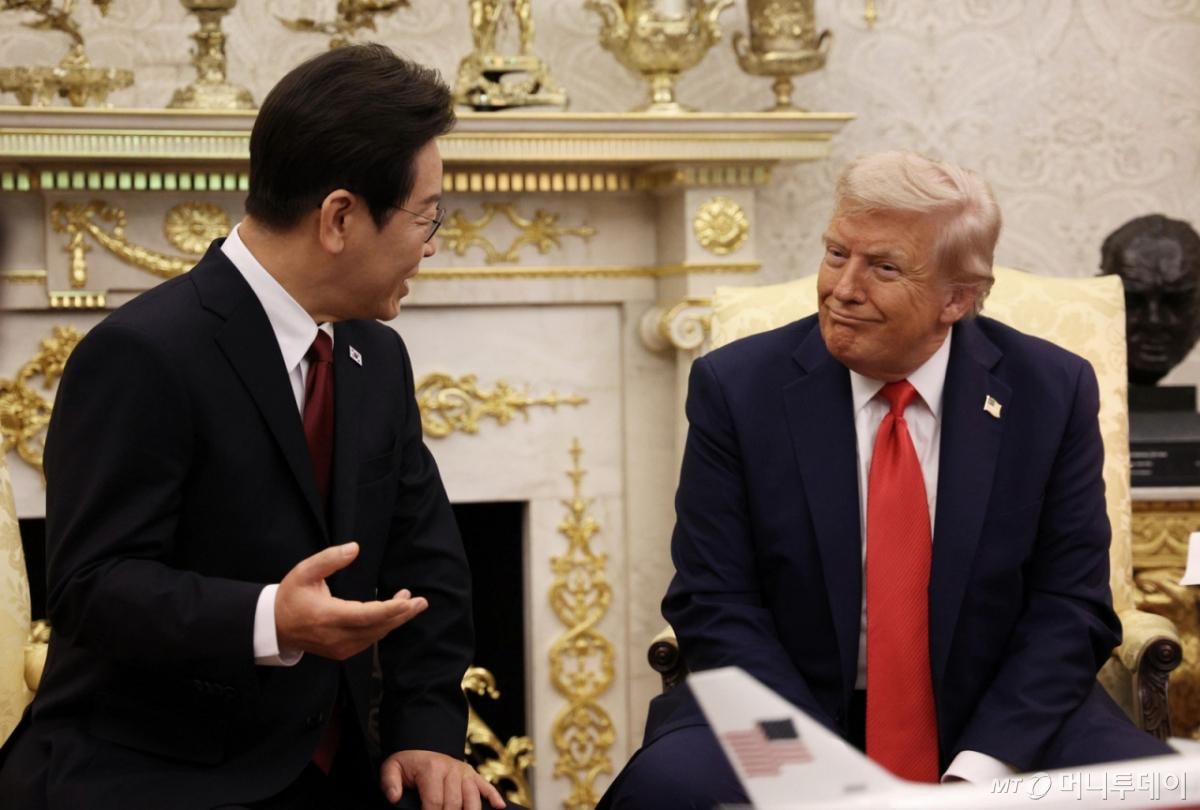
Meanwhile, at the U.S.–South Korea summit held on the 25th in Washington, President Trump declared, “America will buy ships from Korea.” Analysts believe he made this remark because his administration already has regulatory easing measures in mind.
Posted by Freewhale98
6 Comments
Common Korea W
Monkey paw curls:
The US de facto gets rid of the Jones act, but it is now hinged entirely on acquiescing to the legal validity of the Imperial Executive’s Rule-by-Executive-Order
Just pass a law to repeal it Jesus Christ
Wtf I love executive overreach now
Great example of what happens when Congress fails to get off its ass and embraces the gridlock. Instead of real legal reform, we get executive overreach. The irony is that the best ( while still terrible) argument for the jones act and its partner act – national security – is the part being directly challenged by this overreach.
Jones Act Delenda est.
AAAAAAAHHHHHHHHH