
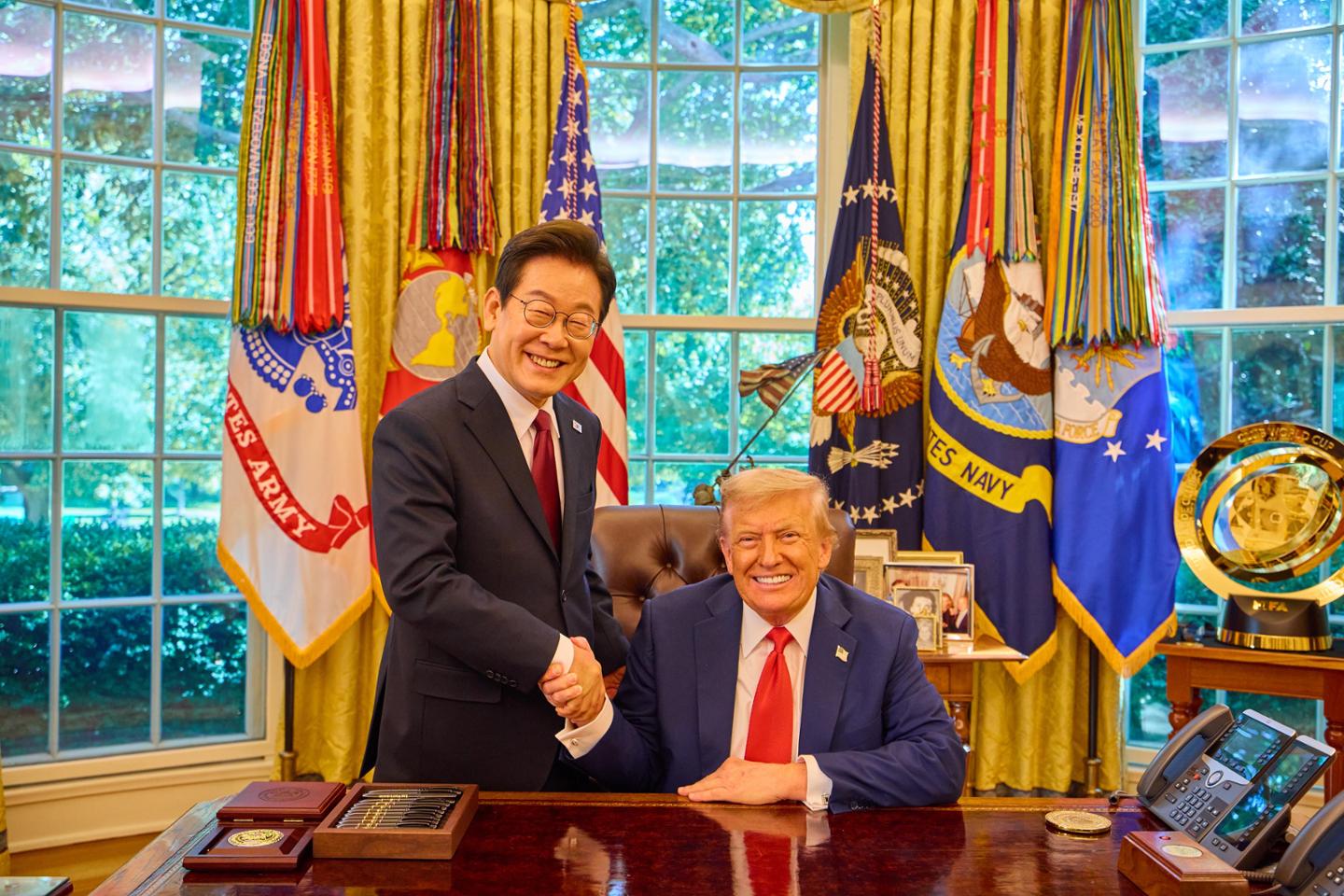
“Choosing a Path More Conservative Than Conservatives”
This is how the diplomatic community has evaluated President Lee Jae-myung after his whirlwind six-day trip to the United States and Japan.
Breaking with the precedent of past administrations that traditionally visited the U.S. first, President Lee chose Japan for his inaugural overseas trip. Moreover, the hallmarks of progressive administrations—raising historical grievances or pursuing “strategic ambiguity”—were notably absent from his Japan and U.S. summits. Even while being briefed in advance on the possibility of North Korean leader Kim Jong-un attending China’s Victory Day celebrations, Lee reaffirmed that “Korea can no longer pursue the old formula of ‘security with the U.S., economy with China,’” and stressed that the U.S.–ROK alliance remains the foundation of South Korea’s diplomacy.
This was a marked departure from “politician Lee Jae-myung,” who before his election had remarked, “We say xiexie to China and xiexie to Taiwan,” or suggested that “pro-Japanese collaborators maintained power by working with the U.S. occupation forces.” In contrast, the newly released Korea–Japan joint statement all but sidelined the history issue in a “low-key” manner, surprising many.
Why, then, were the results of these summits—pitched as Lee’s first test of “pragmatic, national-interest–focused diplomacy”—so distinctly conservative?
Diplomacy as a Game of Go
Diplomacy, like the board game Go, is about survival of the fittest. To expand one’s influence, you must build more “houses” (alliances) while weakening those of your adversaries. Strength, however, lies in stamina: without the diplomatic “fitness” of intelligence, defense, and supportive allies, no country can control the board.
Yet this “fitness” is under strain. With the Trump administration in Washington destabilizing alliances by demanding tariffs and higher defense spending, and with North Korea’s nuclear arsenal advancing amid deepening Russia–North Korea military ties, Seoul faces a precarious environment. For Lee, the answer has been to leverage Japan.
One former senior diplomat observed:
“Even Japanese Prime Minister Yasuhiro Nakasone visited Korea before meeting Ronald Reagan. Korea and Japan are America’s core Asian allies against China’s rise, and Japan knew the U.S. would welcome that. That’s how the Ron–Yasu honeymoon was forged.”
By visiting Japan first before meeting President Trump, Lee attempted to replicate this dynamic, seeking an “Lee–Trump bond.” The strategy largely worked: though no joint communiqué emerged—prudent given Trump’s volatility—Lee secured goodwill not only from Trump personally but also from key U.S. policymakers. This “new normal” of relationship management by cultivating goodwill rather than formal documents gave Seoul a degree of stability.
The Cost: History Issues Deferred
The price, however, was placing historical disputes with Japan on the back burner. The joint statement with Prime Minister Shigeru Ishiba avoided direct references to forced labor or comfort women, signaling a willingness to focus on future cooperation. For Lee, reviving South Korea’s “diplomatic fitness” via the U.S.–ROK alliance and Korea–Japan ties required downgrading historical grievances to a secondary priority.
But the immediate outcome was stark: the revival of U.S.–ROK–Japan trilateralism was swiftly met with the public confirmation of a North Korea–China–Russia bloc. China announced that Kim Jong-un would attend its Victory Day celebrations—his first participation in such a major international event—seated beside Xi Jinping and Vladimir Putin. This visual underscored both the strength of the trilateral adversary bloc and the elevated strategic stature of nuclear-armed North Korea, casting a shadow over Korea’s security.
This raises uncomfortable questions: What does Korea actually gain by downplaying historical disputes for stronger U.S.–Japan ties? Why did Lee feel compelled to reverse his earlier statements and pursue diplomacy “more conservative than conservatives”? And how should Seoul interpret Kim Jong-un’s high-profile debut on the world stage in Beijing?
“Diplomatic Stamina” as Leverage
As experts note, the ultimate goal is to restore dialogue aimed at denuclearization and peace on the Korean Peninsula. Presidential National Security Director Wi Sung-lac explained in a CBS radio interview:
“We are trying to revive dialogue toward peaceful denuclearization. That requires easing tensions and building trust first. That’s why we’ve proposed talks to the U.S. and are waiting for North Korea’s response.”
In other words, Lee’s conservative diplomatic maneuvers may ultimately serve as a lever for engaging Pyongyang and stabilizing the region.
Risks of Overreach
Yet history cautions that without patience and consistency, alliances can become liabilities rather than assets. Under President Yoon Suk-yeol, aggressive rhetoric toward China and Russia, combined with unilateral concessions to Japan, deepened North Korea–Russia ties and left Seoul isolated.
Lee’s early diplomacy has so far won public support at home, but if Seoul allows itself to be swayed by external pressures, today’s “lever” could quickly turn into tomorrow’s “weakness.” Success in diplomacy, as in Go, lies in stamina, discipline, and the long view.
Posted by Freewhale98