
China ups surveillance of troubled people to quell rising unrest | Communist Party’s new ‘society work’ agency helps with emotional and economic setbacks while monitoring dissatisfied people
Posted by ONETRILLIONAMERICANS
China ups surveillance of troubled people to quell rising unrest | Communist Party’s new ‘society work’ agency helps with emotional and economic setbacks while monitoring dissatisfied people
Posted by ONETRILLIONAMERICANS
1 Comment
> A 68-year-old man in China’s Zhejiang province barged into a local government office last year and declared he couldn’t go on living. His neighbors were bullying him, he claimed, and he threatened to take revenge.
> The man had previously served a prison term. He was financially strained, estranged from his family and had frequent conflicts with neighbors. He was what Chinese authorities call a “five-loss individual”: someone with life setbacks, investment failures, family disputes, mental disorders or “emotional imbalance.”
> Authorities swung into action. A sprawling new Communist Party agency, the Central Society Work Department, arranged a support plan that delayed some of the man’s debt repayment deadlines and provided counseling and other benefits. Within weeks, the local society-work office declared on social media that the man’s life was “back on track,” without elaborating.
> Chinese leader Xi Jinping uses “society work” as an umbrella term for the Communist Party’s expanding efforts to reach left-behind communities and social castoffs. While helpful to individuals, the program’s overarching goal is to ensure that the problems don’t turn into threats to public order.
> In the process, officials are cranking up the machinery of state surveillance to monitor socially fragile or dissatisfied people.
> Some top officials at the new society-work department were plucked from state security and the police. Many of its local offices are directly managed by law-enforcement chiefs or placed under their supervision.
> Authorities asked party secretaries of each community to screen for people who have suffered losses, run background checks on them and report their information to a higher-level agency twice a month, according to a screenshot that appeared to be an order in a work chat group that was posted in December by a Yunnan-based user on China’s Xiaohongshu social-networking platform.
> Companies have been asked to monitor people deemed to have suffered life setbacks, according to online directives by local government and law enforcement.
> Authorities are also making use of China’s “grid management” system, an approach dating back to the early 2000s that divides communities into sections of several hundred households, each overseen by a “grid manager” who visits residents regularly and gathers data on their lives, such as contact details, employment status and housing conditions. Among other things, they promote government policies, monitor social sentiment and look for possible security threats.
> Some grid managers are being asked to track people who are distressed over personal losses, and report issues up the chain before they fester into bigger problems, according to local government and media reports.
> The fundamental principle, Xi has said, is to ensure that “small problems don’t leave the village, big problems don’t leave the town, and contradictions don’t get handed to higher ups.”
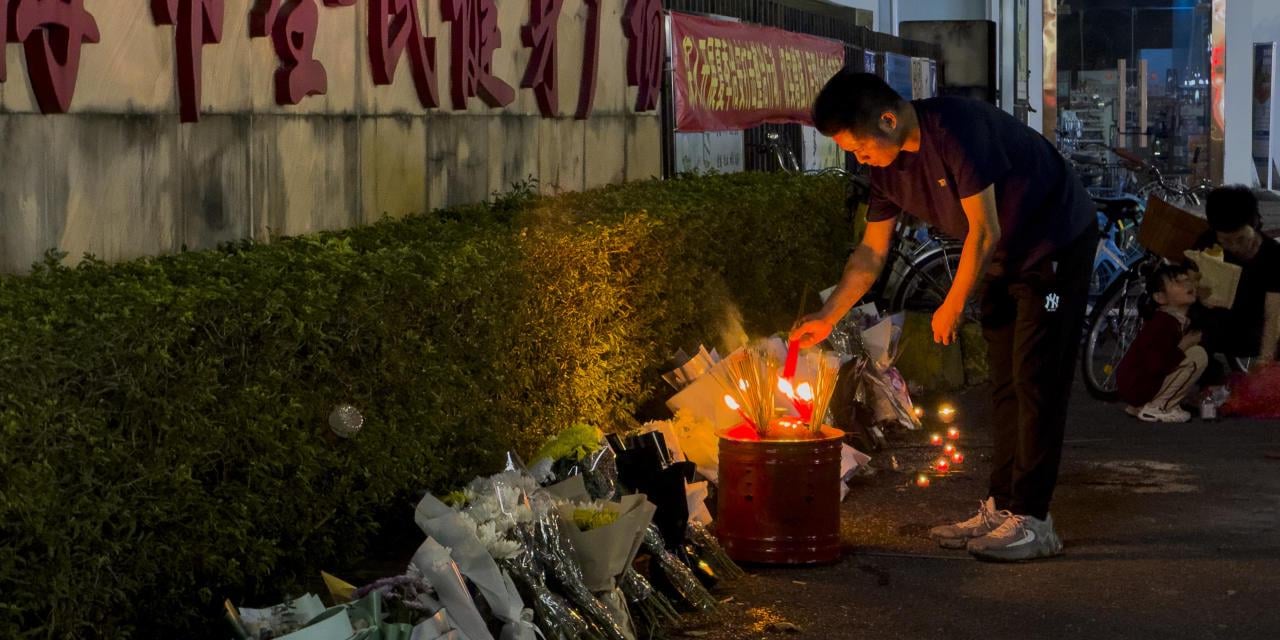
> China’s economy is struggling under the pressure of trade tensions, a busted property market and other challenges. A series of violent attacks, including mass stabbings against seemingly random targets and cars ramming into crowds, has gripped national attention and prompted authorities to scramble for ways to address problems.
> For Communist Party supporters, the efforts show how the government proactively responds to individuals’ needs, particularly when times are tough.
> For critics of the party, it’s a reminder of its absolute need for social control, and its willingness to use state power to tamp down any signs of unrest.
> “It’s not about rescuing the so-called ‘five losses’ at all, it’s about control,” said a man in Shanghai who went bankrupt last year and had his assets frozen after being caught in a legal battle with his former employer.
> He said he fears getting labeled as a five-loss individual because it could lead to increased monitoring of his family. Such people “are seen as potential terrorists,” he said.
> The Central Society Work Department and the local society-work office in Zhejiang province didn’t respond to requests for comment. The office removed the social-media post about the man it said it helped.
> Key to the Communist Party’s effort is the Central Society Work Department, created in 2023.
Currently headquartered in central Beijing, minutes from the Zhongnanhai leadership compound, the department helps organize and oversee the efforts of millions of party members, social workers and volunteers who are involved in government projects to engage with and provide support to underprivileged groups.
It runs social-media accounts and an official newspaper, China Society Work Daily, that tout the department’s outreach.
> Sometimes, the job is simply to show residents a good time and remind them the party cares. A district in the eastern city of Hangzhou organized a concert in January ahead of the Lunar New Year to help residents “feel in their hearts the warmth and power that music brings.”
> Society-work offices also step in to foster what the party calls “spiritual civilization,” an umbrella term for good morals, civic-mindedness and community spirit.
> These efforts put the party more squarely in charge of matters once left to residents’ committees, which are meant to be semiautonomous groups that managed grassroots affairs with help from local governments.
> There is also an increasingly overt state security element behind such efforts.
> Local officials in the northwestern county of Weiyuan marked an International Volunteer Day by having volunteers go out to inspect fire-safety equipment and teach residents about recycling—as well as distribute pamphlets about China’s national security law, which sets expansive definitions on threats that include subversion, terrorism and cybercrime.
> In the eastern city of Changzhou, society-work representatives teamed up with security officials one Saturday morning to run a “Political and Legal Affairs Milk Tea Stand,” enticing residents with free beverages and imbuing them with lessons on avoiding cults and drug use. “Residents could feel the care and warmth of the rule of law while enjoying a delicious drink,” a local society-work official said on social media.
!ping CHINA&SNEK