
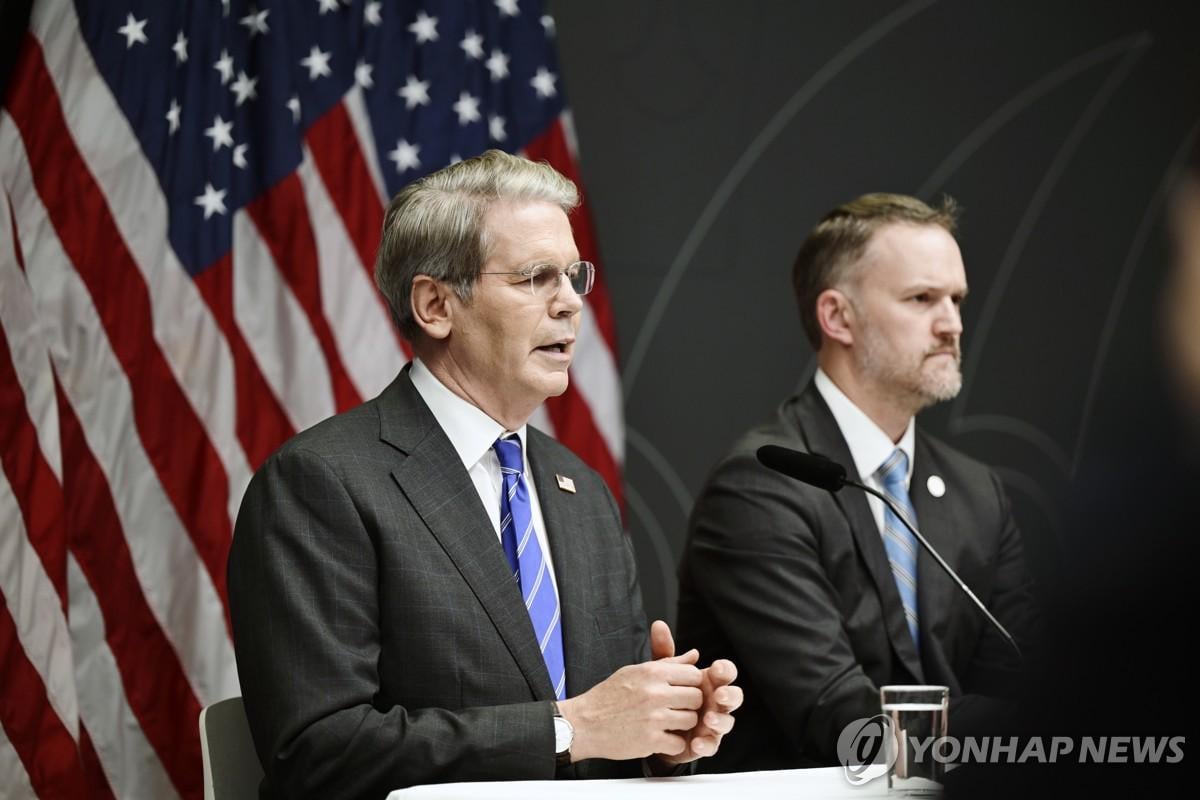
The administration of U.S. President Donald Trump has revealed concerns that if the courts suspend the implementation of reciprocal tariffs, countries such as South Korea and Japan, which have reached broad trade framework agreements with the United States, might refuse to uphold those deals.
Jamieson Greer, U.S. Trade Representative (USTR), stated in a testimony submitted to the U.S. Court of Appeals for the D.C. Circuit on the 29th of last month that since the court began hearings on the case, the administration has announced trade agreements with the European Union (EU), Indonesia, the Philippines, Vietnam, Japan, South Korea, and the United Kingdom.
Greer explained: “As of the date of this testimony, the United States and these trading partners are working quickly and diligently to convert these framework agreements into legally binding documents. The President expects to continue finalizing these agreements over the coming months.”
He further stressed: “None of these agreements would have been possible without the imposition of tariffs to regulate imports and bring other countries to the negotiating table. The success of negotiations depends on the credible threat that tariffs will be enforced immediately.”
This testimony was submitted to the court on the 29th.
That same day, the court ruled that while the International Emergency Economic Powers Act (IEEPA), which President Trump cited as the basis for reciprocal tariffs, does give the president authority to regulate imports, it does not extend that authority to imposing tariffs by executive order.
The Trump administration submitted its testimony as part of a request to suspend the ruling’s effect, arguing that significant harm could occur if the ruling went into force before the administration could appeal to the Supreme Court.
The court granted a stay of its ruling until October 14 to allow the administration’s appeal, and the Trump administration plans to bring the case before the Supreme Court.
In a statement, Commerce Secretary Howard Rutnick argued that if tariffs based on IEEPA were halted, it would cause “enormous and irreparable damage to the United States, U.S. foreign policy, and national security both now and in the future.” He added that such a ruling would threaten the United States’ broad strategic interests at home and abroad, lead foreign trading partners to retaliate or withdraw from trade agreements, and derail important ongoing negotiations.
Treasury Secretary Scott Bessent emphasized: “Tariff pressure is extremely important for the President’s ability to bring other countries to the negotiating table and to counter efforts by foreign trading partners to delay negotiations or impose retaliatory tariffs in order to distort competitive conditions for U.S. exporters.”
Secretary of State Marco Rubio asserted that halting tariffs based on IEEPA would negatively affect negotiations to end the war in Ukraine.
President Trump had invoked IEEPA when imposing a 25% tariff on India for importing Russian crude oil, arguing that such tariffs “will help secure peace and strengthen the President’s negotiating power to resolve the national emergency related to Russia’s actions in Ukraine.”
Posted by Freewhale98
6 Comments
Then get legal congressional authorization for them rather than doing them illegally 🙂
How about not starting a trade war in the first place? Then, there is no need for emergency power as there wouldn’t be retaliation.
Did blud die or what
Then avoid building your whole rethoric on such legally shakey fundations lmao
Then have the tariffs go through congress if you want a stronger foundation for them. This whole administration has some allergic reaction to do anything with congress.
I HATE PRESIDENTIALISM
I HATE PRESIDENTIALISM
I HATE PRESIDENTIALISM
I HATE PRESIDENTIALISM