>Our undercover reporter Ana, and 34 other recruits, were asked to attend secret online seminars which would “prepare operatives”. With titles like “How to go from your kitchen to national leader”, they seemed to serve as a vetting process. Ana and the others had to pass regular tests on what they had learned.
>Ms Juc told Ana she would be paid 3,000 Moldovan lei ($170, £125) a month to produce TikTok and Facebook posts in the run-up to the election, and that she would be sent the money from Promsvyazbank (PSB) – a sanctioned Russian state-owned bank which acts as the official bank for the Russian defence ministry, and is a shareholder in one of Ilan Shor’s companies.
>Inside the Telegram group, Ana and the BBC had access to previous instructions issued to participants. Initially, they had been asked for patriotic posts about historical figures in Moldovan history – but gradually the demands had become overtly political.
>Ana was asked to post unfounded allegations – including that Moldova’s current government is planning to falsify the election results, Moldova’s potential EU membership is contingent on its citizens becoming LGBTQ+, and that President Sandu is facilitating child trafficking.
>The network, we concluded, is made up of at least 90 TikTok accounts – some masquerading as news outlets – which have posted thousands of videos totalling more than 23 million views and 860,000 likes since January. Moldova’s population is just 2.4 million.
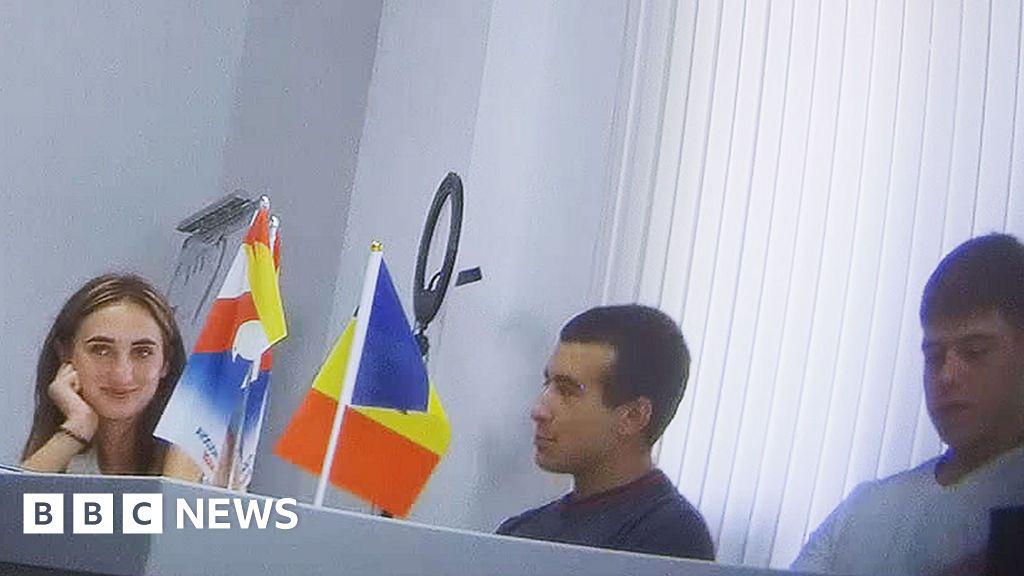
>Our evidence also suggests the network our reporter joined is being bank-rolled from Russia. Ana overheard – and filmed – Alina Juc on the phone asking for money from Moscow.
>”Listen, can you bring money from Moscow… I just need to give my people their salaries,” we filmed her saying.

1 Comment
>Our undercover reporter Ana, and 34 other recruits, were asked to attend secret online seminars which would “prepare operatives”. With titles like “How to go from your kitchen to national leader”, they seemed to serve as a vetting process. Ana and the others had to pass regular tests on what they had learned.
>Ms Juc told Ana she would be paid 3,000 Moldovan lei ($170, £125) a month to produce TikTok and Facebook posts in the run-up to the election, and that she would be sent the money from Promsvyazbank (PSB) – a sanctioned Russian state-owned bank which acts as the official bank for the Russian defence ministry, and is a shareholder in one of Ilan Shor’s companies.
>Inside the Telegram group, Ana and the BBC had access to previous instructions issued to participants. Initially, they had been asked for patriotic posts about historical figures in Moldovan history – but gradually the demands had become overtly political.
>Ana was asked to post unfounded allegations – including that Moldova’s current government is planning to falsify the election results, Moldova’s potential EU membership is contingent on its citizens becoming LGBTQ+, and that President Sandu is facilitating child trafficking.
>The network, we concluded, is made up of at least 90 TikTok accounts – some masquerading as news outlets – which have posted thousands of videos totalling more than 23 million views and 860,000 likes since January. Moldova’s population is just 2.4 million.
>Our evidence also suggests the network our reporter joined is being bank-rolled from Russia. Ana overheard – and filmed – Alina Juc on the phone asking for money from Moscow.
>”Listen, can you bring money from Moscow… I just need to give my people their salaries,” we filmed her saying.