
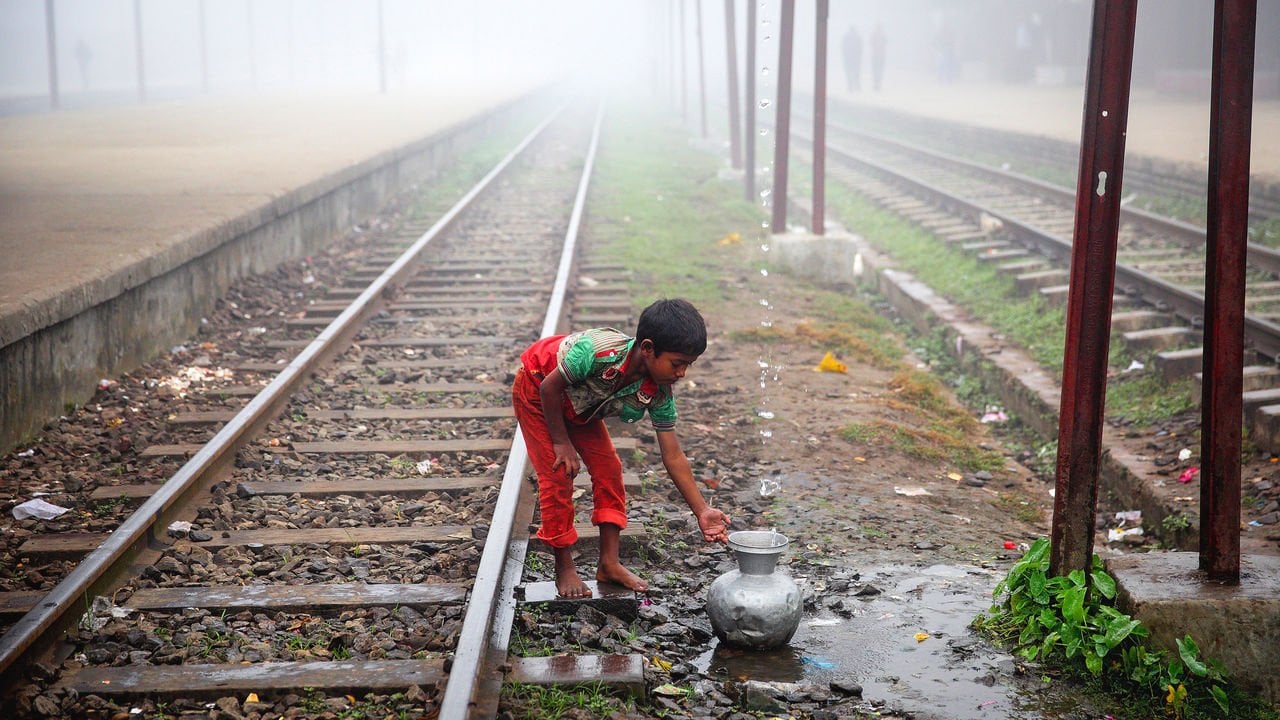
The poisonous global politics of water | Polarisation makes it harder to adapt to climate change
Posted by Independent-Low-2398
The poisonous global politics of water | Polarisation makes it harder to adapt to climate change
Posted by Independent-Low-2398
1 Comment
# Overview
> THE WATER thieves come at night. They arrive in trucks, suck water out of irrigation canals and drive off. This infuriates Alejandro Meneses, who owns a big vegetable farm in Coquimbo, a parched province of Chile. In theory, his landholding comes with the right to pour 40 litres of river-water a second on his fields. But thanks to drought, exacerbated by theft, he can get just a tenth of that, which he must negotiate with his neighbours. If the price of food goes up because farmers like him cannot grow enough, “there will be a big social problem,” he says.
> The world’s water troubles can be summed up in six words: “too little, too much, too dirty”, says Charlie Iceland of the World Resources Institute (WRI), a think-tank. Climate change will only aggravate the troubles. Already, roughly half of humanity lives under what the WRI calls “highly water-stressed conditions” for at least one month a year.
> Adapting will require not only new technology but a new politics. Villages, regions and countries will need to collaborate to share scarce water and build flood defences. The needs of farmers, who use 70% of the world’s freshwater, must be balanced with those of the urbanites they feed, as well as industry. In short, a politics of trust, give-and-take and long-term planning is needed. Yet the spread of “them-and-us” demagoguery makes this harder. A global study by Jens Marquardt and Markus Lederer of the University of Darmstadt notes that populists stir up anger, sow distrust of science and dismiss climate policies as the agenda of liberal elites.
# Chile (too little)
> In Chile, “too little” is becoming a crisis, for which politics is nowhere close to finding a solution. It is the most water-stressed country in South America. “Santiago [the capital] is OK now but in ten years it might not be,” warns Jessica López, the public-works minister.
> For centuries, Chileans who wanted water simply took it from streams and rivers, or sank wells to pump groundwater. But as parts of the country dry up, rules written in wetter times are increasingly out of date. Intense distrust between left and right—in a country that has seen massive protests in recent years—makes them hard to revise.
> Conservative governments granted many landowners “water rights”, allowing them to pump a generous amount each day, for free and for ever. Today, the total volume of granted water rights far exceeds what can sustainably be extracted. So farmers like Mr Meneses have had to sit down with their local water association and agree on how much everyone can pump. Yet some people cheat, sinking illicit boreholes. Tension between big farmers, small farmers and villagers is high. “We’re surrounded by farms with illegal wells, and that’s why we have no water,” says Erica Díaz, a hard-up villager who relies on water trucks and recycles her washing-up water onto her vegetable patch.
# Kenya (too much)
> In April and May floods in Kenya were the worst in memory. Bridges, schools and railways were destroyed. Perhaps 300 people died. Following years of drought, the government was caught off-guard, says Kennedy Odede of SHOFCO, an NGO serving Kenya’s slums. “When it started raining, people were happy. Nobody was expecting there to be too much.”
> The government should have been better informed. Persistent drought paves the way for flooding, since the soil hardens and the water has nowhere to go but sideways. Kenya’s populist president, William Ruto, ignored warnings last year of impending floods.
> Benninah Nazau, a vegetable hawker in Mathare, a Nairobi slum, recalls rain pounding on her tin roof at 5pm on April 23rd. When she peered out, she saw tables and chairs swept along by the nearby river. By 1am the water was surging through her home. She grabbed her five children and took them to higher ground, unable to salvage any possessions. “It was life or death.” Neighbours were carried off in the deluge.
> Political dysfunction makes cities less resilient. Rules barring the construction of homes dangerously close to the river—such as Ms Nazau’s, which was only six metres—are ignored. Landowners bribe officials to look the other way when they flout planning codes. Builders pave over wetlands.
# Interstate conflict
> Tensions between states are common, too. As rivers grow more erratic, negotiations between downstream countries and upstream ones may grow more fraught. Dry countries (such as China and the Gulf states) are buying up farmland in Africa and the Americas to secure future supplies of food. In effect, they are importing vast quantities of water in the form of wheat and soyabeans. This could become a political flashpoint.
> Water wars between states are fortunately rare. But Egypt is furious about an Ethiopian dam that could disrupt its access to the Nile river, from which it gets nine-tenths of its water. Talks over how to share the water keep failing. Egyptian officials hint they might go to war. They may be bluffing, but no one can be sure.
# Migration
> Another thing that makes water policy hard is that many people—such as those whose homes are too costly to defend from floods, or whose crops wither—will eventually have to move. Chilean vineyards are already shifting south. Outback towns will shrink. Inundated Africans and Asians will keep migrating to cities or abroad.
> Rich countries may be able to help compensate those whose homes and fields are rendered worthless, but the process will be disruptive everywhere. Nonetheless, it should be manageable. The WRI estimates that solving the world’s water crises would cost 1% of GDP per year until 2030, and that every $1 invested in sensible ways to do so would yield $6.80 in benefits. However, getting the politics right will require calm, collaborative leadership, disproving the epigram attributed, perhaps erroneously, to Mark Twain: “Whisky’s for drinking; water’s for fighting.”
!ping ECO