
The GOP crackdown on free speech isn’t a big ideological change | What truly connects policy positions is people’s allegiance to others who self-identify in the same way
Posted by ONETRILLIONAMERICANS
The GOP crackdown on free speech isn’t a big ideological change | What truly connects policy positions is people’s allegiance to others who self-identify in the same way
Posted by ONETRILLIONAMERICANS
2 Comments
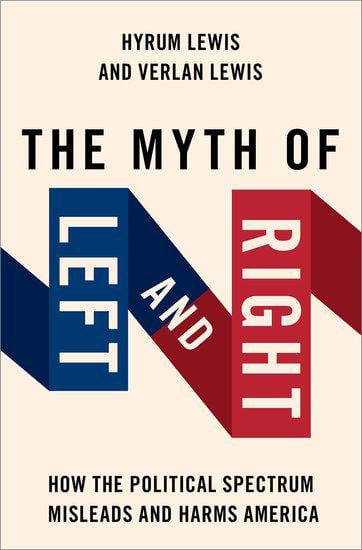
I’ve been enjoying the discourse over the past couple years about whether people’s political preferences are based on ideology/principles or just identity. Here’s an interesting political science article in that vein about a recent book called *The Myth of Left and Right*:
> Such a turnabout among Republicans would seem to suggest a fundamental ideological change. Is a party typically associated with limited government now embracing the expansion of government power to shut down political expression it doesn’t agree with?
> But a 2023 book suggests this is just more of the same in American politics. According to Hyrum and Verlan Lewis in *The Myth of Left and Right*, the two primary U.S. parties bundle together an unrelated set of political positions – and these positions change over time. Therefore, the authors point out, it doesn’t make sense to speak of the “left” and the “right.”
> But don’t people on “the left” share certain political positions – and aren’t supporters of the left logically opposed to some coherent worldview of those “on the right”? Is there such a thing as a fixed set of left-wing and right-wing principles? The authors’ unambiguous answer is a strong “No.” They explain:
> > In the realm of social policy alone there are hundreds of distinct and unrelated issues, such as free speech, immigration, gay marriage, drug restriction, racial justice, abortion, law enforcement, and religious liberty, and yet we still use the term “socially conservative” or “socially liberal” as if all these disparate issues were one. Is someone who favors both gay marriage and stronger border enforcement socially “right wing” or “left wing”? The question itself, like the model that frames it, is meaningless.
> Lewis and Lewis conclude that specific policy opinions or decisions to support candidates are not rooted in ideological essences, whether opposition vs. openness to change, or preferences for big versus limited government. Instead, what truly connects policy positions is people’s allegiance to others who self-identify in the same way (as being liberal or conservative; or on the left vs. the right). This social theory of ideology is also supported by research by John V. Kane, and a version of this was articulated in books by Christopher Achen and Larry Bartels and Donald Kinder and Nathan Kalmoe.
> **In other words, the political spectrum doesn’t reflect people’s philosophical values. Instead, it indicates their tribal commitments. “Ideologies do not define tribes, tribes define ideologies,” the Lewis brothers say.** To say that parties or factions define, or try to define, what counts as left-wing or right-wing is surely worth considering.
> The book looks at specific issues that may seem familiar but become quite striking when viewed together. These examples include dramatic changes in trade policy attitudes where parties reversed their positions in recent memory, to decades-old examples of reversals on foreign policy, and many others.
“a party typically associated with limited government”
I guess if you’ve been in a coma since before the Patriot Act this could be a description of the Republicans. It’s like when people talk about expecting them to do something about the deficit and I have to explain that Eisenhower isn’t around anymore.