I thought this was a brilliant and ultimately convincing deconstruction of something I had accepted uncritically: that contemporary society has fallen victim to a process that could be described as “polarization,” which implies radicalization from both sides. Really thought-provoking, well supported piece of media analysis, highly recommend it even if you’re skeptical (I was).
> Perhaps the best illustration of the “polarization” dogma’s pervasive influence on our current political and cultural discourse is the way even some of the otherwise admirable work from journalists and scholars suffers from “polarization”-induced nostalgia and distortion. Ezra Klein’s Why We’re Polarized, for instance – one of the better and certainly most well-known, most commercially successful examples amidst a sea of polarization books that target a broad audience – inadvertently provides a good case *against* polarization as the master diagnosis of our time. Ezra Klein is undoubtedly one of America’s most influential commentators, and he has strongly impacted what a self-proclaimed liberal, reasonable camp thinks for many years. Why We’re Polarized came out in early 2020 and received a ton of attention. I actually think people should indeed read it. The way Klein summarizes and synthesizes important work by political scientists, sociologists, and political psychologists on the conflicts that are shaping American society is quite instructive. **But the main problem with this book is that, fundamentally, what the author lays out is, by his own admission, not adequately interpreted as “polarization.”**
> In the final third of the book, Klein himself emphasizes that we are not looking at a radicalization on both sides of the political spectrum. He emphasizes the difference between the Right, entirely focused on the interests and sensibilities of white conservatives, and a Democratic coalition that is much more diverse – ideologically, racially and ethnically, and in terms of cultural sensibilities: “Sorting has made Democrats more diverse and Republicans more homogeneous. As a result, appealing to Democrats requires appealing to a lot of different kinds of people with different interests.” (p. 230) **As a matter of fact, Klein sees Democrats as extremely resistant to political extremism due to this heterogeneity of their supporters: “Democrats,” the author argues, “have an immune system of diversity and democracy.”** (p. 229)
> To account for these rather crucial differences between Left and Right, Klein employs the concept of “asymmetrical polarization.” But that doesn’t really solve the problem. Even when it comes with the qualifier “asymmetric,” the term “polarization” still implies *both sides* moving towards the extremes at least to a somewhat significant degree – and that is certainly how the term is used in the broader public discourse and understood in widely accepted parlance today. But based on the evidence Ezra Klein himself presents, there is no liberal version of Fox News and the rightwing media bubble, the Democrats don’t have a Trump, and there is no equivalent on the Left to the influence of reactionary and white nationalist forces inside the GOP. **If, by the authors’ own standards, de-emphasizing the concept of “asymmetric polarization” and instead foregrounding the idea of a radicalization of the conservative movement and the GOP would capture the central development in recent U.S. history and politics more adequately and precisely, why doesn’t he?**
> Such distortions characterize not just journalistic approaches and the broader polarization discourse in general, but also some of the most prominent scholarly work on American history and politics of the past few years. The nostalgic longing for a supposedly better, pre-polarization era shines through even in generally excellent work, such as Steven Levitsky’s and Daniel Ziblatt’s investigation of How Democracies Die. Published in 2018, How Democracies Die is arguably the most famous – and certainly one of the best – among the many books in the “liberal democracy in crisis” genre that have successfully targeted a wider audience since the beginning of the Trump era. Levitsky and Ziblatt are political scientists. **What positively distinguishes their analysis is that they provide a convincing dissection of how the pre-1960s “consensus” was based on racial exclusion and depended on a cross-party agreement amongst white men to leave white patriarchal supremacy intact. And yet, in the end, the authors still settle on a warning against the dangers of “polarization” and combine it with praise for the mid-twentieth-century consensus era that was supposedly characterized by “egalitarianism, civility, sense of freedom.”** (p. 231)
CinnamonMoney on
What people are truly decrying is the explicit politicization of virtually all occasions and events.
Kamala Harris’ laugh, gun violence’ response, speech, movies, sports,the internet, consumerism, tan suits, friendships, interracial couples in commercials, healthcare, Sidney Sweeney jeans, etc. Whether one had an opinion about these matters before, or one believes everything is political; there has been a raised consciousness at-large within our body-politic.
SenranHaruka on
I actually do agree with “Asymmetric Polarization”, it would be foolish to argue Occupy Wall Street didn’t successfully start moving the Democrats to the left, but that’s just become so normalized people forget it was ever not the case
Wealth taxation, vindictive approach to antitrust, and “billionaires should not exist”, are all extreme positions Democrats are increasingly normalizing amongst themselves and democratic politicians are increasingly pandering to. Democrats can’t themselves see it because they seem like logical outgrowths of how the fat billionaire class has destroyed American democracy and become a fascist tumor that any reasonable person would want to chemo to death, but any conversation with an uneducated small business owner will make you want to kill yourself but also show you that not a lot of people really see things that way! A lot of people are just like “huh? bezos did what? damn that’s interesting how’s my 401k doing?”
And that’s the thing about Polarization, the right is pretty sure based on the narrative they’ve been fed and version of recent history they understand as being their reality, that their extreme positions are justified, too! People don’t just become Nazis for fun, the right is sincerely convinced that the left is trying to subvert American institutions and use them to gaslight us all into accepting higher rates of crime, taxation, and homelessness in order to avenge the Soviet Union and Osama Bin Laden posthumously.

3 Comments
I thought this was a brilliant and ultimately convincing deconstruction of something I had accepted uncritically: that contemporary society has fallen victim to a process that could be described as “polarization,” which implies radicalization from both sides. Really thought-provoking, well supported piece of media analysis, highly recommend it even if you’re skeptical (I was).
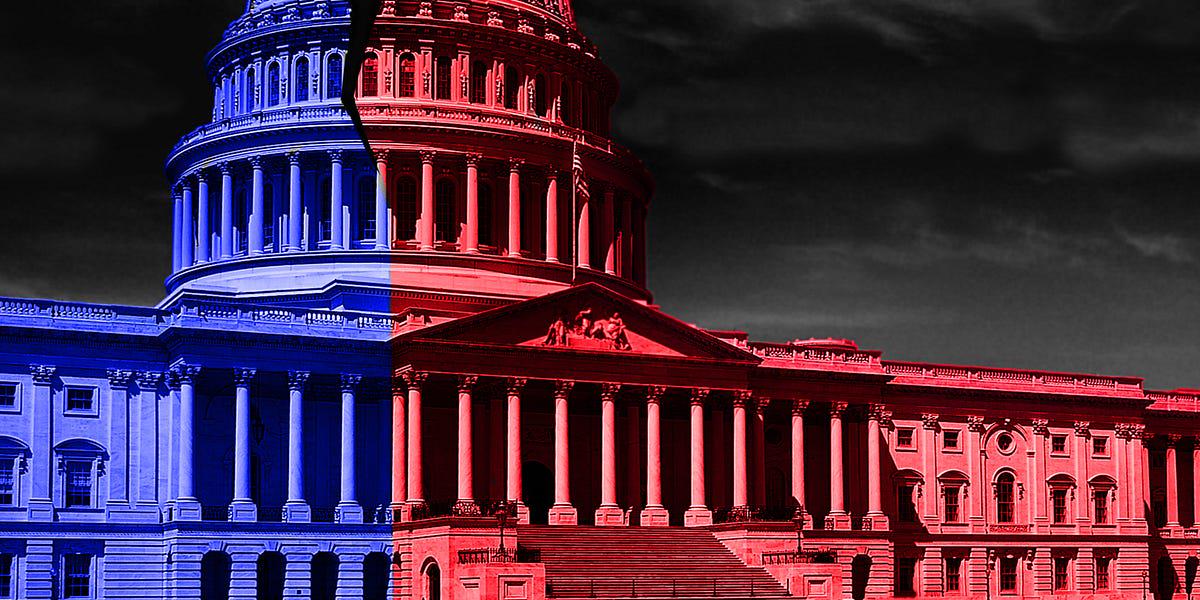
> # Thinkers keep calling one-sided radicalization “polarization”
> Perhaps the best illustration of the “polarization” dogma’s pervasive influence on our current political and cultural discourse is the way even some of the otherwise admirable work from journalists and scholars suffers from “polarization”-induced nostalgia and distortion. Ezra Klein’s Why We’re Polarized, for instance – one of the better and certainly most well-known, most commercially successful examples amidst a sea of polarization books that target a broad audience – inadvertently provides a good case *against* polarization as the master diagnosis of our time. Ezra Klein is undoubtedly one of America’s most influential commentators, and he has strongly impacted what a self-proclaimed liberal, reasonable camp thinks for many years. Why We’re Polarized came out in early 2020 and received a ton of attention. I actually think people should indeed read it. The way Klein summarizes and synthesizes important work by political scientists, sociologists, and political psychologists on the conflicts that are shaping American society is quite instructive. **But the main problem with this book is that, fundamentally, what the author lays out is, by his own admission, not adequately interpreted as “polarization.”**
> In the final third of the book, Klein himself emphasizes that we are not looking at a radicalization on both sides of the political spectrum. He emphasizes the difference between the Right, entirely focused on the interests and sensibilities of white conservatives, and a Democratic coalition that is much more diverse – ideologically, racially and ethnically, and in terms of cultural sensibilities: “Sorting has made Democrats more diverse and Republicans more homogeneous. As a result, appealing to Democrats requires appealing to a lot of different kinds of people with different interests.” (p. 230) **As a matter of fact, Klein sees Democrats as extremely resistant to political extremism due to this heterogeneity of their supporters: “Democrats,” the author argues, “have an immune system of diversity and democracy.”** (p. 229)
> To account for these rather crucial differences between Left and Right, Klein employs the concept of “asymmetrical polarization.” But that doesn’t really solve the problem. Even when it comes with the qualifier “asymmetric,” the term “polarization” still implies *both sides* moving towards the extremes at least to a somewhat significant degree – and that is certainly how the term is used in the broader public discourse and understood in widely accepted parlance today. But based on the evidence Ezra Klein himself presents, there is no liberal version of Fox News and the rightwing media bubble, the Democrats don’t have a Trump, and there is no equivalent on the Left to the influence of reactionary and white nationalist forces inside the GOP. **If, by the authors’ own standards, de-emphasizing the concept of “asymmetric polarization” and instead foregrounding the idea of a radicalization of the conservative movement and the GOP would capture the central development in recent U.S. history and politics more adequately and precisely, why doesn’t he?**
> Such distortions characterize not just journalistic approaches and the broader polarization discourse in general, but also some of the most prominent scholarly work on American history and politics of the past few years. The nostalgic longing for a supposedly better, pre-polarization era shines through even in generally excellent work, such as Steven Levitsky’s and Daniel Ziblatt’s investigation of How Democracies Die. Published in 2018, How Democracies Die is arguably the most famous – and certainly one of the best – among the many books in the “liberal democracy in crisis” genre that have successfully targeted a wider audience since the beginning of the Trump era. Levitsky and Ziblatt are political scientists. **What positively distinguishes their analysis is that they provide a convincing dissection of how the pre-1960s “consensus” was based on racial exclusion and depended on a cross-party agreement amongst white men to leave white patriarchal supremacy intact. And yet, in the end, the authors still settle on a warning against the dangers of “polarization” and combine it with praise for the mid-twentieth-century consensus era that was supposedly characterized by “egalitarianism, civility, sense of freedom.”** (p. 231)
What people are truly decrying is the explicit politicization of virtually all occasions and events.
Kamala Harris’ laugh, gun violence’ response, speech, movies, sports,the internet, consumerism, tan suits, friendships, interracial couples in commercials, healthcare, Sidney Sweeney jeans, etc. Whether one had an opinion about these matters before, or one believes everything is political; there has been a raised consciousness at-large within our body-politic.
I actually do agree with “Asymmetric Polarization”, it would be foolish to argue Occupy Wall Street didn’t successfully start moving the Democrats to the left, but that’s just become so normalized people forget it was ever not the case
Wealth taxation, vindictive approach to antitrust, and “billionaires should not exist”, are all extreme positions Democrats are increasingly normalizing amongst themselves and democratic politicians are increasingly pandering to. Democrats can’t themselves see it because they seem like logical outgrowths of how the fat billionaire class has destroyed American democracy and become a fascist tumor that any reasonable person would want to chemo to death, but any conversation with an uneducated small business owner will make you want to kill yourself but also show you that not a lot of people really see things that way! A lot of people are just like “huh? bezos did what? damn that’s interesting how’s my 401k doing?”
And that’s the thing about Polarization, the right is pretty sure based on the narrative they’ve been fed and version of recent history they understand as being their reality, that their extreme positions are justified, too! People don’t just become Nazis for fun, the right is sincerely convinced that the left is trying to subvert American institutions and use them to gaslight us all into accepting higher rates of crime, taxation, and homelessness in order to avenge the Soviet Union and Osama Bin Laden posthumously.