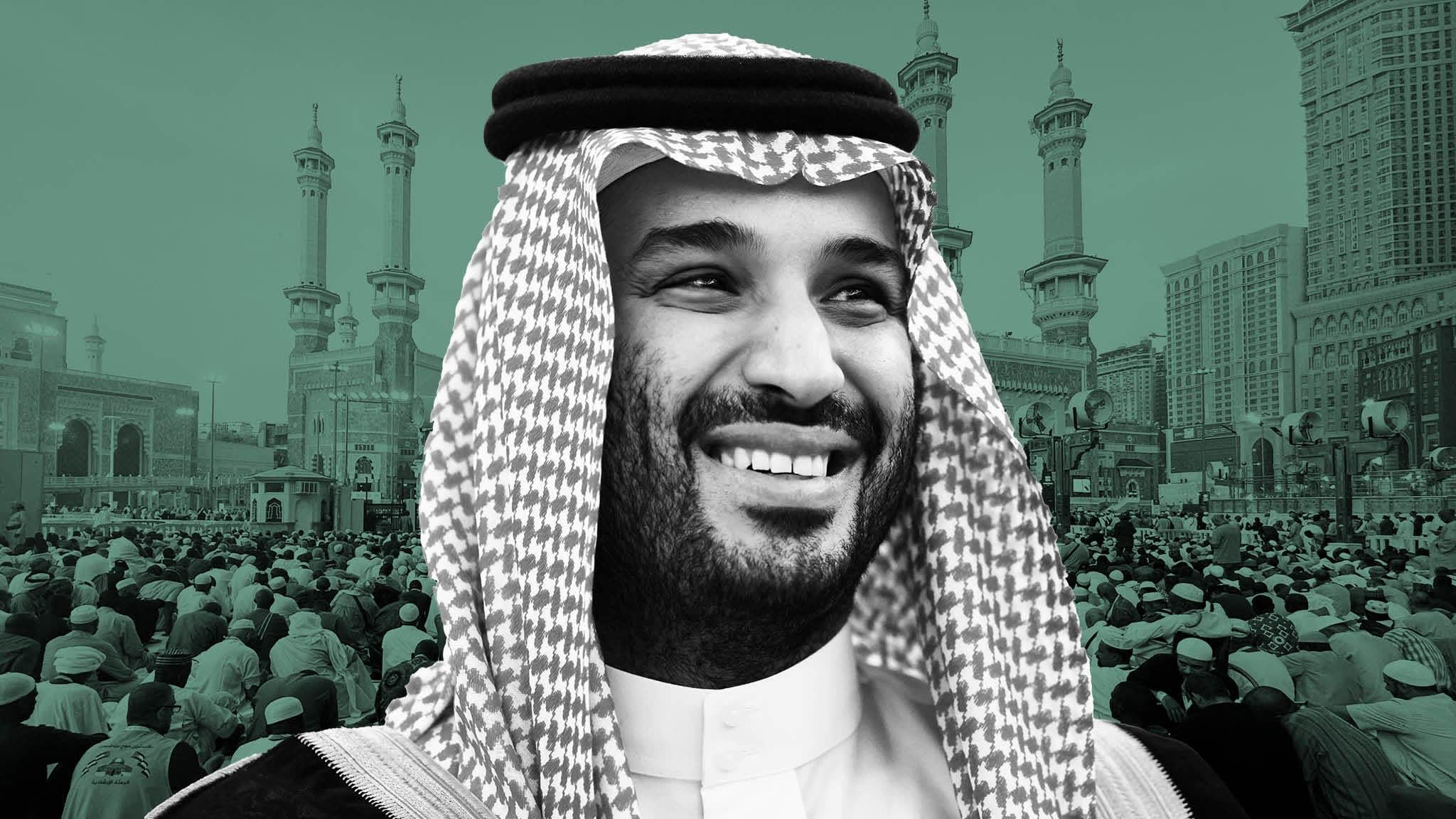
>Shortly after Prince Mohammed bin Salman rose to power, the top cleric in Saudi Arabia was asked what he thought about the kingdom’s plan to lift the ban on public entertainment.
>“We know that music concerts and cinema are harmful and corrupting,” the grand mufti, Sheikh Abdulaziz al-Alsheikh, said in one of his regular live call-in shows in 2017, warning that such forms of entertainment were “promiscuous” and would damage Muslim culture and values. But Prince Mohammed paid little heed, lifting the restrictions soon after, sidelining the traditionalist cleric — who died last week — and vowing to destroy “extremist ideas”. “We want to live a normal life, a life that translates our tolerant religion and our good values and norms,” he said at the time.
>In the years since, the crown prince has embarked on the most ambitious liberalisation of Islam in Saudi Arabia, where the faith originated, since his ancestors joined forces with the Sunni fundamentalist Wahhabis to establish the first Saudi state in the 18th century. He has curbed the powers of the religious police, limited the abilities of judges to interpret sharia law, cut the amount of religious studies taught in schools and all but abandoned public gender segregation.
>These reforms have transformed life for many of the kingdom’s 36mn people, helping underpin Prince Mohammed’s ambitious modernisation agenda. They have also reverberated globally as a country long accused of exporting radicalism, particularly after the 9/11 attacks, seeks to rebrand its form of Islam around the prince’s vision. “The message that comes from Mecca resonates through the Islamic world, and the money that comes from Riyadh resonates throughout the Islamic world. And it did promote an intolerant view,” said David Rundell, a former US chief of mission in Saudi Arabia. “What they’re doing is making a more tolerant version of Islam.” Prince Mohammed deserves credit as “the first Arab leader to intellectually and seriously take on Islamists” in the home of Islam’s two holiest sites, said a western diplomat in Riyadh. “For someone like me, who has spent the last 20 years dealing with the fallout of 9/11, it’s a significant strategic shift.”
>The rhythms of daily life in the kingdom have changed radically as a result. Shops that used to be forced to close five times a day for prayer are now open around the clock. Far more women are visible in public, having joined the workforce in record numbers since Riyadh lifted the ban on female driving and eased dress code restrictions. Valentine’s Day red roses and Christmas ornaments, once confiscated by the religious police, are sold openly in stores. For the crown prince, he is simply reverting to the course he believes the kingdom had been on before 1979, when the Islamic revolution in Iran and the siege of Mecca’s Grand Mosque by Sunni Islamists rattled Saudi Arabia’s rulers into imposing a more puritanical version of Islam.
>Authorities gave clerics such as Alsheikh and his predecessors free rein to impose their views on the public and spread their message abroad so that they wouldn’t challenge the royal family politically. Saudi Arabia, and affiliate organisations such as the Muslim World League (MWL), which aims to promote Islam and its values, came under heavy scrutiny from the US and other western powers after 9/11, when 15 of the 19 hijackers turned out to be Saudi citizens. Today MWL is at the forefront of projecting the new image of Saudi Islam. Instead of funding mosques abroad and sending Saudi-educated imams to lead them, the MWL now hosts conferences and councils that focus on outreach and interfaith dialogue.
>While Alsheikh had receded in prominence, with his later public appearances rare and tightly controlled, MWL’s secretary-general Sheikh Mohammad al-Issa has become one the most important religious leaders in Saudi Arabia. A former justice minister under the previous king, Issa is seen as a leading advocate for Prince Mohammed’s rebrand of Islam and a top contender to succeed Alsheikh as grand mufti.
Le1bn1z on
In Bin Salman it’s hard not to see echoes of past absolutist monarchs and their ambivalent relationship to clergy. I often find it easy to see close comparisons to Louis XIV or the early Renaissance Italian princes.
On the one hand, of course religion (or some ideology that may as well be a religion, like Leninist or Stalinist flavors of Marxism) is important to constructing frameworks of support or at least submission to absolutist rule.
At the same time, clerics’ existence as a separate power base will always be a matter of discomfort for absolutists, who will look for ways to have social frameworks express their political seniority and supremacy over clerics by curtailing their power. Curbing their ability to appoint clerical officials and to enforce morality are almost always the most obvious targets.
So its important to note that this is not “liberalising” in any political sense of the word. This program is not aimed at creating norms that lead to greater liberty from political authoritarianism. Instead, it is aimed at moving another sphere of power – that of arbitration of morality – into the authoritarian hands of the House of Saud.
This is combined with the use of libertine luxury as a tool to help “domesticate” the aristocracy. Whether warlike barons with their knights and men at arms in their rural hilltop keeps or leaders of semi-nomadic armed groups of the desert or oases or even militant terrorists dreaming of a global Caliphate, there’s a lot to be gained by bringing them to the capital, putting them up in a palace, making them fat on sweets and indolence and replacing their passions and skills for riding and raiding with one for sports, theatre, and bookkeeping. Challenging the austere morality of the Wahhabis and making any plausible aristocratic challenger someone who is fat, soft, unfamiliar with violence or the hardship of war, and trades the rugged independence of the warlord for decadent dependence on the Royal system for the comforts on which they depend is a critical part of building enduring authoritarian institutions.
So there will be important limits to any “liberalisation” of Islam in Arabia under the House of Saud, as the Royal Family will still want robust belief in a religion that legitimizes their rule. Freedom of Speech will not be achieved, but the gag on free expression and thought merely enforced in a different way. Libertine license will be focused primarily on the rich and aristocrats, with robust religious codes, albeit demonstrably limited and controlled by the House of Saud, still held for most commoners.
The one sliver of hope that comes from this process, however, comes from the potential effects processes like this under rulers like Louis XIV had on allowing some people to broaden their imaginations as to what reality is and what society could be. Tolerance of this, so long as it does not challenge the monarchy, may start the ever so slow and painful process of re-expanding the imaginations and critical rational thoughts of at least a small few in Arabian society. This can be an eventual foundation for the overthrow of the intellectual structures of authoritarianism.
But Bin Salman will remember that this process took centuries in the West, and so likely does not see it as a threat to him or even his grandchildren.

2 Comments
>Shortly after Prince Mohammed bin Salman rose to power, the top cleric in Saudi Arabia was asked what he thought about the kingdom’s plan to lift the ban on public entertainment.
>“We know that music concerts and cinema are harmful and corrupting,” the grand mufti, Sheikh Abdulaziz al-Alsheikh, said in one of his regular live call-in shows in 2017, warning that such forms of entertainment were “promiscuous” and would damage Muslim culture and values. But Prince Mohammed paid little heed, lifting the restrictions soon after, sidelining the traditionalist cleric — who died last week — and vowing to destroy “extremist ideas”. “We want to live a normal life, a life that translates our tolerant religion and our good values and norms,” he said at the time.
>In the years since, the crown prince has embarked on the most ambitious liberalisation of Islam in Saudi Arabia, where the faith originated, since his ancestors joined forces with the Sunni fundamentalist Wahhabis to establish the first Saudi state in the 18th century. He has curbed the powers of the religious police, limited the abilities of judges to interpret sharia law, cut the amount of religious studies taught in schools and all but abandoned public gender segregation.
>These reforms have transformed life for many of the kingdom’s 36mn people, helping underpin Prince Mohammed’s ambitious modernisation agenda. They have also reverberated globally as a country long accused of exporting radicalism, particularly after the 9/11 attacks, seeks to rebrand its form of Islam around the prince’s vision. “The message that comes from Mecca resonates through the Islamic world, and the money that comes from Riyadh resonates throughout the Islamic world. And it did promote an intolerant view,” said David Rundell, a former US chief of mission in Saudi Arabia. “What they’re doing is making a more tolerant version of Islam.” Prince Mohammed deserves credit as “the first Arab leader to intellectually and seriously take on Islamists” in the home of Islam’s two holiest sites, said a western diplomat in Riyadh. “For someone like me, who has spent the last 20 years dealing with the fallout of 9/11, it’s a significant strategic shift.”
>The rhythms of daily life in the kingdom have changed radically as a result. Shops that used to be forced to close five times a day for prayer are now open around the clock. Far more women are visible in public, having joined the workforce in record numbers since Riyadh lifted the ban on female driving and eased dress code restrictions. Valentine’s Day red roses and Christmas ornaments, once confiscated by the religious police, are sold openly in stores. For the crown prince, he is simply reverting to the course he believes the kingdom had been on before 1979, when the Islamic revolution in Iran and the siege of Mecca’s Grand Mosque by Sunni Islamists rattled Saudi Arabia’s rulers into imposing a more puritanical version of Islam.
>Authorities gave clerics such as Alsheikh and his predecessors free rein to impose their views on the public and spread their message abroad so that they wouldn’t challenge the royal family politically. Saudi Arabia, and affiliate organisations such as the Muslim World League (MWL), which aims to promote Islam and its values, came under heavy scrutiny from the US and other western powers after 9/11, when 15 of the 19 hijackers turned out to be Saudi citizens. Today MWL is at the forefront of projecting the new image of Saudi Islam. Instead of funding mosques abroad and sending Saudi-educated imams to lead them, the MWL now hosts conferences and councils that focus on outreach and interfaith dialogue.
>While Alsheikh had receded in prominence, with his later public appearances rare and tightly controlled, MWL’s secretary-general Sheikh Mohammad al-Issa has become one the most important religious leaders in Saudi Arabia. A former justice minister under the previous king, Issa is seen as a leading advocate for Prince Mohammed’s rebrand of Islam and a top contender to succeed Alsheikh as grand mufti.
In Bin Salman it’s hard not to see echoes of past absolutist monarchs and their ambivalent relationship to clergy. I often find it easy to see close comparisons to Louis XIV or the early Renaissance Italian princes.
On the one hand, of course religion (or some ideology that may as well be a religion, like Leninist or Stalinist flavors of Marxism) is important to constructing frameworks of support or at least submission to absolutist rule.
At the same time, clerics’ existence as a separate power base will always be a matter of discomfort for absolutists, who will look for ways to have social frameworks express their political seniority and supremacy over clerics by curtailing their power. Curbing their ability to appoint clerical officials and to enforce morality are almost always the most obvious targets.
So its important to note that this is not “liberalising” in any political sense of the word. This program is not aimed at creating norms that lead to greater liberty from political authoritarianism. Instead, it is aimed at moving another sphere of power – that of arbitration of morality – into the authoritarian hands of the House of Saud.
This is combined with the use of libertine luxury as a tool to help “domesticate” the aristocracy. Whether warlike barons with their knights and men at arms in their rural hilltop keeps or leaders of semi-nomadic armed groups of the desert or oases or even militant terrorists dreaming of a global Caliphate, there’s a lot to be gained by bringing them to the capital, putting them up in a palace, making them fat on sweets and indolence and replacing their passions and skills for riding and raiding with one for sports, theatre, and bookkeeping. Challenging the austere morality of the Wahhabis and making any plausible aristocratic challenger someone who is fat, soft, unfamiliar with violence or the hardship of war, and trades the rugged independence of the warlord for decadent dependence on the Royal system for the comforts on which they depend is a critical part of building enduring authoritarian institutions.
So there will be important limits to any “liberalisation” of Islam in Arabia under the House of Saud, as the Royal Family will still want robust belief in a religion that legitimizes their rule. Freedom of Speech will not be achieved, but the gag on free expression and thought merely enforced in a different way. Libertine license will be focused primarily on the rich and aristocrats, with robust religious codes, albeit demonstrably limited and controlled by the House of Saud, still held for most commoners.
The one sliver of hope that comes from this process, however, comes from the potential effects processes like this under rulers like Louis XIV had on allowing some people to broaden their imaginations as to what reality is and what society could be. Tolerance of this, so long as it does not challenge the monarchy, may start the ever so slow and painful process of re-expanding the imaginations and critical rational thoughts of at least a small few in Arabian society. This can be an eventual foundation for the overthrow of the intellectual structures of authoritarianism.
But Bin Salman will remember that this process took centuries in the West, and so likely does not see it as a threat to him or even his grandchildren.