> In late August, in the midst of the harvest season, the authorities announced a six-month ban on the export of the raw nut.
> The intention was to boost local production of the finished butter – as opposed to the nuts – and so increase the amount of the profit which stays in Nigeria. But the sudden shift has led to a fall in demand for the shea nut as there is not enough local capacity to process all of the country’s harvest.
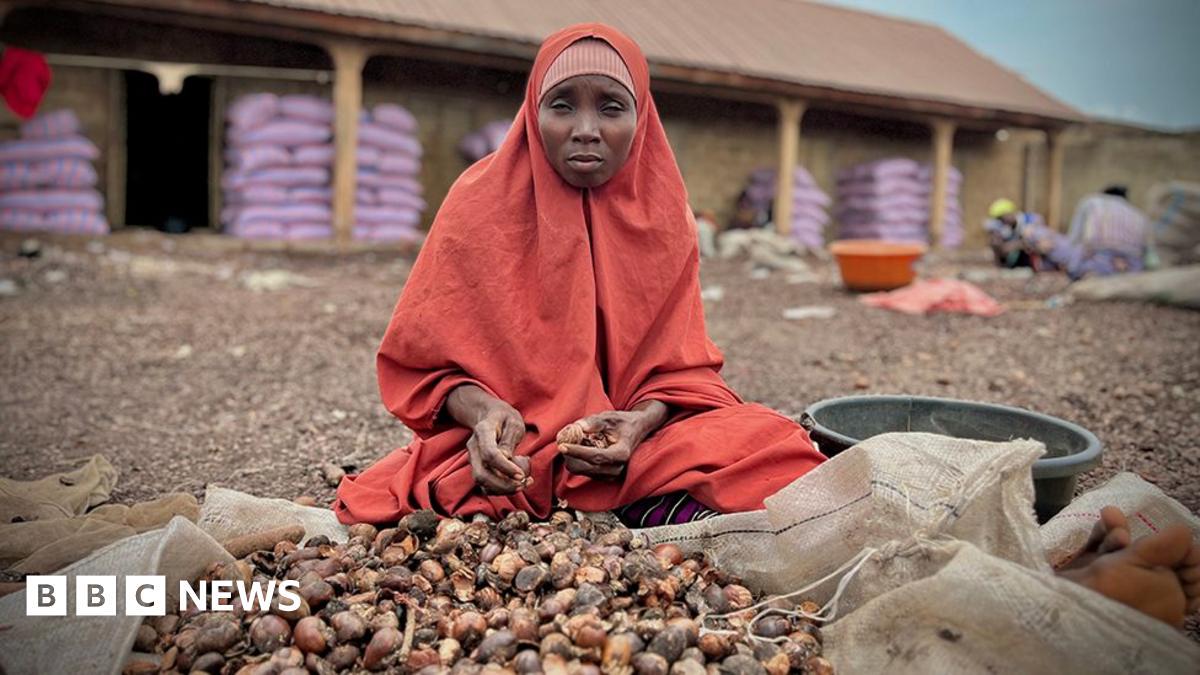
> The reduction in demand has led to a collapse in the price of shea nuts, which in turn has meant that the income from their work is no longer enough for the women to live on.
> (…) One of the key projects driving this change is a factory owned by Salid Agriculture Nigeria Limited in Kudu, also in Niger state.
> The plant, which is owned by an ally of the current government, has been described as Africa’s largest facility dedicated to just producing shea butter, boasting an annual production capacity of 30,000 tonnes. It aims to produce butter for cosmetics, food and pharmaceuticals.
> The export ban came into effect just two weeks after this new factory was opened but overall there are not enough processing plants in Nigeria to cope with all the shea nuts that could be harvested.
> (…) Unsurprisingly, Ali Saidu, Salid’s managing director, sees the opportunity in the export ban.
> “We are seeing so many responses now from shea nut suppliers,” he says. Before the ban, Mr Salid rarely received calls from traders. “Immediately after, they began calling us to ask how they could supply.”
> He is also benefitting from lower prices, as before the export ban Mr Saidu’s firm struggled to match the money on offer from international buyers.
wow who could’ve seen this coming
!ping AFRICA
omnipotentsandwich on
I love how it’s pretty obvious why they banned exports. The largest factory is an ally of the government. They and the industry group support the ban. This was done solely to benefit corporate interests. They couldn’t care less how it affects these women.

3 Comments
> In late August, in the midst of the harvest season, the authorities announced a six-month ban on the export of the raw nut.
> The intention was to boost local production of the finished butter – as opposed to the nuts – and so increase the amount of the profit which stays in Nigeria. But the sudden shift has led to a fall in demand for the shea nut as there is not enough local capacity to process all of the country’s harvest.
> The reduction in demand has led to a collapse in the price of shea nuts, which in turn has meant that the income from their work is no longer enough for the women to live on.
> (…) One of the key projects driving this change is a factory owned by Salid Agriculture Nigeria Limited in Kudu, also in Niger state.
> The plant, which is owned by an ally of the current government, has been described as Africa’s largest facility dedicated to just producing shea butter, boasting an annual production capacity of 30,000 tonnes. It aims to produce butter for cosmetics, food and pharmaceuticals.
> The export ban came into effect just two weeks after this new factory was opened but overall there are not enough processing plants in Nigeria to cope with all the shea nuts that could be harvested.
> (…) Unsurprisingly, Ali Saidu, Salid’s managing director, sees the opportunity in the export ban.
> “We are seeing so many responses now from shea nut suppliers,” he says. Before the ban, Mr Salid rarely received calls from traders. “Immediately after, they began calling us to ask how they could supply.”
> He is also benefitting from lower prices, as before the export ban Mr Saidu’s firm struggled to match the money on offer from international buyers.
wow who could’ve seen this coming
!ping AFRICA
I love how it’s pretty obvious why they banned exports. The largest factory is an ally of the government. They and the industry group support the ban. This was done solely to benefit corporate interests. They couldn’t care less how it affects these women.
All import-substitution policies in a nutshell
:/