
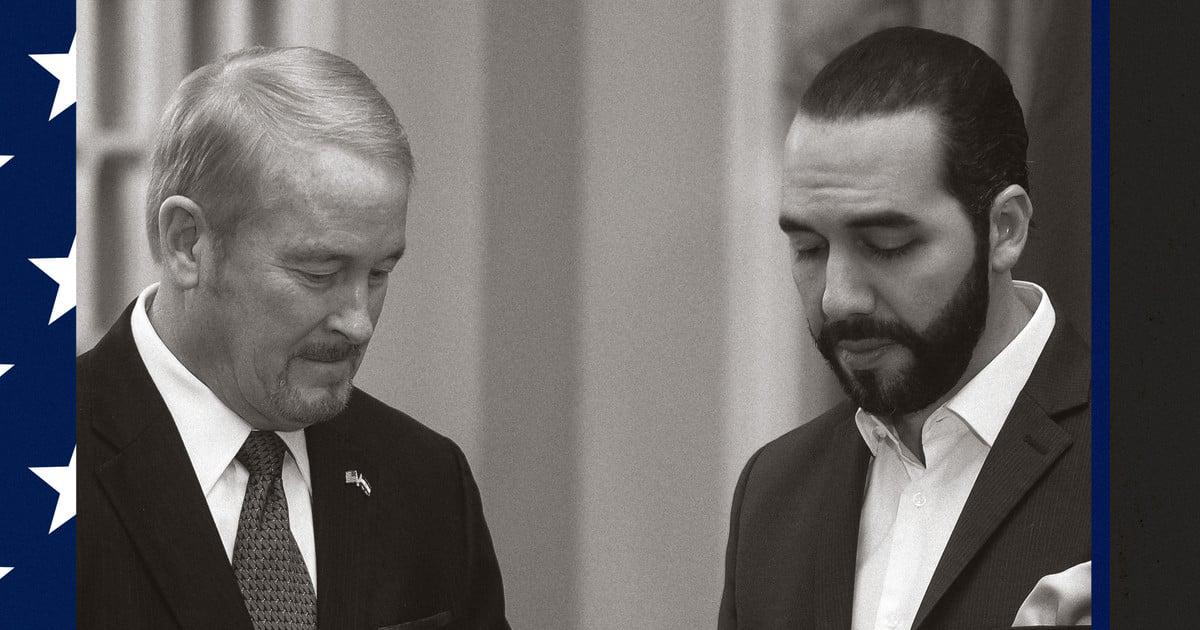
In August 2020, the president of El Salvador, Nayib Bukele, went to the U.S. ambassador with an extraordinary request. Salvadoran authorities had intercepted a conversation between a journalist and a U.S. embassy contractor about corruption among high-level aides to the president.
The contractor, a U.S. citizen, was no ordinary source. He collaborated with U.S. and Salvadoran investigators who were targeting the president’s inner circle. Over the previous year, he had helped an FBI-led task force uncover a suspected alliance between the Bukele government and the MS-13 street gang, which was responsible for murders, rapes and kidnappings in the United States. He had worked to gather evidence that the president’s aides had secretly met with gang bosses in prison and agreed to give them money and protection in exchange for a reduction in violence. The information posed a threat to the Bukele government.
Bukele wanted the contractor out of the country — and in Ambassador Ronald D. Johnson, he had a powerful American friend. Johnson was a former CIA officer and appointee of President Donald Trump serving in his first diplomatic post. He had cultivated a strikingly close relationship with the Salvadoran president. After Bukele provided Johnson with the recordings, the ambassador immediately ordered an investigation that resulted in the contractor’s dismissal.
It was not the only favor Johnson did for Bukele, according to a ProPublica investigation based on a previously undisclosed report by the State Department’s inspector general and interviews with U.S. and Salvadoran officials. The dismissal of the contractor was part of a pattern in which Johnson has been accused of shielding Bukele from U.S. and Salvadoran law enforcement, ProPublica found. Johnson did little to pursue the extradition to the United States of an MS-13 boss who was a potential witness to the secret gang pact and a top target of the FBI-led task force, officials said.
After he stepped down as ambassador, Johnson continued his support for the Salvadoran president despite the Biden administration’s efforts to curb Bukele’s increasing authoritarianism. He also played a prominent role in making Bukele Trump’s favorite Latin American leader, according to interviews and public records.
Johnson’s tight friendship with Bukele troubled top State Department officials in the Biden administration, who asked his successor, Jean Manes, to look into the firing of the contractor. She reached a blunt conclusion, according to the inspector general’s report: “Bukele requested Johnson remove [the contractor] and that was what happened.”
“Manes explained that [the contractor] was working on anti-corruption cases against individuals close to El Salvadoran President Nayib Bukele and Manes believed removing [him] was a way to ensure the investigations stopped,” the report said.
ProPublica has also learned that Manes’ review led to an extreme measure: She forced the ouster of the CIA station chief, a longtime friend of Johnson, because she felt he was “too close” to Bukele, according to the inspector general report. Senior State Department and White House officials said they suspected that Johnson’s continuing relationships with the station chief and Bukele fomented resistance within the embassy to the new U.S. policy confronting the Salvadoran president over corruption and democracy issues, according to interviews.
Posted by John3262005