
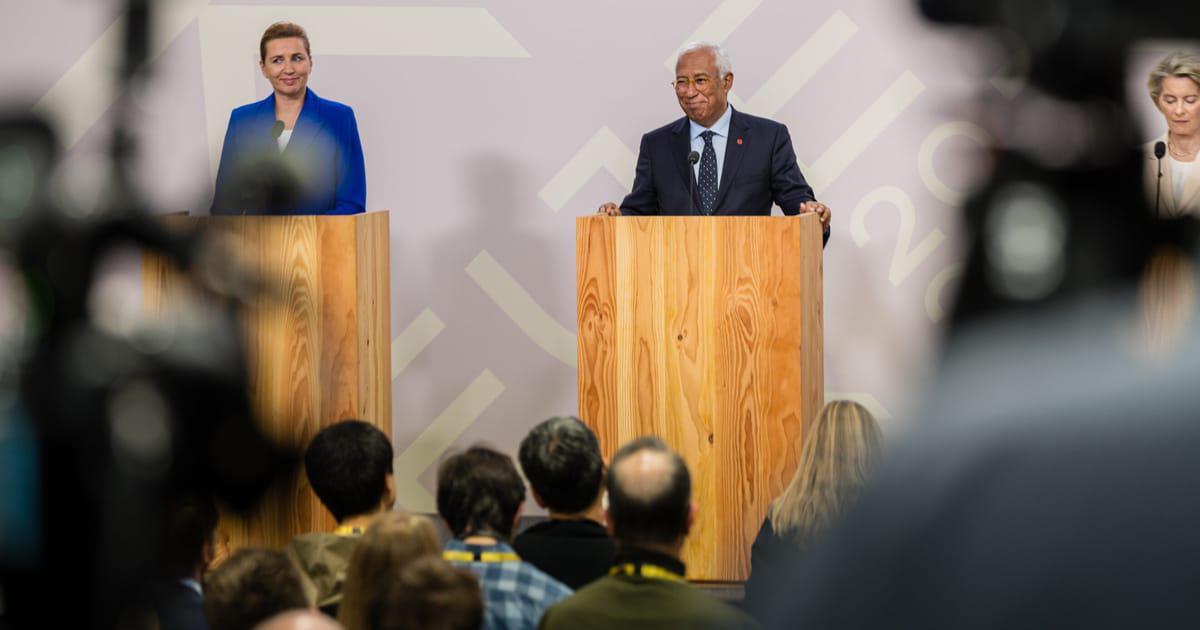
COPENHAGEN ― European Union leaders spent a day in the Danish capital discussing how to bolster the continent’s security.
1. Frozen assets stay in the freezer, for now
EU countries were not ready to endorse a European Commission plan to use Russian frozen assets to finance a loan to Ukraine. One of the reasons the deal was not agreed in Copenhagen is that some countries, especially Belgium, need to be reassured the plan is legally sound.
Belgian Prime Minister Bart De Wever was the most cautious, as his country would bear the brunt of any Russian legal action.
2. Leaders tell the Commission: We’re still in charge of defense
The two hours on the schedule for talking about common defense ended up taking twice that long. While countries broadly welcomed the Commission’s proposals, leaders insisted on having a bigger say. European heavyweights France and Germany expressed skepticism of a drone wall managed by the Commission, while southern countries are pushing for a broader concept that will also protect their borders.
3. Merz didn’t manage to set the agenda
German Chancellor Friedrich Merz went into the summit wanting to talk about competitiveness — and failed. It seemed Merz hadn’t bothered to read the official schedule, which included one session on defense and one on Ukraine.
4. Royal appointments trump everything else
The end point of the Copenhagen summit was dictated by a dinner invitation. The Danish royals invited EU leaders for dinner at 7 p.m. sharp.
That appointment added the pressure of a deadline. But the session on security and defense took four hours, twice as long as scheduled, because leaders went beyond their pre-written talking points and free-styled answers. Costa, who chaired the meeting, didn’t dare cut the mic given how sensitive the talks were, said an EU official, who denied the talks took longer because of disagreements among leaders.
5. All the members of the club want to decide who can enter
Costa’s idea of fast-tracking Ukraine’s bid to join the EU didn’t work. And that was no surprise. That was a no-go for the Hungarian prime minister, who is the EU leader closest to Russian President Vladimir Putin. But other countries, including France, the Netherlands and Greece, were also opposed and let the proposal sink.
Posted by -Maestral-
1 Comment
!ping Europe
Rundown of Copenhagen summit.