**Rules come ahead of expected meeting this month between Donald Trump and Xi Jinping**
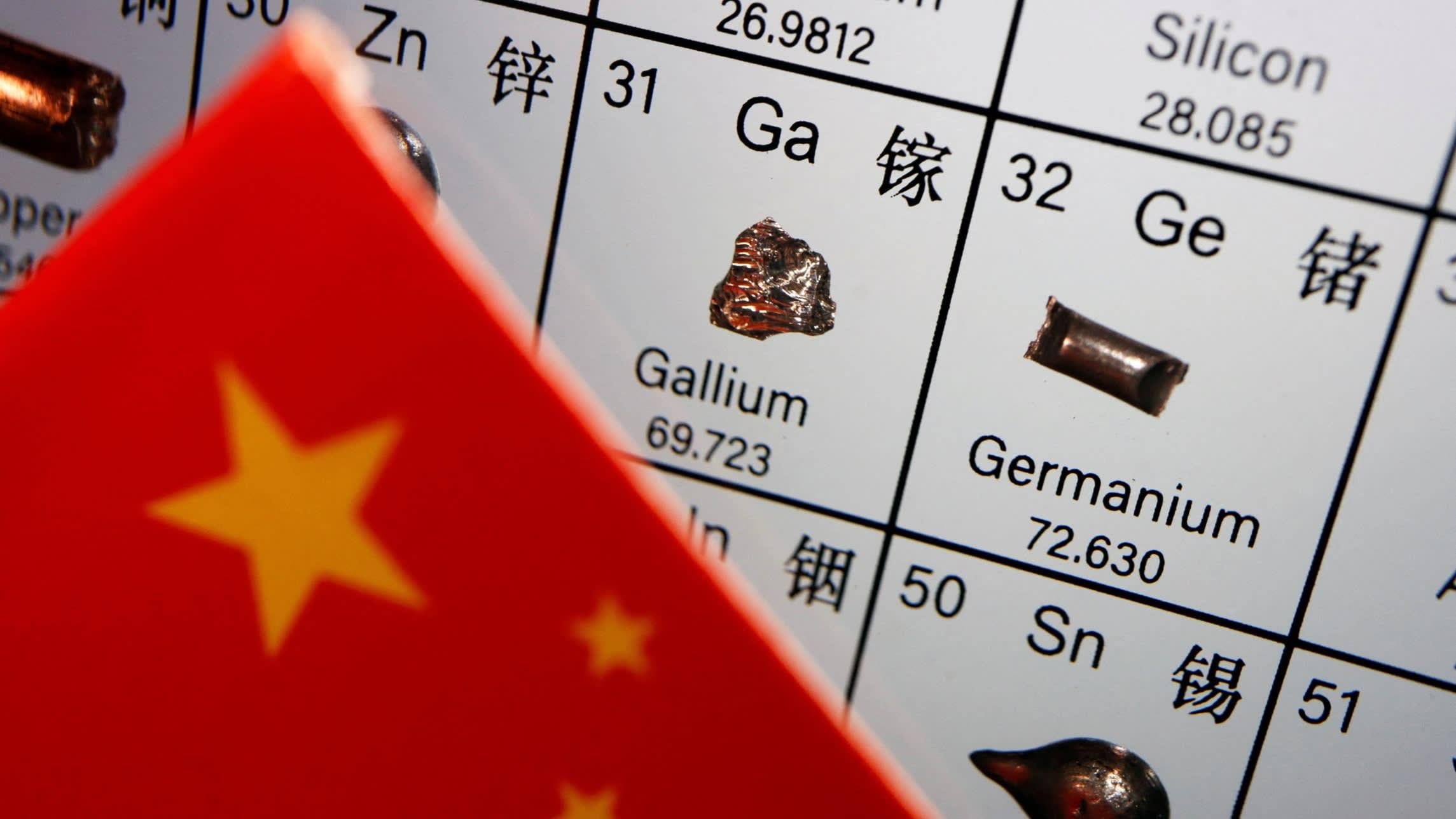
China has unveiled sweeping export controls on rare earths and related technologies, as it strengthens its leverage over critical minerals ahead of an expected meeting this month between US President Donald Trump and Xi Jinping.
Under the new rules, foreign companies will need Beijing’s approval to export magnets that contain even trace amounts of Chinese-sourced rare earth materials, or that were produced using the country’s extraction methods, refining or magnet-making technology.
The restrictions announced on Thursday by the commerce ministry will for the first time create a Chinese version of the US foreign direct product rule, a measure Washington has used to block semiconductor-related exports to China from third countries.
The rules give Beijing more leverage to exert control over the global rare-earth supply chain.
Rare earth minerals and magnets are critical to technologies from smartphones to electric vehicles and fighter jets.
Beijing first introduced rare-earth export restrictions in April in retaliation for tariffs imposed by the Trump administration.
The move helped push Washington to the negotiating table, as the shortage of Chinese rare earths began to hit production in the US auto supply chain.
Since then, US shortages of the minerals have featured in several rounds of trade talks between the two countries. China’s latest controls come as Xi prepares to meet Trump in Gyeongju, South Korea, this month.
“The timing of this new policy is strategic,” said Gracelin Baskaran, a critical minerals expert at the Center for Strategic and International Studies. “China just put some new negotiation pawns on the table.”
China controls about 70 per cent of rare earth mining, 90 per cent of separation and processing, and 93 per cent of magnet manufacturing, according to a Financial Times analysis.
China’s commerce ministry said the new measures were intended to “protect its national security and interests” and prevent the “misuse of rare earth materials in military and other sensitive sectors”.
The ministry added that some overseas companies had significantly harmed China’s security by transferring Chinese-origin rare earth materials and technology to others for military use.
The new licensing regime will cover foreign-made rare earth magnets and certain semiconductor materials that by value contain at least 0.1 per cent Chinese-origin heavy rare earths.
The ministry said the rules would be phased in from December 1 with most export licences for military users to be denied. It said exports to manufacturers of semiconductors and related equipment would be examined on a case-by-case basis.
Dai Menghao, a trade compliance partner at law firm King & Wood Mallesons, said China had put in place rules which closely mirror the US export-control regime.
“It’s a systematic, comprehensive response to the US,” Dai said, noting it would take China some time to build up enforcement mechanisms to fully match the US.
The news buoyed shares in China’s large state-owned rare earth groups. China Northern Rare Earth’s shares rose 10 per cent in Shanghai while Rising Nonferrous Metals Share stock was up by more than 6 per cent.
Beijing’s commerce ministry and customs administration also announced expanded export controls on some battery anodes and on lithium cathodes and precursors, among other key materials in the Chinese-dominated global battery supply chain.
It was not clear how strictly the controls would be implemented. CATL and BYD, the world’s two biggest battery makers, did not immediately comment.
China’s expanding rare earth controls have forced Washington to roll out significant state support for American and allied countries’ rare earth miners and magnet makers in attempt to break Beijing’s chokehold. The G7 group of advanced economies is also exploring how to build up a non-China supply chain.
“The new directive is a clear effort to hinder development of industrial base capabilities in the United States and its allies,” said Baskaran.
Otherwise_Young52201 on
I mean, given how NATO countries and other affiliates have openly talked about for years of creating trade blocs to shut out China, along with increasing hostility to trade with China in general, it’s only natural for them to now weaponize rare earth exports.
Especially considering how very few countries actually retaliated against the US for its worldwide tariffs. China obviously doesn’t want to be isolated economically. As such, restricting rare earths as a means of signaling possible further retaliation against countries aligning themselves with a US economic bloc is quite necessary.
sinuhe_t on
>Rare earth minerals and magnets are critical to technologies from smartphones to electric vehicles and fighter jets. (…) China controls about 70 per cent of rare earth mining, 90 per cent of separation and processing, and 93 per cent of magnet manufacturing
I see different values for how much the entire rare earth sector is worth, but it seems to be somewhere between 5-15 billion USD. Which is to say: the sector is worth (in purely economic terms) something like 3 to 8 GTA VI’s. The West has abandoned control over a crucial economic sector, despite the fact that it would not be that expensive to maintain capacity and independence.
> HREEs, however, are much more geologically scarce and occur almost exclusively
in ion-adsorption clays, which are overwhelmingly concentrated in southern China
and parts of northern Myanmar. Outside of these areas, most known HREE deposits
are small, lower grade, more radioactive, or in environmentally prohibitive regions.
This stands in contrast to LREEs such as cerium, lanthanum, and neodymium, which
are far more geologically abundant and widely distributed across multiple continents,
including Brazil, Australia, the United States, and parts of Africa (much of which is
reflected in Figure 1). While light rare earths are still important for applications like
catalysts, glass polishing, and certain magnets, they are generally easier to source
and less strategically constrained. As a result, China’s roughly 60–65% share of the
light rare earths mine output is meaningful but not irreplaceable. This is not at all
the case with HREEs though, which represent a far more genuine supply choke point
for key technologies of the future. The below visual shows the gaps in China’s
participation between the two types of rare earths (Figure 2 and Figure 3).
> Once the focus shifts from all rare earths to just the HREEs, China’s position morphs
from temporarily dominant to near-absolute monopoly, accounting for more than
98% of global extraction if Myanmar is included and a near equivalent share of
separation capacity. **This is not a market distortion that can be easily fixed by
building more processing plants in the West. Without viable deposits, investment in
processing is somewhat irrelevant.** In this sense, Deng Xiaoping’s remarks
understate the level of control and dominance that China has over the rare earths
that matter. The only other known material sources of HREEs sits in regions
bordering China in Myanmar, which holds 10-15% of known global HREE reserves
(and all of their output is processed in China). There is no clear historical precedent
for this scale of control over a strategic asset. A few examples that come to mind are
De Beer’s control of the diamond trade in the 20th century or Sudan’s control over
Gum Arabic, a key input for soft drinks—but neither commodity has anything
approaching the same strategic or geopolitical value.
People can talk all they want about Lynas this or Mountain Pass that. Here’s what those companies have to say:
> *Lynas 2024 Annual Report*: “The Company continues to investigate
opportunities to secure alternative sources of Heavy Rare Earth feedstock.
However, global availability is limited, with most supply originating from ionic
clay deposits in China and Myanmar.”
> *MP Materials 2024 Annual Report*: “While the Mountain Pass facility produces
separated Light Rare Earth products such as NdPr, our planned Heavy Rare
Earth separation capabilities will still depend on feedstock imports. Current
non-Chinese supply is negligible, making global heavy rare earth supply chains
highly vulnerable to geopolitical risk.”

4 Comments
Paywall; https://archive.ph/N7gTp
**Rules come ahead of expected meeting this month between Donald Trump and Xi Jinping**
China has unveiled sweeping export controls on rare earths and related technologies, as it strengthens its leverage over critical minerals ahead of an expected meeting this month between US President Donald Trump and Xi Jinping.
Under the new rules, foreign companies will need Beijing’s approval to export magnets that contain even trace amounts of Chinese-sourced rare earth materials, or that were produced using the country’s extraction methods, refining or magnet-making technology.
The restrictions announced on Thursday by the commerce ministry will for the first time create a Chinese version of the US foreign direct product rule, a measure Washington has used to block semiconductor-related exports to China from third countries.
The rules give Beijing more leverage to exert control over the global rare-earth supply chain.
Rare earth minerals and magnets are critical to technologies from smartphones to electric vehicles and fighter jets.
Beijing first introduced rare-earth export restrictions in April in retaliation for tariffs imposed by the Trump administration.
The move helped push Washington to the negotiating table, as the shortage of Chinese rare earths began to hit production in the US auto supply chain.
Since then, US shortages of the minerals have featured in several rounds of trade talks between the two countries. China’s latest controls come as Xi prepares to meet Trump in Gyeongju, South Korea, this month.
“The timing of this new policy is strategic,” said Gracelin Baskaran, a critical minerals expert at the Center for Strategic and International Studies. “China just put some new negotiation pawns on the table.”
China controls about 70 per cent of rare earth mining, 90 per cent of separation and processing, and 93 per cent of magnet manufacturing, according to a Financial Times analysis.
China’s commerce ministry said the new measures were intended to “protect its national security and interests” and prevent the “misuse of rare earth materials in military and other sensitive sectors”.
The ministry added that some overseas companies had significantly harmed China’s security by transferring Chinese-origin rare earth materials and technology to others for military use.
The new licensing regime will cover foreign-made rare earth magnets and certain semiconductor materials that by value contain at least 0.1 per cent Chinese-origin heavy rare earths.
The ministry said the rules would be phased in from December 1 with most export licences for military users to be denied. It said exports to manufacturers of semiconductors and related equipment would be examined on a case-by-case basis.
Dai Menghao, a trade compliance partner at law firm King & Wood Mallesons, said China had put in place rules which closely mirror the US export-control regime.
“It’s a systematic, comprehensive response to the US,” Dai said, noting it would take China some time to build up enforcement mechanisms to fully match the US.
The news buoyed shares in China’s large state-owned rare earth groups. China Northern Rare Earth’s shares rose 10 per cent in Shanghai while Rising Nonferrous Metals Share stock was up by more than 6 per cent.
Beijing’s commerce ministry and customs administration also announced expanded export controls on some battery anodes and on lithium cathodes and precursors, among other key materials in the Chinese-dominated global battery supply chain.
It was not clear how strictly the controls would be implemented. CATL and BYD, the world’s two biggest battery makers, did not immediately comment.
China’s expanding rare earth controls have forced Washington to roll out significant state support for American and allied countries’ rare earth miners and magnet makers in attempt to break Beijing’s chokehold. The G7 group of advanced economies is also exploring how to build up a non-China supply chain.
“The new directive is a clear effort to hinder development of industrial base capabilities in the United States and its allies,” said Baskaran.
I mean, given how NATO countries and other affiliates have openly talked about for years of creating trade blocs to shut out China, along with increasing hostility to trade with China in general, it’s only natural for them to now weaponize rare earth exports.
Especially considering how very few countries actually retaliated against the US for its worldwide tariffs. China obviously doesn’t want to be isolated economically. As such, restricting rare earths as a means of signaling possible further retaliation against countries aligning themselves with a US economic bloc is quite necessary.
>Rare earth minerals and magnets are critical to technologies from smartphones to electric vehicles and fighter jets. (…) China controls about 70 per cent of rare earth mining, 90 per cent of separation and processing, and 93 per cent of magnet manufacturing
I see different values for how much the entire rare earth sector is worth, but it seems to be somewhere between 5-15 billion USD. Which is to say: the sector is worth (in purely economic terms) something like 3 to 8 GTA VI’s. The West has abandoned control over a crucial economic sector, despite the fact that it would not be that expensive to maintain capacity and independence.
What End of History does to a mf.
While this will obviously cause headaches for other countries, [the main chokepoint continues to be overlooked by mass media](https://research.nus.edu.sg/eai/wp-content/uploads/2025/09/EAIBB-No.-1843-Rare-earths_China-synopsis_exsum.pdf). Technology is a problem, though not an insurmountable one given sufficient time and money. Geology is a different story.
> HREEs, however, are much more geologically scarce and occur almost exclusively
in ion-adsorption clays, which are overwhelmingly concentrated in southern China
and parts of northern Myanmar. Outside of these areas, most known HREE deposits
are small, lower grade, more radioactive, or in environmentally prohibitive regions.
This stands in contrast to LREEs such as cerium, lanthanum, and neodymium, which
are far more geologically abundant and widely distributed across multiple continents,
including Brazil, Australia, the United States, and parts of Africa (much of which is
reflected in Figure 1). While light rare earths are still important for applications like
catalysts, glass polishing, and certain magnets, they are generally easier to source
and less strategically constrained. As a result, China’s roughly 60–65% share of the
light rare earths mine output is meaningful but not irreplaceable. This is not at all
the case with HREEs though, which represent a far more genuine supply choke point
for key technologies of the future. The below visual shows the gaps in China’s
participation between the two types of rare earths (Figure 2 and Figure 3).
> Once the focus shifts from all rare earths to just the HREEs, China’s position morphs
from temporarily dominant to near-absolute monopoly, accounting for more than
98% of global extraction if Myanmar is included and a near equivalent share of
separation capacity. **This is not a market distortion that can be easily fixed by
building more processing plants in the West. Without viable deposits, investment in
processing is somewhat irrelevant.** In this sense, Deng Xiaoping’s remarks
understate the level of control and dominance that China has over the rare earths
that matter. The only other known material sources of HREEs sits in regions
bordering China in Myanmar, which holds 10-15% of known global HREE reserves
(and all of their output is processed in China). There is no clear historical precedent
for this scale of control over a strategic asset. A few examples that come to mind are
De Beer’s control of the diamond trade in the 20th century or Sudan’s control over
Gum Arabic, a key input for soft drinks—but neither commodity has anything
approaching the same strategic or geopolitical value.
People can talk all they want about Lynas this or Mountain Pass that. Here’s what those companies have to say:
> *Lynas 2024 Annual Report*: “The Company continues to investigate
opportunities to secure alternative sources of Heavy Rare Earth feedstock.
However, global availability is limited, with most supply originating from ionic
clay deposits in China and Myanmar.”
> *MP Materials 2024 Annual Report*: “While the Mountain Pass facility produces
separated Light Rare Earth products such as NdPr, our planned Heavy Rare
Earth separation capabilities will still depend on feedstock imports. Current
non-Chinese supply is negligible, making global heavy rare earth supply chains
highly vulnerable to geopolitical risk.”