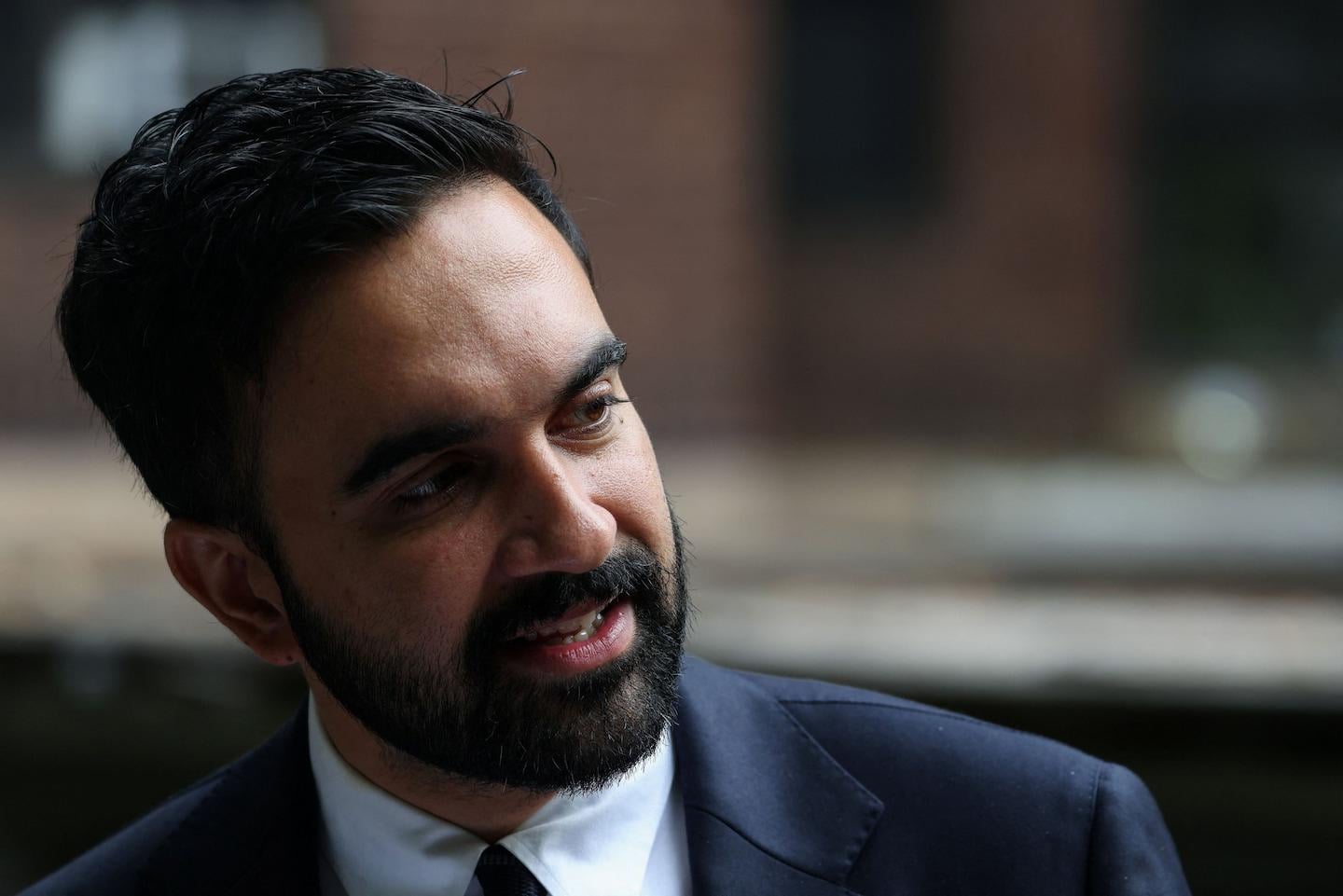
> Who could have guessed that Zohran Mamdani (D), the leading candidate to become the next New York mayor, would provoke a firestorm by announcing this week that he intends to phase out the city’s early elementary school programs for gifted students in the name of equity? Parents of bright children want access to schooling that meets their needs? Shocking.
>Mamdani’s plan, first revealed in response to a questionnaire from the New York Times, would eliminate gifted programs for all children in public schools until they enter third grade. Currently, students can enter these programs as early as kindergarten based on nominations from their preschool teachers, as well as other measures such as report cards. The gifted program, which has spots for only about 2,500 children out of roughly 55,000 citywide, teaches the same curriculum but at a faster pace.
> The left has long criticized the programs for exacerbating segregation in the city’s school system. Students who come from higher-income families are at an advantage of being selected, resulting in a disproportionate number of White and Asian kids. Black and Hispanic kids, who comprise 66 percent of total enrollment, make up only 21 percent of participants in these programs.
>Mamdani’s campaign has also criticized the selection process. “Identifying academic giftedness at age 4 is hard to do objectively by any assessment, whether through testing or teacher nominations,” campaign spokesperson Dora Pekec said in a statement to Chalkbeat. Mamdani’s plan, she wrote, “will ensure that every New York City public school student receives a high-quality early education that enables them to be challenged and fulfilled.”
>But what Mamdani and school systems that have made similar changes don’t seem to appreciate is that gifted children have different learning needs from their peers, just as children with cognitive disabilities benefit from education plans that are specific to them. It’s one thing to critique how the city identifies gifted students, which at young ages is not a perfect science. Mamdani’s proposal, however, would essentially create a one-size-fits-all educational experience that might not serve these children well. That would complicate teachers’ ability to tailor their lesson plans for their students.
>Parents see the gifted programs as stepping stones toward high-achieving schools down the road. But the solution is not to take away opportunities from children who are currently benefiting from them; it is to expand the program and improve how the city identifies children from underserved populations.
>Politicians tread on dangerous ground when their pursuit of equity comes at the cost of children’s opportunities.
Zaiush on
Is there any way for some student who is a late bloomer to advance up to a higher “track” in the current system? Not sure about permanent sorting in kindergarten

2 Comments
> Who could have guessed that Zohran Mamdani (D), the leading candidate to become the next New York mayor, would provoke a firestorm by announcing this week that he intends to phase out the city’s early elementary school programs for gifted students in the name of equity? Parents of bright children want access to schooling that meets their needs? Shocking.
>Mamdani’s plan, first revealed in response to a questionnaire from the New York Times, would eliminate gifted programs for all children in public schools until they enter third grade. Currently, students can enter these programs as early as kindergarten based on nominations from their preschool teachers, as well as other measures such as report cards. The gifted program, which has spots for only about 2,500 children out of roughly 55,000 citywide, teaches the same curriculum but at a faster pace.
> The left has long criticized the programs for exacerbating segregation in the city’s school system. Students who come from higher-income families are at an advantage of being selected, resulting in a disproportionate number of White and Asian kids. Black and Hispanic kids, who comprise 66 percent of total enrollment, make up only 21 percent of participants in these programs.
>Mamdani’s campaign has also criticized the selection process. “Identifying academic giftedness at age 4 is hard to do objectively by any assessment, whether through testing or teacher nominations,” campaign spokesperson Dora Pekec said in a statement to Chalkbeat. Mamdani’s plan, she wrote, “will ensure that every New York City public school student receives a high-quality early education that enables them to be challenged and fulfilled.”
>But what Mamdani and school systems that have made similar changes don’t seem to appreciate is that gifted children have different learning needs from their peers, just as children with cognitive disabilities benefit from education plans that are specific to them. It’s one thing to critique how the city identifies gifted students, which at young ages is not a perfect science. Mamdani’s proposal, however, would essentially create a one-size-fits-all educational experience that might not serve these children well. That would complicate teachers’ ability to tailor their lesson plans for their students.
>Parents see the gifted programs as stepping stones toward high-achieving schools down the road. But the solution is not to take away opportunities from children who are currently benefiting from them; it is to expand the program and improve how the city identifies children from underserved populations.
>Politicians tread on dangerous ground when their pursuit of equity comes at the cost of children’s opportunities.
Is there any way for some student who is a late bloomer to advance up to a higher “track” in the current system? Not sure about permanent sorting in kindergarten