>“*To the best of our knowledge, I am not aware of any conversation between PM Modi and President Trump yesterday,*” Randhir Jaiswal, a spokesman for the Ministry of External Affairs, told reporters at a briefing in New Delhi on Thursday.
>US-India relations have been strained since Trump imposed a 50% tariff on goods from the South Asian nation, a move the president cast as a punishment for New Delhi’s purchases of Russian crude. On Wednesday, Trump signaled a possible resolution to the issue by telling reporters at the White House that Modi had committed to not buying oil from Russia.
>In a statement earlier Thursday, Jaiswal ***didn’t confirm that India is complying with Trump’s demands***, although he said that New Delhi is working to deepen energy ties with the US.
>A White House official, asked about the purported conversation between Trump and Modi, said only that *productive discussions have occurred*, without specifying any participants. The official also noted that India is already cutting its purchases of Russian oil.
>India became a major importer of Russian crude after the start of the war in Ukraine in 2022, and has been able to scoop up deliveries at discounts. Purchases of Russian oil fell slightly last month, but still made up one-third of India’s overall imports in spite of the US push to curb flows.
>On Thursday, several executives from state-owned Indian refiners said they were [caught off guard](https://www.bloomberg.com/news/articles/2025-10-16/indian-refiners-to-take-less-russian-oil-after-trump-comments) by Trump’s comments. The executives, who asked not to be named as they’re not authorized to speak publicly, said they hadn’t been briefed by New Delhi or any ministries on the matter. Three executives said Indian imports of Russian oil would drop in the short term.
>While India was among the first countries to begin trade negotiations with the US earlier this year, its goods now face the highest tariffs in Asia.
>In recent weeks, the two sides have taken steps to repair relations. Trump and Modi spoke last week to review trade talks, and negotiators from New Delhi are currently in the US to clinch a deal they say may come as soon as November.
>Trump said Wednesday that India could not stop the purchases of Russian oil “*immediately*,” adding that “*it’s a little bit of a process, but the process is going to be over with soon.*”
What probably happened here was there were some backdoor discussions about concessions made to Uncle Sam in order to lower the tariffs. Some official may have suggested lowering the purchase of Russian oil. On the surface, it doesn’t seem to be a bad deal, given Russia can’t export much anyway due to drone strikes on their refineries. However, now that Trump has made the entire thing public, and after receiving overwhelming backlash from the Indian public and opposition parties, the deal will be stalled for at least 2–3 months. Right now, there’s a *delicate dance* going on between Trump’s desire to go public and India’s desire to keep any understanding behind the scenes. As long as they can get the 25 percent penalty tariff to go away and pave the way for a trade deal. And that’s why you can see the Indian government’s discomfort with appearing to be responding to the Trump administration’s pressure on Russian oil purchases. India might prefer public messaging that doesn’t suggest it has yielded to that pressure. Hence, I sense that the next step on Russian oil should be an agreed choreography between the governments of India and US on how to roll out an understanding in public. And voilà, there you go, a trade deal comes next.

2 Comments
The photo is so good
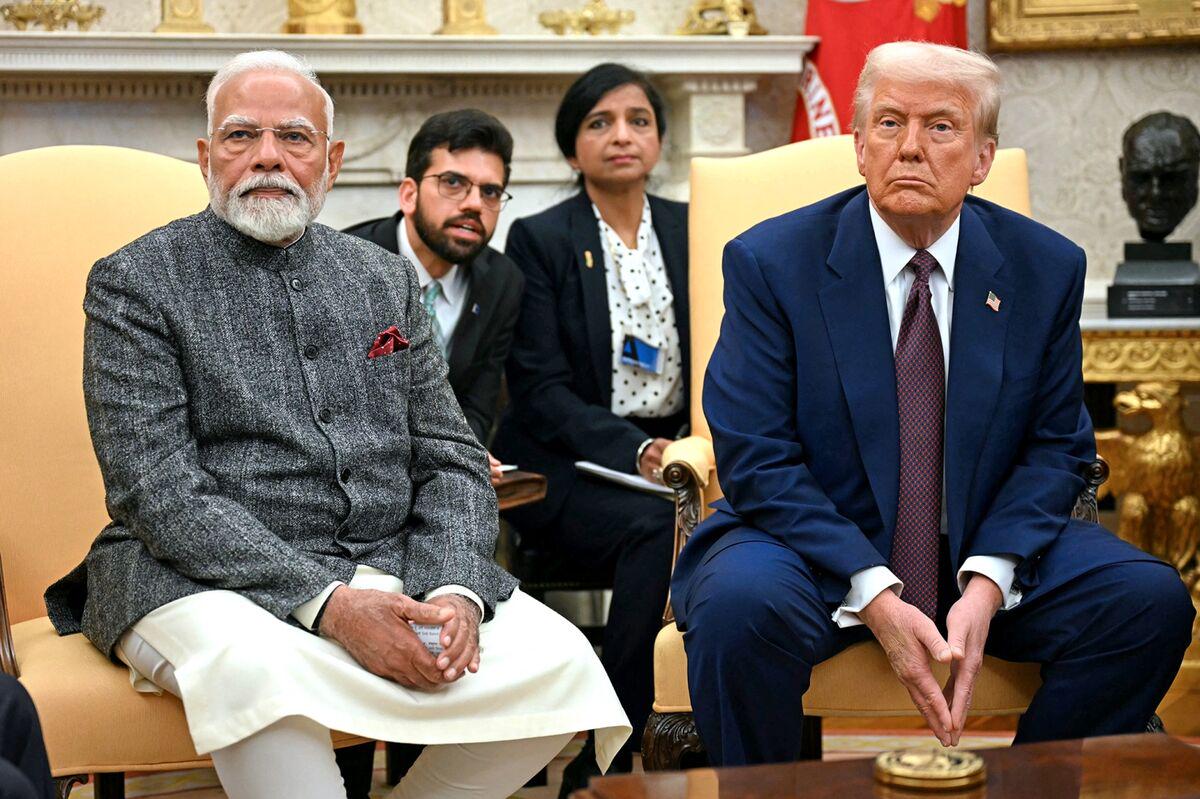
>India’s foreign ministry said it’s unaware of a conversation between President Donald Trump and Prime Minister Narendra Modi on Wednesday, hours after the US leader indicated he [spoke](https://www.bloomberg.com/news/articles/2025-10-15/trump-says-modi-committed-to-stop-russian-oil-purchases) with his Indian counterpart, who pledged to halt Russian oil purchases.
>“*To the best of our knowledge, I am not aware of any conversation between PM Modi and President Trump yesterday,*” Randhir Jaiswal, a spokesman for the Ministry of External Affairs, told reporters at a briefing in New Delhi on Thursday.
>US-India relations have been strained since Trump imposed a 50% tariff on goods from the South Asian nation, a move the president cast as a punishment for New Delhi’s purchases of Russian crude. On Wednesday, Trump signaled a possible resolution to the issue by telling reporters at the White House that Modi had committed to not buying oil from Russia.
>In a statement earlier Thursday, Jaiswal ***didn’t confirm that India is complying with Trump’s demands***, although he said that New Delhi is working to deepen energy ties with the US.
>Modi’s government has previously indicated the country would [keep buying](https://www.bloomberg.com/news/articles/2025-09-05/india-will-keep-buying-russian-oil-finance-minister-says) Russian oil if it is economically viable, and Jaiswal reiterated on Thursday that consumer interests remain a top priority in shaping India’s energy import policy.
>A White House official, asked about the purported conversation between Trump and Modi, said only that *productive discussions have occurred*, without specifying any participants. The official also noted that India is already cutting its purchases of Russian oil.
>India became a major importer of Russian crude after the start of the war in Ukraine in 2022, and has been able to scoop up deliveries at discounts. Purchases of Russian oil fell slightly last month, but still made up one-third of India’s overall imports in spite of the US push to curb flows.
>On Thursday, several executives from state-owned Indian refiners said they were [caught off guard](https://www.bloomberg.com/news/articles/2025-10-16/indian-refiners-to-take-less-russian-oil-after-trump-comments) by Trump’s comments. The executives, who asked not to be named as they’re not authorized to speak publicly, said they hadn’t been briefed by New Delhi or any ministries on the matter. Three executives said Indian imports of Russian oil would drop in the short term.
# Different Versions
>India has disputed Trump’s version of events in the past. The US president has said several times that he used trade as leverage to broker a ceasefire between India and Pakistan in May — an assertion Modi and his officials have [repeatedly denied](https://www.bloomberg.com/news/articles/2025-05-13/india-denies-trump-s-suggestion-he-used-trade-to-secure-truce) but Islamabad has embraced.
>While India was among the first countries to begin trade negotiations with the US earlier this year, its goods now face the highest tariffs in Asia.
>In recent weeks, the two sides have taken steps to repair relations. Trump and Modi spoke last week to review trade talks, and negotiators from New Delhi are currently in the US to clinch a deal they say may come as soon as November.
>Trump said Wednesday that India could not stop the purchases of Russian oil “*immediately*,” adding that “*it’s a little bit of a process, but the process is going to be over with soon.*”
What probably happened here was there were some backdoor discussions about concessions made to Uncle Sam in order to lower the tariffs. Some official may have suggested lowering the purchase of Russian oil. On the surface, it doesn’t seem to be a bad deal, given Russia can’t export much anyway due to drone strikes on their refineries. However, now that Trump has made the entire thing public, and after receiving overwhelming backlash from the Indian public and opposition parties, the deal will be stalled for at least 2–3 months. Right now, there’s a *delicate dance* going on between Trump’s desire to go public and India’s desire to keep any understanding behind the scenes. As long as they can get the 25 percent penalty tariff to go away and pave the way for a trade deal. And that’s why you can see the Indian government’s discomfort with appearing to be responding to the Trump administration’s pressure on Russian oil purchases. India might prefer public messaging that doesn’t suggest it has yielded to that pressure. Hence, I sense that the next step on Russian oil should be an agreed choreography between the governments of India and US on how to roll out an understanding in public. And voilà, there you go, a trade deal comes next.