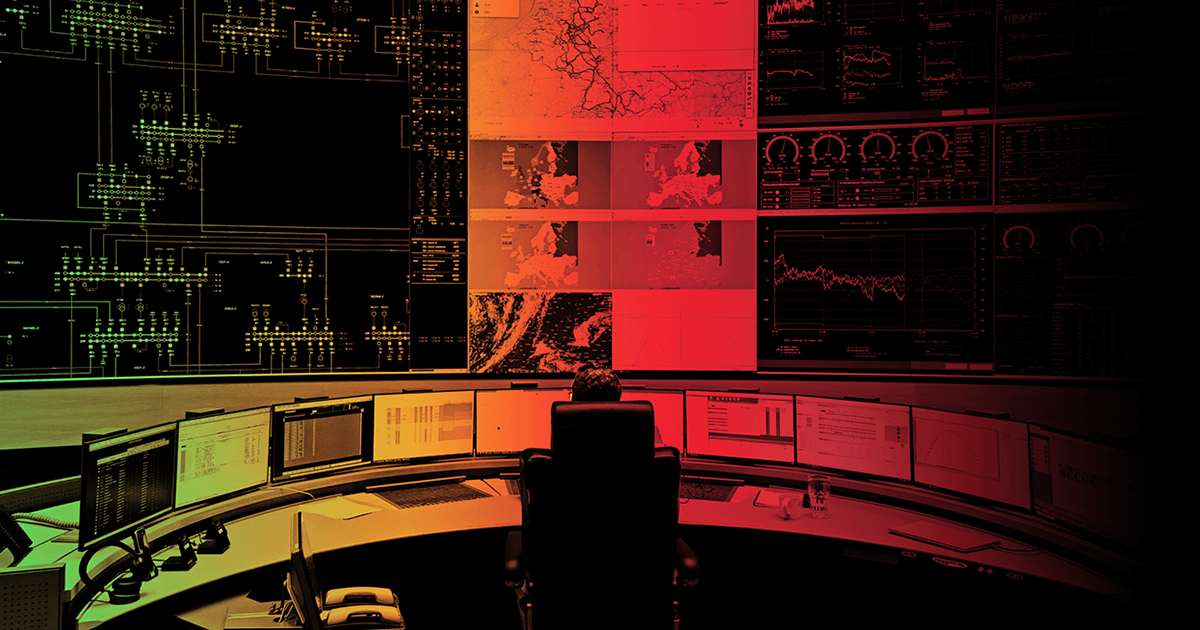
> When an early warning system designed to alert operators across Europe about disturbances on the grid was rolled out a decade ago, the predominant color showing on the on-screen maps was green. Safe with no disruptions. More recently it has become common for the maps in grid control rooms to light up amber, red, and on occasion even black for blackout. The widely-used traffic light model is a real-time illustration of how solar’s rapid success — with roughly four panels being installed somewhere in Europe every second — is colliding with the limits of a grid built long before renewables became central to power generation. The situation is getting more difficult to manage and operators say they lack the tools they need to balance out the effects of solar, according to interviews with more than a half-dozen European grid managers. Getting it wrong or failing to act has severe consequences like the lights going out. “The speed of the change is extreme,” said Jan Vorrink, who ran the control room of the Dutch grid for over a decade. “The strong increase in solar is pushing the boundaries of the system.”
> Solar farms are being built faster than even the industry expected. In 2020, Europe installed 23 gigawatts of solar, according to BloombergNEF data. Each year since then a new record has been set, with some 69.2 gigawatts expected to be added this year, capping a more than quadrupling of capacity in the last decade. By the end of the decade, solar is set to become the largest green energy source globally, according to the International Energy Agency. The shift has been particularly marked in Europe where countries have supercharged the buildout to try and ditch expensive imports of natural gas and deliver on the COP28 pledge to triple global renewable capacity by 2030, crucial to achieving the Paris Agreement’s 1.5C target. Vorrink now works on designing a control room fit for the future, but he was on the front line at Tennet Holding BV for many years. In 2009 when he was manager, the control room was a calm and quiet place to work. Alarms rarely rang, if ever. Now those alarms go off frequently when voltage surges and the grid becomes overloaded. The entire network is being stretched about as far as it can go, he said. “We can still handle it, but it’s not easy,” he said. The question now for Europe is whether it can revamp its grid fast enough to prevent another dramatic blackout. A chaotic shift would play into the hands of political factions across the world who claim that net zero will cripple businesses and make energy more expensive.
> Solar’s popularity has risen as panel prices have declined dramatically. Large-scale manufacturing has driven costs down by about 99% since the 1970s, according to a MIT study published last month. Because it’s cheap to install, solar is accessible to consumers who want to put a few panels on a rooftop, as well as utility-scale farms spread out over hundreds of acres. The cumulative effect means that the grid can’t mitigate the impact of high voltage when it occurs on such a large scale. In June, solar was the biggest source of electricity in the European Union for the first time, an increase of 22% from a year earlier, according to data from thinktank Ember. If only a few homes in a neighborhood have solar panels, it’s manageable, but when nearly all of them do, it becomes much harder to control, Tennet’s Vorrink said. The fragility of the region’s electricity network came into focus earlier this month when Spain’s grid operator asked for emergency measures to control sharp increases in voltage. Red Electrica said it noticed the surges during times of low demand and high solar production and warned that it could lead to a cascade of disconnections, reminiscent of those that caused the worst blackout in Europe in decades. The outage, earlier this year, affected more than 50 million people in Spain and Portugal and shows what’s at stake.
> In the aftermath, many were quick to blame solar. It’s clear from evidence published so far that the sudden disconnection of a large amount of solar did contribute to high voltage on the network, which ultimately brought down the system. And the issue hasn’t gone away. Voltage is the electrical pressure that pushes electrons from power stations through the grid to consumers. Networks need to be kept steady and if the voltage starts to move outside the boundaries set by the control room, alarms will sound that there’s a problem somewhere. It’s not just Spain, surges in voltage are happening more often in Europe with the rapid addition of renewable power generation. In 2024 there were a record 8,645 instances when voltage rose above allowed European limits. That’s more than a 2,000% increase from 2015, when there were 34 alerts, according to data published by the European Network of Transmission System Operators for Electricity, known as Entso-e. That’s like getting an alert almost every hour, up from fewer than three times a month a decade ago. When there’s an increase in voltage, other devices connected to the grid including power stations, may automatically disconnect to protect them from damage. This has the effect of raising the voltage even further. In a worst-case scenario the cycle continues until the whole network goes down like it did in Spain.
> For decades, low voltage was the more common problem and grid operators developed tools to manage it. Solar has turned the status quo on its head. Grid operators have started to respond. Germany enacted a law earlier this year to try and discourage solar farm operations from producing more power than consumers can use. Italy has been buying up new equipment to stabilize the grid in ways that fossil fuel plants have typically done. And following the report on Spain, the pan-European grid operators group Entso-e is calling for changes to regulation that would force renewable generators to help keep voltage under control. The flood of solar power is causing disruption beyond just voltage. It’s become common for wholesale prices to fall below zero. Solar and wind have no fuel costs, so there’s little incentive for operators to switch off when prices fall. When there’s low demand and lots of renewable supply, prices can turn negative. Europe’s biggest power market Germany has the largest fleet of solar and wind in the region. It also has a rapidly rising number of negative prices. In 2019, about 2% of hourly power contracts traded below zero. By last year, the figure had more than doubled to 5.2%.
sleepyrivertroll on
It’s odd that I didn’t see the article mention combining solar with battery storage. That seems like an obvious way to control the uneven nature of solar production. It would slow down deployment of new solar projects but it seems like the grid can barely handle things at the current rate.

3 Comments
I got a solution:
Just build more
> When an early warning system designed to alert operators across Europe about disturbances on the grid was rolled out a decade ago, the predominant color showing on the on-screen maps was green. Safe with no disruptions. More recently it has become common for the maps in grid control rooms to light up amber, red, and on occasion even black for blackout. The widely-used traffic light model is a real-time illustration of how solar’s rapid success — with roughly four panels being installed somewhere in Europe every second — is colliding with the limits of a grid built long before renewables became central to power generation. The situation is getting more difficult to manage and operators say they lack the tools they need to balance out the effects of solar, according to interviews with more than a half-dozen European grid managers. Getting it wrong or failing to act has severe consequences like the lights going out. “The speed of the change is extreme,” said Jan Vorrink, who ran the control room of the Dutch grid for over a decade. “The strong increase in solar is pushing the boundaries of the system.”
> Solar farms are being built faster than even the industry expected. In 2020, Europe installed 23 gigawatts of solar, according to BloombergNEF data. Each year since then a new record has been set, with some 69.2 gigawatts expected to be added this year, capping a more than quadrupling of capacity in the last decade. By the end of the decade, solar is set to become the largest green energy source globally, according to the International Energy Agency. The shift has been particularly marked in Europe where countries have supercharged the buildout to try and ditch expensive imports of natural gas and deliver on the COP28 pledge to triple global renewable capacity by 2030, crucial to achieving the Paris Agreement’s 1.5C target. Vorrink now works on designing a control room fit for the future, but he was on the front line at Tennet Holding BV for many years. In 2009 when he was manager, the control room was a calm and quiet place to work. Alarms rarely rang, if ever. Now those alarms go off frequently when voltage surges and the grid becomes overloaded. The entire network is being stretched about as far as it can go, he said. “We can still handle it, but it’s not easy,” he said. The question now for Europe is whether it can revamp its grid fast enough to prevent another dramatic blackout. A chaotic shift would play into the hands of political factions across the world who claim that net zero will cripple businesses and make energy more expensive.
> Solar’s popularity has risen as panel prices have declined dramatically. Large-scale manufacturing has driven costs down by about 99% since the 1970s, according to a MIT study published last month. Because it’s cheap to install, solar is accessible to consumers who want to put a few panels on a rooftop, as well as utility-scale farms spread out over hundreds of acres. The cumulative effect means that the grid can’t mitigate the impact of high voltage when it occurs on such a large scale. In June, solar was the biggest source of electricity in the European Union for the first time, an increase of 22% from a year earlier, according to data from thinktank Ember. If only a few homes in a neighborhood have solar panels, it’s manageable, but when nearly all of them do, it becomes much harder to control, Tennet’s Vorrink said. The fragility of the region’s electricity network came into focus earlier this month when Spain’s grid operator asked for emergency measures to control sharp increases in voltage. Red Electrica said it noticed the surges during times of low demand and high solar production and warned that it could lead to a cascade of disconnections, reminiscent of those that caused the worst blackout in Europe in decades. The outage, earlier this year, affected more than 50 million people in Spain and Portugal and shows what’s at stake.
> In the aftermath, many were quick to blame solar. It’s clear from evidence published so far that the sudden disconnection of a large amount of solar did contribute to high voltage on the network, which ultimately brought down the system. And the issue hasn’t gone away. Voltage is the electrical pressure that pushes electrons from power stations through the grid to consumers. Networks need to be kept steady and if the voltage starts to move outside the boundaries set by the control room, alarms will sound that there’s a problem somewhere. It’s not just Spain, surges in voltage are happening more often in Europe with the rapid addition of renewable power generation. In 2024 there were a record 8,645 instances when voltage rose above allowed European limits. That’s more than a 2,000% increase from 2015, when there were 34 alerts, according to data published by the European Network of Transmission System Operators for Electricity, known as Entso-e. That’s like getting an alert almost every hour, up from fewer than three times a month a decade ago. When there’s an increase in voltage, other devices connected to the grid including power stations, may automatically disconnect to protect them from damage. This has the effect of raising the voltage even further. In a worst-case scenario the cycle continues until the whole network goes down like it did in Spain.
> For decades, low voltage was the more common problem and grid operators developed tools to manage it. Solar has turned the status quo on its head. Grid operators have started to respond. Germany enacted a law earlier this year to try and discourage solar farm operations from producing more power than consumers can use. Italy has been buying up new equipment to stabilize the grid in ways that fossil fuel plants have typically done. And following the report on Spain, the pan-European grid operators group Entso-e is calling for changes to regulation that would force renewable generators to help keep voltage under control. The flood of solar power is causing disruption beyond just voltage. It’s become common for wholesale prices to fall below zero. Solar and wind have no fuel costs, so there’s little incentive for operators to switch off when prices fall. When there’s low demand and lots of renewable supply, prices can turn negative. Europe’s biggest power market Germany has the largest fleet of solar and wind in the region. It also has a rapidly rising number of negative prices. In 2019, about 2% of hourly power contracts traded below zero. By last year, the figure had more than doubled to 5.2%.
It’s odd that I didn’t see the article mention combining solar with battery storage. That seems like an obvious way to control the uneven nature of solar production. It would slow down deployment of new solar projects but it seems like the grid can barely handle things at the current rate.