
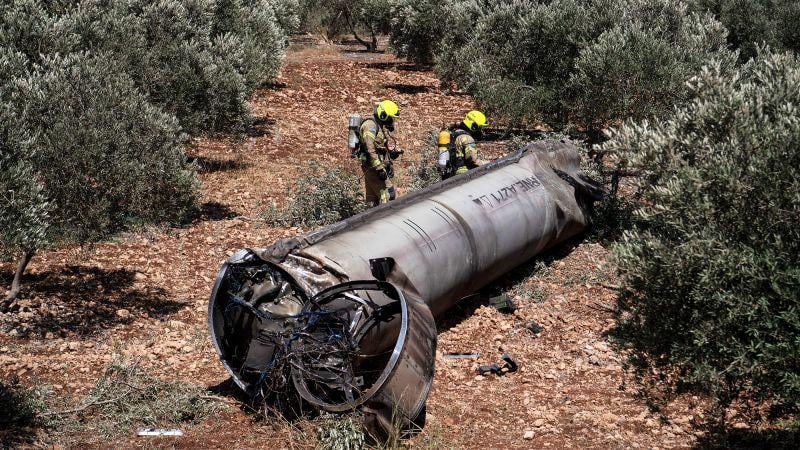
Iran appears to be stepping up the rebuilding of its ballistic missile program, despite the reintroduction last month of United Nations sanctions that ban arms sales to the country and ballistic missile activity.
European intelligence sources say several shipments of sodium perchlorate, the main precursor in the production of the solid propellant that powers Iran’s mid-range conventional missiles, have arrived from China to the Iranian port of Bandar Abbas since the so-called “snapback” mechanism was triggered at the end of September.
Those sources say the shipments, which began arriving on September 29, contain 2,000 tons of sodium perchlorate bought by Iran from Chinese suppliers in the wake of its 12-day conflict with Israel in June. The purchases are believed to be part of a determined effort to rebuild the Islamic Republic’s depleted missile stocks. Several of the cargo ships and Chinese entities involved are under sanctions from the United States.
The deliveries come after more-than-a-decade-old UN sanctions were restored by the snapback mechanism – a provision for Iranian breaches of the 2015 Joint Comprehensive Plan of Action (JCPOA) deal to monitor its nuclear program.
Under the sanctions re-imposed on Tehran last month, Iran shall not undertake any activity related to ballistic missiles capable of delivering nuclear weapons. UN member states must also prevent the provision to Iran of materials that could contribute to the country’s development of a nuclear weapons delivery system, which experts say could include ballistic missiles.
While the shipped substance – sodium perchlorate – is not specifically named in UN documents on materials banned for export to Iran, it is a direct precursor of ammonium perchlorate, a listed and prohibited oxidizer used in ballistic missiles. However, experts say that the sanctions’ failure to explicitly prohibit the chemical may leave China room to argue that it is not in violation of any UN ban.
It’s not clear if the Chinese government is aware of the shipments. In response to a question from CNN about the transactions, a spokesperson for China’s Ministry of Foreign Affairs said that, while he was “not familiar with the specific situation,” China has “consistently implemented export controls on dual-use items in accordance with its international obligations and domestic laws and regulations.”
Posted by John3262005