
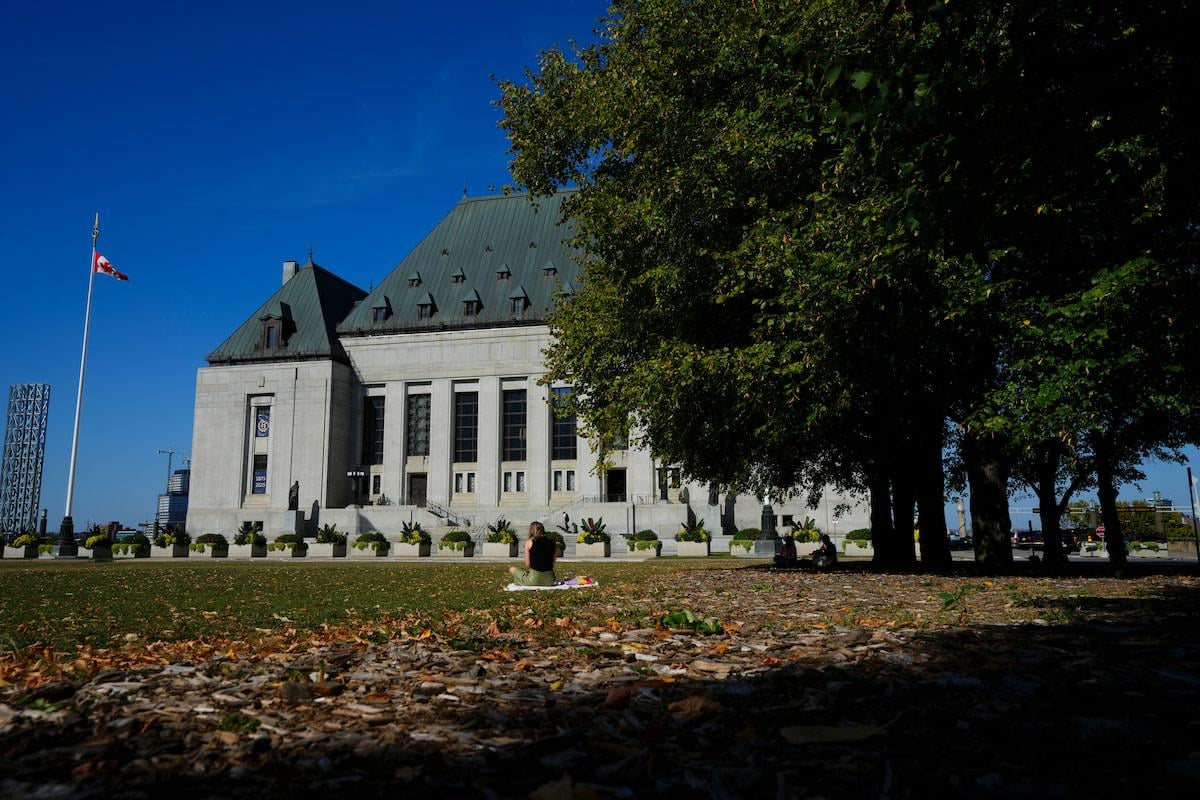
[Canadian] Supreme Court under fire for ruling against mandatory-minimum sentences in child-porn case
Posted by IHateTrains123
[Canadian] Supreme Court under fire for ruling against mandatory-minimum sentences in child-porn case
Posted by IHateTrains123
3 Comments
Archived version: [https://archive.fo/Hjb53](https://archive.fo/Hjb53).
The Supreme Court of Canada’s controversial ruling against mandatory-minimum jail sentences for some child-pornography crimes has shone a harsh spotlight on how the top court weighs the law in such cases.
The 5-4 decision on Oct. 31 – with Chief Justice Richard Wagner co-writing the dissent – led a range of political leaders across the country to lambaste the ruling.
[…]
The case at the top court was rooted in the conviction of two men in Quebec for possessing hundreds of images of child pornography, some of which showed brutal sexual abuse of young children.
The key legal issue, however, was whether a mandatory-minimum punishment of one year in jail for possessing or accessing child porn was constitutionally sound.
The Supreme Court narrowly declared that it was not.
**The ruling reveals a continuing philosophical divide at the country’s top court about mandatory minimums and the tool the court uses to determine whether they are unconstitutional.** It also represents a relatively rare example of the Chief Justice joining a dissenting opinion.
Ruling the minimum unconstitutional is based on Section 12 of the Charter, which protects Canadians from cruel and unusual punishment inflicted by the state and can be overridden by the notwithstanding clause.
**But the decision didn’t focus on the convicted offenders in Quebec and rested on a reasonably foreseeable hypothetical scenario used by the Supreme Court. The majority envisioned an 18-year-old who receives an image that could be considered child porn from a friend, a picture of that friend’s 17-year-old girlfriend.**
The Supreme Court majority concluded that one year in jail in such a situation would be cruel and unusual and declared the minimum unconstitutional.
Use of such imagined examples came to the fore a decade ago in a case call Nur, in a decision written by then-chief justice Beverley McLachlin. In that 2015 case, minimum jail sentences of several years for some gun crimes were considered reasonable in the circumstances but not so in imagined scenarios and thus the minimum was unconstitutional.
Since then, the same thing has happened to other, but not all, minimums that have been tested at the Supreme Court.
This approach has always stoked some skepticism but this time, given the nature of the crimes involved, the ruling has garnered much more criticism than usual.
Chief Justice Wagner, who co-wrote the Oct. 31 dissent with Justice Suzanne Côté, was unable to persuade at least one more of his colleagues to sign on to his opinion.
Before he rose to his current role, Chief Justice Wagner was in dissent in the 2015 Nur case – siding with Parliament to uphold the minimums – and was likewise in dissent in the 2016 Lloyd case, where a minimum for drug trafficking was ruled unconstitutional.
As Chief Justice, he has been part of majorities that ruled against other minimums, but he has also strongly emphasized the importance of strict punishment in crimes against children, such as in the 2019 Friesen decision he co-wrote.
Something I did some light googling on: are there any other Common Law countries where this kind of legal tool (meaning the “reasonable hypotheticals”) is used by courts? From my searches I could not find something comparable; it seemed to be a uniquely Canadian phenomenon.
It’s hard not to be maximally cynical that the courts are jealous gods. There’s a reason that they have to use “reasonable hypotheticals” to overturn laws that limit any of their discretionary powers; there is also police, prosecutor, and juror discretion that prevents any of these manifestly unjust scenarios from occurring in the first place.
Mandatory minimums are bad in general but in weighing them I definitely think the Court should be considering the edge cases that will be caught rather than just the most heinous cases!