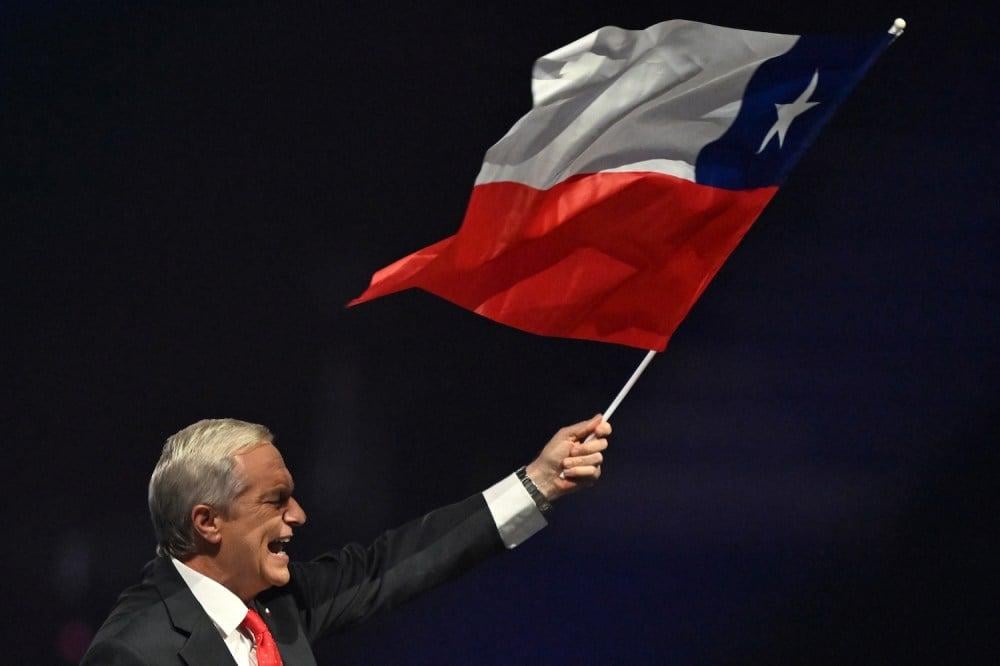
>Chile is the latest country in the Western Hemisphere to face a stark choice between right and left. While the upcoming presidential election remains fluid, the leading contenders are José Antonio Kast, a right-wing politician that many liken to U.S. President Donald Trump, and an upstart Communist Party candidate, Jeannette Jara. Jara is currently the [favorite](https://archive.ph/o/CXI1Z/https://www.as-coa.org/articles/poll-tracker-chiles-2025-presidential-election) to eke out a narrow win in first-round voting, but even if that happens, she is expected to fall short of the 50 percent needed to avoid a runoff election—and then to lose to Kast in that runoff.
>A Kast victory would continue a rightward trend in Latin America. A right turn in Chile would follow similar recent shifts in Argentina, Bolivia, and Ecuador. And given some of Kast’s polarizing rhetoric and policy proposals, it could deepen the country’s worsening political divide and fuel another round of instability that threatens Chile’s longtime status as a beacon of stable democracy and economic prosperity in the region.
>From Chile’s transition to democracy in 1990 until the election of President Gabriel Boric, politicians on the left and right have governed with restraint and moderation out of a recognition of the country’s fraught history with dictatorship and its hard-won economic gains, along with the straightjacket of its [authoritarian-era constitution](https://archive.ph/o/CXI1Z/https://www.amazon.com/Authoritarianism-Origins-Democracy-Michael-Albertus/dp/1107199824). That won Chile a reputation for political stability and, along with the country’s openness to the international market and respect for private property, impressive economic growth. It was the first country in the region to achieve high-income status and join the vaunted Organization for Economic Cooperation and Development club of developed economies.

3 Comments
>Chile is the latest country in the Western Hemisphere to face a stark choice between right and left. While the upcoming presidential election remains fluid, the leading contenders are José Antonio Kast, a right-wing politician that many liken to U.S. President Donald Trump, and an upstart Communist Party candidate, Jeannette Jara. Jara is currently the [favorite](https://archive.ph/o/CXI1Z/https://www.as-coa.org/articles/poll-tracker-chiles-2025-presidential-election) to eke out a narrow win in first-round voting, but even if that happens, she is expected to fall short of the 50 percent needed to avoid a runoff election—and then to lose to Kast in that runoff.
>A Kast victory would continue a rightward trend in Latin America. A right turn in Chile would follow similar recent shifts in Argentina, Bolivia, and Ecuador. And given some of Kast’s polarizing rhetoric and policy proposals, it could deepen the country’s worsening political divide and fuel another round of instability that threatens Chile’s longtime status as a beacon of stable democracy and economic prosperity in the region.
>From Chile’s transition to democracy in 1990 until the election of President Gabriel Boric, politicians on the left and right have governed with restraint and moderation out of a recognition of the country’s fraught history with dictatorship and its hard-won economic gains, along with the straightjacket of its [authoritarian-era constitution](https://archive.ph/o/CXI1Z/https://www.amazon.com/Authoritarianism-Origins-Democracy-Michael-Albertus/dp/1107199824). That won Chile a reputation for political stability and, along with the country’s openness to the international market and respect for private property, impressive economic growth. It was the first country in the region to achieve high-income status and join the vaunted Organization for Economic Cooperation and Development club of developed economies.
>Much has changed since Chile’s [last presidential election](https://archive.ph/o/CXI1Z/https://www.washingtonpost.com/opinions/2021/12/13/chiles-election-will-define-its-national-identity-political-struggles-all-over-latin-america/) four years ago. In late 2021, the country voted overwhelmingly to begin a process to [replace its constitution](https://archive.ph/o/CXI1Z/https://www.nytimes.com/2020/10/19/opinion/chile-constitution-referendum-protests.html), which dates back to the era of dictatorship under Gen. Augusto Pinochet. The country then rejected both a progressive and then a conservative replacement constitution in succession, taking the wind out of reform and leaving Boric and the left politically adrift. The reelection of Trump, who has allied himself with—and provided [material support](https://archive.ph/o/CXI1Z/https://www.theguardian.com/world/2025/oct/27/trump-javier-mileis-electoral-triumph-argentina) to—right-wing figures across Latin America has buoyed the ascendant right.
Well I dunno about unprecedented…
What happened to Evelyn Matthei? I thought she was a front runner a little while back.