
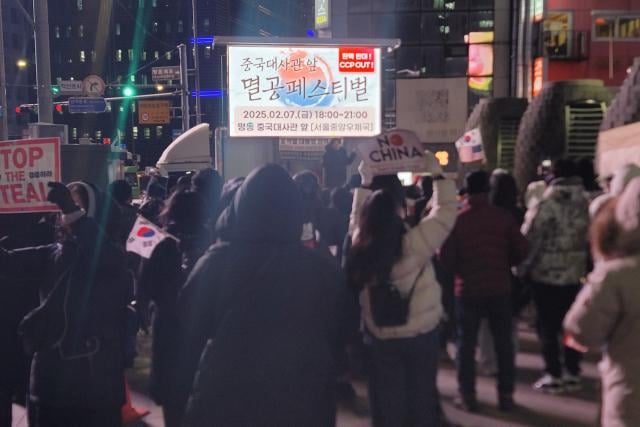
The Ministry of Culture, Sports and Tourism (MCST) has officially requested that the National Police Agency reinstate the Tourism Police Unit, which was disbanded in November 2023 under the government’s organizational efficiency plan. The aim is to address the growing concerns of a public safety vacuum in tourism ahead of the era of 20 million foreign visitors.
According to the MCST on the 12th, the ministry recently submitted an official request to the police to re-establish the Tourism Police Unit. The move comes amid increasing illegal activities targeting foreign tourists—such as recent controversies over men approaching foreign women tourists near Hongdae or some merchants overcharging visitors. As the central authority for tourism, the ministry has decided to restore a specialized body. An MCST official stated, “With recent xenophobic protests in Myeongdong raising safety concerns among inbound tourists, we are consulting with the police to ensure the protection of foreign visitors.”
The Tourism Police Unit was launched in October 2013 when Korea surpassed 10 million foreign tourists. It operated as an independent organization under the Seoul Metropolitan Police Agency, staffed by officers fluent in English, Japanese, and Chinese, and deployed across seven major tourist zones including Myeongdong and Hongdae. Officers served as special judicial police, cracking down on illegal call vans and unlicensed guides, and received positive evaluations. However, the unit was officially dissolved in November 2023 as part of government personnel cuts and organizational streamlining. Its functions were transferred to the foreign affairs or criminal divisions of local police stations such as Namdaemun (Myeongdong) and Mapo (Hongdae).
The MCST’s request for reinstatement after two years is driven by increasing foreign tourist numbers and the growing limitations of the current part-time arrangement. Regular police officers often lack foreign-language communication skills and have difficulty understanding the unique nature of tourism-related offenses, making immediate intervention challenging. Issues such as refund refusal, price disputes, and unlicensed tour guides require tourism-specific expertise and continuous on-site guidance, unlike routine assault or theft cases. This gap in tourism-specialized policing has allowed incidents—such as the recent tourist anxiety triggered by xenophobic protests in Myeongdong—to escalate without the swift, specialized response once provided by the Tourism Police. Ultimately, the MCST determined that the part-time system cannot maintain order in the era of 20 million tourists and decided to push for restoring a dedicated unit.
However, reinstating the Tourism Police will not happen immediately. Restoring the unit requires reversing the police organization’s personnel and structural changes, which ultimately demands close coordination and high-level decision-making between ministries. An MCST official noted, “Cooperation from the police is necessary, so it may take time.”
Posted by Freewhale98
2 Comments
[ Context ]
Faced with the abandonment by Trump adminstration and Korean public, pro-Yoon far-right is trying to find a new opportunity for political revival. As their online influencers failed to secure support from the US, they are shifting their resources to violent attacks on foreigners in Korea. They think they can gain popularity by appealing to xenophobia just like in the West. So, they are intensifying violence against tourists coming to Korea, raising concerns for tourists.
From the article, it seems there is also concern about scams that target tourists.
Is the xenophobia concern mostly about hostility towards Chinese and Japanese tourists?