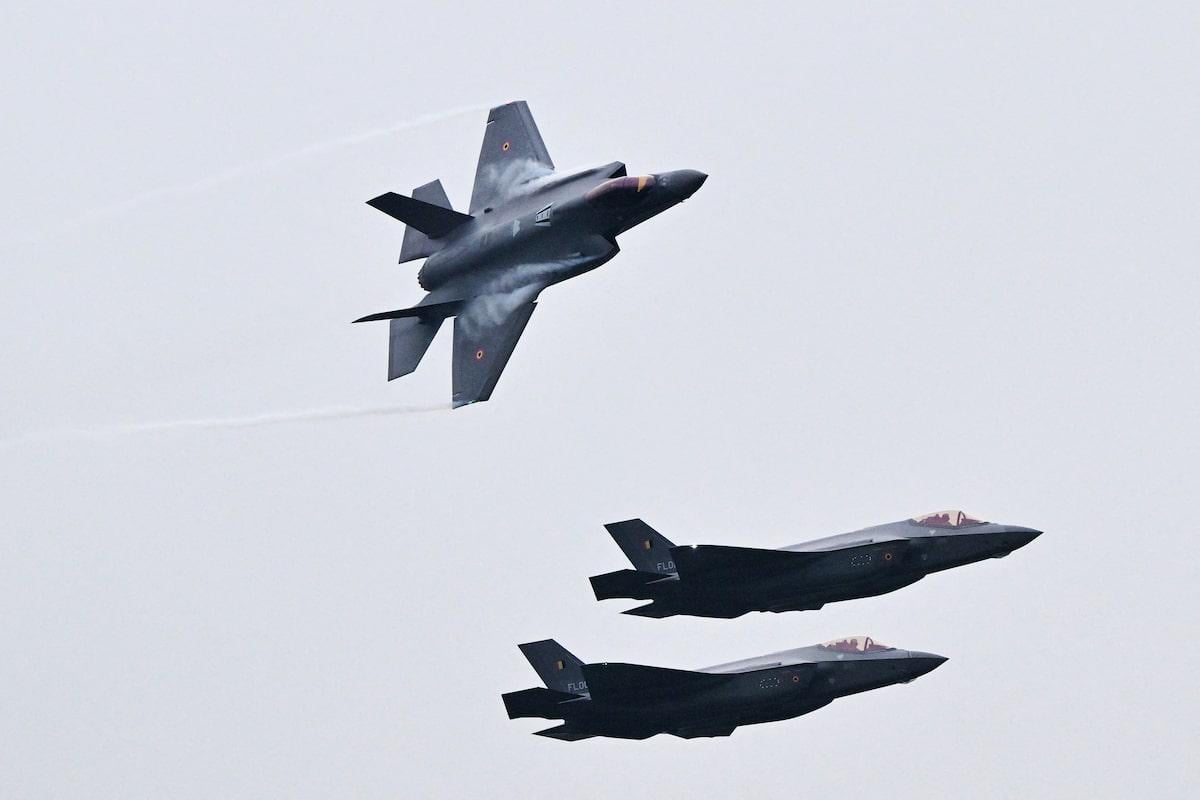
>The full acquisition of the F-35 fleet remains the only realistic and viable option for defending North America in partnership with the United States.
>However, the European dimension of Canadian defence policy poses a distinct challenge that can be met very well, and perhaps better, by a second European fleet. There is no guarantee that the United States will continue to support security and deterrence operations in Europe in the coming decades, given the uncertain evolution of its foreign policy. Canada must therefore prepare for the possibility of military engagement in Europe without American support, a scenario reminiscent of the early years of the two world wars.
>However, the F-35 may not be deployed without Washington’s tacit approval, which controls the aircraft’s software, sensitive data flows and maintenance systems. This dependence limits Canadian operational sovereignty in a European context. Thus, while the F-35 is perfectly suited to continental defence, it does not alone constitute a satisfactory response to Canada’s strategic autonomy requirements.
>**It is in this context that a mixed fleet could become relevant, but only in the medium term, beyond 2035 – and only once the RCAF has made up its personnel shortfalls, collaborative combat aircraft (CCA) systems become available, and the sixth-generation fighter programs that are currently in development have reached sufficient maturity.** A second fleet should therefore be considered not as an immediate alternative to the F-35, but as a strategic complement enabling Canada to have a credible expeditionary capability in Europe that is less dependent on U.S. approval and well-integrated with European military technology infrastructures.
>[…]
>The choice of one of these future ecosystems would rapidly involve our high-tech military industry in a sixth-generation partnership development for decades, while guiding the selection of its first element, the 4.5+ platform, for which Canada could begin planning production today with a view to achieving initial operational capability in 2035.
>By relying on a dual presence – the F-35 for continental defence and a European platform for expeditionary operations and sixth-generation readiness – Canada could play a unique role as a bridge between Europe and the United States, promote interoperability between competing systems, and become a crucial industrial partner for NATO’s resilience.
>Such a strategy would also strengthen its ability to contribute credibly to deterrence in Europe, while preserving its strategic autonomy. It would therefore be a mistake to try to impose a poorly calibrated mixed fleet today, one that is impossible to integrate within the critical time frame, disconnected from the RCAF’s current capabilities, and of no strategic military relevance.
>The most coherent option would be to complete the acquisition of the F-35 in order to preserve the defence of the North American continent, while planning, with our military experts, a gradual expansion beyond 2035 toward a second European fleet integrated into an emerging sixth-generation ecosystem. This approach, which would still require a decade of development and acquisitions, could involve our military industry right away and would guarantee Canada a more sovereign posture that is militarily and strategically relevant, and better aligned with the technological developments of the 21st century.
!ping Can
Worth-Jicama3936 on
Logistical officers love them
OkEntertainment1313 on
I’m going to add what may have been lost in the CBC headline yesterday.
12 retired General Officers from the RCAF have written a private letter to Cabinet outlining why Canada should not stray from purchasing 88 F35s. The letter has not been made public. Its authors include former Chief of the Defence Staff and former fighter pilot Tom Lawson.
OrbitalAlpaca on
If you are a big country with big defense spending then you can justify having different fleets of jets since some jets having better mission profiles then other jets. Canada has gotten used to only needing to service 1 type of fighter for a long time and may not have the breadth without extra funding for training and maintenance a different fleet of fighter jets. If they don’t want to buy the F-35s, then try to sell them back and go all in on a Gripen instead.
Aware-Computer4550 on
Canada’s military posture isn’t one that is expeditionary in nature. It’s spending and size look like it’s focused only on defending itself. I don’t really see a situation where Canadian jets are being flown in Europe.

5 Comments
>The full acquisition of the F-35 fleet remains the only realistic and viable option for defending North America in partnership with the United States.
>However, the European dimension of Canadian defence policy poses a distinct challenge that can be met very well, and perhaps better, by a second European fleet. There is no guarantee that the United States will continue to support security and deterrence operations in Europe in the coming decades, given the uncertain evolution of its foreign policy. Canada must therefore prepare for the possibility of military engagement in Europe without American support, a scenario reminiscent of the early years of the two world wars.
>However, the F-35 may not be deployed without Washington’s tacit approval, which controls the aircraft’s software, sensitive data flows and maintenance systems. This dependence limits Canadian operational sovereignty in a European context. Thus, while the F-35 is perfectly suited to continental defence, it does not alone constitute a satisfactory response to Canada’s strategic autonomy requirements.
>**It is in this context that a mixed fleet could become relevant, but only in the medium term, beyond 2035 – and only once the RCAF has made up its personnel shortfalls, collaborative combat aircraft (CCA) systems become available, and the sixth-generation fighter programs that are currently in development have reached sufficient maturity.** A second fleet should therefore be considered not as an immediate alternative to the F-35, but as a strategic complement enabling Canada to have a credible expeditionary capability in Europe that is less dependent on U.S. approval and well-integrated with European military technology infrastructures.
>[…]
>The choice of one of these future ecosystems would rapidly involve our high-tech military industry in a sixth-generation partnership development for decades, while guiding the selection of its first element, the 4.5+ platform, for which Canada could begin planning production today with a view to achieving initial operational capability in 2035.
>By relying on a dual presence – the F-35 for continental defence and a European platform for expeditionary operations and sixth-generation readiness – Canada could play a unique role as a bridge between Europe and the United States, promote interoperability between competing systems, and become a crucial industrial partner for NATO’s resilience.
>Such a strategy would also strengthen its ability to contribute credibly to deterrence in Europe, while preserving its strategic autonomy. It would therefore be a mistake to try to impose a poorly calibrated mixed fleet today, one that is impossible to integrate within the critical time frame, disconnected from the RCAF’s current capabilities, and of no strategic military relevance.
>The most coherent option would be to complete the acquisition of the F-35 in order to preserve the defence of the North American continent, while planning, with our military experts, a gradual expansion beyond 2035 toward a second European fleet integrated into an emerging sixth-generation ecosystem. This approach, which would still require a decade of development and acquisitions, could involve our military industry right away and would guarantee Canada a more sovereign posture that is militarily and strategically relevant, and better aligned with the technological developments of the 21st century.
!ping Can
Logistical officers love them
I’m going to add what may have been lost in the CBC headline yesterday.
12 retired General Officers from the RCAF have written a private letter to Cabinet outlining why Canada should not stray from purchasing 88 F35s. The letter has not been made public. Its authors include former Chief of the Defence Staff and former fighter pilot Tom Lawson.
If you are a big country with big defense spending then you can justify having different fleets of jets since some jets having better mission profiles then other jets. Canada has gotten used to only needing to service 1 type of fighter for a long time and may not have the breadth without extra funding for training and maintenance a different fleet of fighter jets. If they don’t want to buy the F-35s, then try to sell them back and go all in on a Gripen instead.
Canada’s military posture isn’t one that is expeditionary in nature. It’s spending and size look like it’s focused only on defending itself. I don’t really see a situation where Canadian jets are being flown in Europe.