The Spanish economy is growing faster than its peers, marking Spain as the world’s fastest-growing advanced economy for a second year running, with growth of about 3.5% in 2024 and 2.9% in the current year.
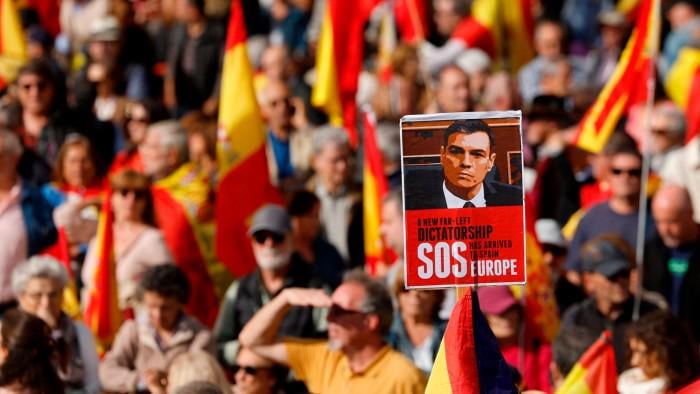
Behind the strong headlines lies a stark political reality: deep polarization and gridlock in parliament have choked off meaningful policy debate and reform.
A recurring issue is the lack of productive policy discussion. While other major economies maintain debate about education, housing, bureaucracy, and AI, Spain’s discourse is dominated by insults and partisan confrontation, limiting actionable policy.
**Key figures and dynamics:**
Miquel Roca, a father of Spain’s 1978 constitution, laments that the two main parties (PSOE and PP) are “comfortable being enemies” and avoid substantive debate.
Prime Minister Pedro Sánchez’s government has struggled to pass a budget since 2022, reflecting the parliamentary stalemate.
PP leader Alberto Núñez Feijóo remains focused on opposition to Sánchez rather than offering a transformative economic plan; Vox’s rise on the right underscores growing fragmentation.
**Structural challenges persist despite growth:**
Productivity remains low, with weak business investment cited as a major drag.
Education and the quality of higher education lag European peers, not aligning with the skills the economy needs.
Unemployment remains relatively high at about 10.5%, the highest in the EU, and bureaucratic barriers hinder entrepreneurship.
Spain has underutilized EU funds (€71bn from NextGenerationEU), with rigidity in policy delaying optimal use.
Housing affordability is a top concern for young people due to supply shortages and rising prices, complicating households’ ability to establish themselves.
There are also several cultural and systemic factors, such as a media landscape which function as unofficial organs of political parties, and a dearth of well-financed independent policy think-tanks because there is no tradition of wealthy people backing them. All of which are not conducive to sustained, policy-driven discussion.

1 Comment
The Spanish economy is growing faster than its peers, marking Spain as the world’s fastest-growing advanced economy for a second year running, with growth of about 3.5% in 2024 and 2.9% in the current year.
Behind the strong headlines lies a stark political reality: deep polarization and gridlock in parliament have choked off meaningful policy debate and reform.
A recurring issue is the lack of productive policy discussion. While other major economies maintain debate about education, housing, bureaucracy, and AI, Spain’s discourse is dominated by insults and partisan confrontation, limiting actionable policy.
**Key figures and dynamics:**
Miquel Roca, a father of Spain’s 1978 constitution, laments that the two main parties (PSOE and PP) are “comfortable being enemies” and avoid substantive debate.
Prime Minister Pedro Sánchez’s government has struggled to pass a budget since 2022, reflecting the parliamentary stalemate.
PP leader Alberto Núñez Feijóo remains focused on opposition to Sánchez rather than offering a transformative economic plan; Vox’s rise on the right underscores growing fragmentation.
**Structural challenges persist despite growth:**
Productivity remains low, with weak business investment cited as a major drag.
Education and the quality of higher education lag European peers, not aligning with the skills the economy needs.
Unemployment remains relatively high at about 10.5%, the highest in the EU, and bureaucratic barriers hinder entrepreneurship.
Spain has underutilized EU funds (€71bn from NextGenerationEU), with rigidity in policy delaying optimal use.
Housing affordability is a top concern for young people due to supply shortages and rising prices, complicating households’ ability to establish themselves.
There are also several cultural and systemic factors, such as a media landscape which function as unofficial organs of political parties, and a dearth of well-financed independent policy think-tanks because there is no tradition of wealthy people backing them. All of which are not conducive to sustained, policy-driven discussion.
[Archive link](https://archive.is/20251119142953/https://www.ft.com/content/ea2a6456-21eb-48e6-93c2-1c56210d786f)
!ping EUROPE