China is mobilizing an armada of civilian ships that could help in an invasion of Taiwan – a mission that could surpass the Second World War’s Normandy landings. Reuters used ship tracking data and satellite images to monitor the role civilian vessels played in Chinese maritime exercises this summer. The drills revealed that China is devising concrete invasion plans, naval warfare experts say, and rehearsing new techniques aimed at speeding up beach landings of troops and equipment in a bid to overwhelm Taiwan’s defenders.
[…]
In response to questions, Taiwan’s defense ministry referred Reuters to comments made in September by Defense Minister Wellington Koo, who said that the island maintains “continuous oversight” of China’s use of roll-on, roll-off vessels. “We closely monitor how they support military operations,” Koo said, adding that Taiwan has “developed relevant contingency plans.”
The arsenal of weapons on display during Xi’s parade included amphibious assault vehicles that would be crucial for seizing control of Taiwan. Reuters also observed civilian ships loading similar amphibious assault vehicles in this year’s naval exercises.
With a fleet of these civilian ships drafted to serve alongside the world’s biggest navy, China can exploit the full scope of its massive maritime power in preparing for an attack on Taiwan. The PLA has legal authority to take control of civilian shipping for military purposes.
The way China used civilian cargo vessels in this summers’ exercises is “a substantial moving of the needle” towards being able to carry enough troops, equipment and supplies to the beaches of Taiwan as part of an invasion, said Thomas Shugart, a former U.S. submarine officer who closely follows China’s fleet.
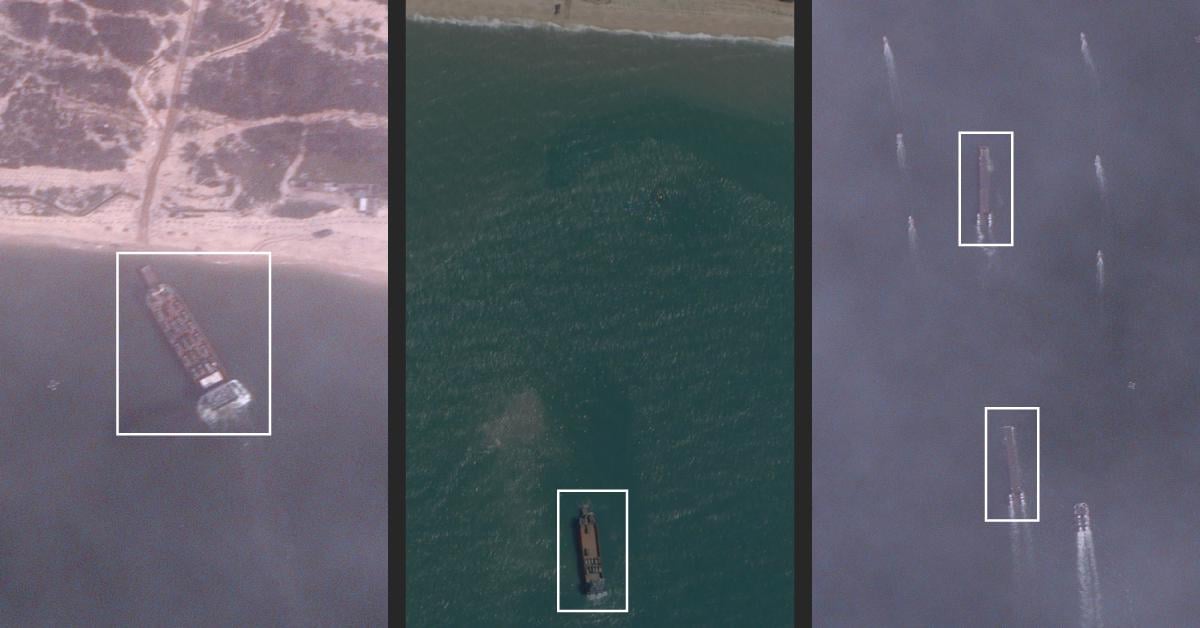
“This is a very significant development,” said Shugart, referring to China using deck cargo ships to offload vehicles directly onto the beach, which he recently wrote about on X. “It is a huge increase in their first wave capacity, in their ability to take heavy vehicles straight to the beach in a first wave.”
[…]
Still, China’s naval capabilities keep growing, the Reuters analysis shows. Throughout the summer, we tracked the movements of more than 100 civilian vessels that have participated in drills like the August one or are owned by operators that often participate in military exercises.
In July, we identified an exercise underway at the beach near Jiesheng, and spotted several deck cargo ships cruising toward the beach, loaded with vehicles.
A swarm of these civilian vessels could sharply boost the size of the forces deployed for an invasion and potentially enable China to carry out assaults at a bigger number of sites on Taiwan, according to Taiwanese and U.S. experts on amphibious warfare.
Admiral Lee Hsi-min, a former chief of Taiwan’s armed forces and one of the island’s leading thinkers on defense and security, said the satellite images of the August exercises revealed the PLA was now experimenting with craft smaller than the bigger civilian vessels used in earlier drills.
“My guess is that they are trying to develop a kind of large number of small amphibious landing ships supported by the civilian sector,” Lee said. “During wartime, they would conduct multi-point, small amphibious landing operations.”
This could be more difficult for Taiwan’s defenders to repulse than landings at fewer sites, he added.

1 Comment
China is mobilizing an armada of civilian ships that could help in an invasion of Taiwan – a mission that could surpass the Second World War’s Normandy landings. Reuters used ship tracking data and satellite images to monitor the role civilian vessels played in Chinese maritime exercises this summer. The drills revealed that China is devising concrete invasion plans, naval warfare experts say, and rehearsing new techniques aimed at speeding up beach landings of troops and equipment in a bid to overwhelm Taiwan’s defenders.
[…]
In response to questions, Taiwan’s defense ministry referred Reuters to comments made in September by Defense Minister Wellington Koo, who said that the island maintains “continuous oversight” of China’s use of roll-on, roll-off vessels. “We closely monitor how they support military operations,” Koo said, adding that Taiwan has “developed relevant contingency plans.”
The arsenal of weapons on display during Xi’s parade included amphibious assault vehicles that would be crucial for seizing control of Taiwan. Reuters also observed civilian ships loading similar amphibious assault vehicles in this year’s naval exercises.
With a fleet of these civilian ships drafted to serve alongside the world’s biggest navy, China can exploit the full scope of its massive maritime power in preparing for an attack on Taiwan. The PLA has legal authority to take control of civilian shipping for military purposes.
The way China used civilian cargo vessels in this summers’ exercises is “a substantial moving of the needle” towards being able to carry enough troops, equipment and supplies to the beaches of Taiwan as part of an invasion, said Thomas Shugart, a former U.S. submarine officer who closely follows China’s fleet.
“This is a very significant development,” said Shugart, referring to China using deck cargo ships to offload vehicles directly onto the beach, which he recently wrote about on X. “It is a huge increase in their first wave capacity, in their ability to take heavy vehicles straight to the beach in a first wave.”
[…]
Still, China’s naval capabilities keep growing, the Reuters analysis shows. Throughout the summer, we tracked the movements of more than 100 civilian vessels that have participated in drills like the August one or are owned by operators that often participate in military exercises.
In July, we identified an exercise underway at the beach near Jiesheng, and spotted several deck cargo ships cruising toward the beach, loaded with vehicles.
A swarm of these civilian vessels could sharply boost the size of the forces deployed for an invasion and potentially enable China to carry out assaults at a bigger number of sites on Taiwan, according to Taiwanese and U.S. experts on amphibious warfare.
Admiral Lee Hsi-min, a former chief of Taiwan’s armed forces and one of the island’s leading thinkers on defense and security, said the satellite images of the August exercises revealed the PLA was now experimenting with craft smaller than the bigger civilian vessels used in earlier drills.
“My guess is that they are trying to develop a kind of large number of small amphibious landing ships supported by the civilian sector,” Lee said. “During wartime, they would conduct multi-point, small amphibious landing operations.”
This could be more difficult for Taiwan’s defenders to repulse than landings at fewer sites, he added.