> As construction workers dug foundations for a high-rise in downtown Bratislava in September, they uncovered a 500-pound bomb, undetonated and forgotten. The site, on the northern banks of the Danube River, was part of a vast wasteland for three decades, a reminder of the city’s wartime destruction and post-Soviet decay.
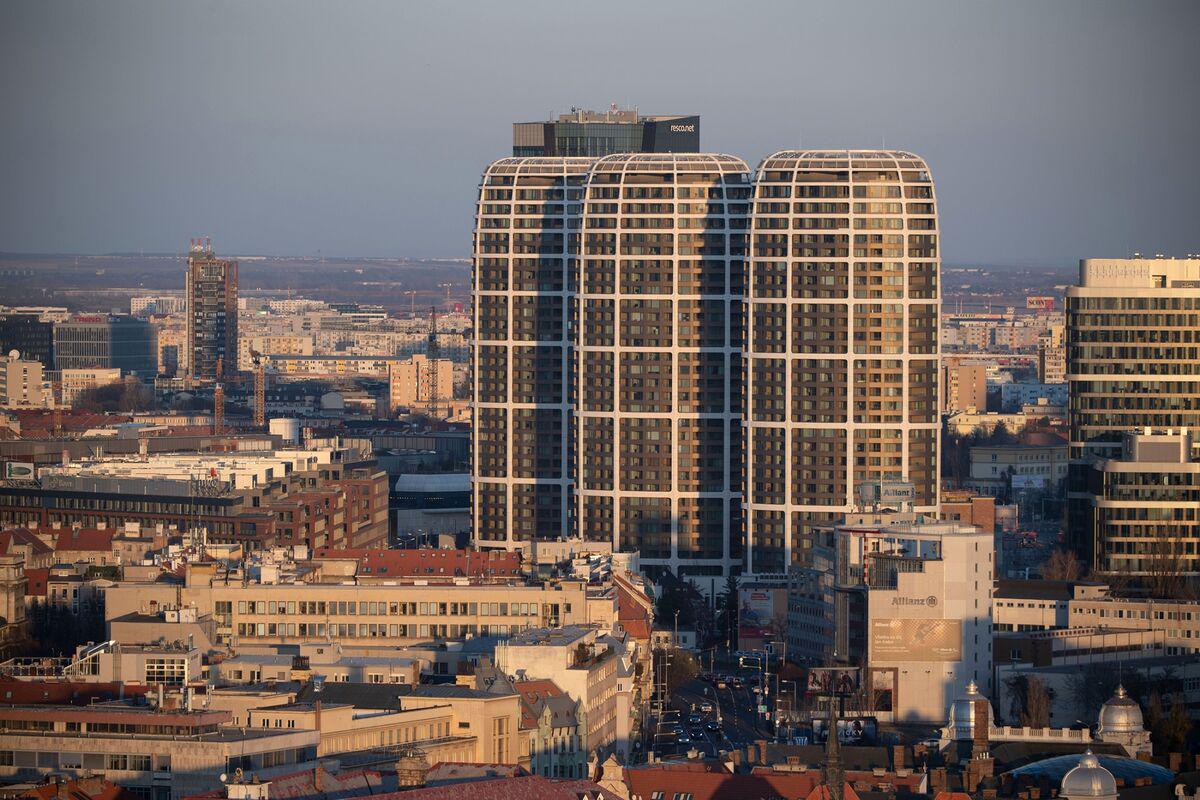
> The excavations — briefly delayed while experts disposed of the World War II ordnance — are helping to change that. No longer a dark scar on the city’s map full of aging warehouses behind rusting fences and abandoned lots overtaken by greenery, this section of downtown is now home to two-dozen gleaming new buildings, crowned by the Slovak capital’s first skyscraper over 150 meters (500 feet). More than $3 billion has flowed into projects, including buildings designed by world-renowned architects Zaha Hadid and Stefano Boeri, filling in gaps in the city’s urban fabric and reshaping its identity.
> “Bratislava has always had this remarkable ability to adapt, to rise from the challenges it faces and reshape itself to thrive,” said Matus Vallo, the capital’s 48-year-old mayor, “and I think in recent years that renewal has been happening in a really impressive way.”As a young man, Vallo visited the area to catch a show at Divadlo Stoka. Located in a former trade union building for the city transport company, it was the first independent theater company set up after communism, and retains to this day a loyal following for its bold political and social satires. But back then, that was the only draw. “It was a no-man’s land,” Vallo said.
> For a long time, there was little appetite and less money available for redevelopment. As Slovakia rebuilt its industrial base following the collapse of communism in 1989, the services sector began to thrive, driving demand for office space, shopping and housing. But challenges remained, including land consolidation, outdated zoning and environmental burdens, while the 2008-2009 financial crisis kept large investors away from smaller markets like Bratislava.
> That started to change in the 2010s. Panorama City became the first high-rise to pierce the skyline downtown in 2016. The project was given to Spanish architect Ricardo Bofill, who designed twin triangular towers. We were looking for “a breath of fresh air,” said Peter Pis, commercial director at JTRE, one of Slovakia’s top developers, with investments of about €1 billion in a range of downtown projects, including apartments, retail and office space. About four years later, Penta Real Estate’s Sky Park towers development went up, with sleek elliptical towers designed by Hadid and heights surpassing 328 feet (100 meters). The country’s first skyscraper followed. Standing at 168 meters and boasting luxury apartments, it offers panoramic views of the Danube and entire city center.
> Below is one of the area’s new malls — no other European capital or major city boasts as much retail floor space in shopping centers per resident as the Slovak capital, according to Austrian research agency RegioData Research GmbH. The trend stems from the city’s socialist past, its small population and its location near the borders, which together have helped drive a high concentration of shopping space. “The oldest generation lived through 40 years of absolute goods scarcity. So, when shopping malls finally arrived, they were something entirely new and alluring,” said Juraj Sujan, Bratislava’s chief architect. The boom has reshaped the city’s retail landscape — unlike other European capitals, shops for brand-name clothing, footwear and other goods are almost all exclusively found within Bratislava’s malls.
> Few buildings in the area survived the war, and the neglect that followed the collapse of communism. The most impressive among the surviving historic buildings is the Jurkovic Heating Plant, designed by Dusan Jurkovic, a leading mid-20th-century Slovak architect. After a €13 million restoration — which won the Architecture MasterPrize award in 2022 — the Jurkovic plant is now home to a buzzing coworking and event center. With the momentum came challenges. During the war, US-led forces dropped hundreds of tons of explosives on an oil refinery vital to Nazi Germany’s war machine, housed in the vast industrial zone. The area was partially revived during the communist era, but it was largely left to decay after the regime’s collapse. For decades leaked oil from the bombed refinery, expended munitions and other pollutants continued to leach into the ground, heavily contaminating the soil.
vaguelydad on
Build baby build! I’d love to see Eastern Europe leapfrog Western Europe by building and being friendly to companies creating prosperity. Like how the Sunbelt is leaving behind the rust belt, NIMBY England, and California.

2 Comments
> As construction workers dug foundations for a high-rise in downtown Bratislava in September, they uncovered a 500-pound bomb, undetonated and forgotten. The site, on the northern banks of the Danube River, was part of a vast wasteland for three decades, a reminder of the city’s wartime destruction and post-Soviet decay.
> The excavations — briefly delayed while experts disposed of the World War II ordnance — are helping to change that. No longer a dark scar on the city’s map full of aging warehouses behind rusting fences and abandoned lots overtaken by greenery, this section of downtown is now home to two-dozen gleaming new buildings, crowned by the Slovak capital’s first skyscraper over 150 meters (500 feet). More than $3 billion has flowed into projects, including buildings designed by world-renowned architects Zaha Hadid and Stefano Boeri, filling in gaps in the city’s urban fabric and reshaping its identity.
> “Bratislava has always had this remarkable ability to adapt, to rise from the challenges it faces and reshape itself to thrive,” said Matus Vallo, the capital’s 48-year-old mayor, “and I think in recent years that renewal has been happening in a really impressive way.”As a young man, Vallo visited the area to catch a show at Divadlo Stoka. Located in a former trade union building for the city transport company, it was the first independent theater company set up after communism, and retains to this day a loyal following for its bold political and social satires. But back then, that was the only draw. “It was a no-man’s land,” Vallo said.
> For a long time, there was little appetite and less money available for redevelopment. As Slovakia rebuilt its industrial base following the collapse of communism in 1989, the services sector began to thrive, driving demand for office space, shopping and housing. But challenges remained, including land consolidation, outdated zoning and environmental burdens, while the 2008-2009 financial crisis kept large investors away from smaller markets like Bratislava.
> That started to change in the 2010s. Panorama City became the first high-rise to pierce the skyline downtown in 2016. The project was given to Spanish architect Ricardo Bofill, who designed twin triangular towers. We were looking for “a breath of fresh air,” said Peter Pis, commercial director at JTRE, one of Slovakia’s top developers, with investments of about €1 billion in a range of downtown projects, including apartments, retail and office space. About four years later, Penta Real Estate’s Sky Park towers development went up, with sleek elliptical towers designed by Hadid and heights surpassing 328 feet (100 meters). The country’s first skyscraper followed. Standing at 168 meters and boasting luxury apartments, it offers panoramic views of the Danube and entire city center.
> Below is one of the area’s new malls — no other European capital or major city boasts as much retail floor space in shopping centers per resident as the Slovak capital, according to Austrian research agency RegioData Research GmbH. The trend stems from the city’s socialist past, its small population and its location near the borders, which together have helped drive a high concentration of shopping space. “The oldest generation lived through 40 years of absolute goods scarcity. So, when shopping malls finally arrived, they were something entirely new and alluring,” said Juraj Sujan, Bratislava’s chief architect. The boom has reshaped the city’s retail landscape — unlike other European capitals, shops for brand-name clothing, footwear and other goods are almost all exclusively found within Bratislava’s malls.
> Few buildings in the area survived the war, and the neglect that followed the collapse of communism. The most impressive among the surviving historic buildings is the Jurkovic Heating Plant, designed by Dusan Jurkovic, a leading mid-20th-century Slovak architect. After a €13 million restoration — which won the Architecture MasterPrize award in 2022 — the Jurkovic plant is now home to a buzzing coworking and event center. With the momentum came challenges. During the war, US-led forces dropped hundreds of tons of explosives on an oil refinery vital to Nazi Germany’s war machine, housed in the vast industrial zone. The area was partially revived during the communist era, but it was largely left to decay after the regime’s collapse. For decades leaked oil from the bombed refinery, expended munitions and other pollutants continued to leach into the ground, heavily contaminating the soil.
Build baby build! I’d love to see Eastern Europe leapfrog Western Europe by building and being friendly to companies creating prosperity. Like how the Sunbelt is leaving behind the rust belt, NIMBY England, and California.