
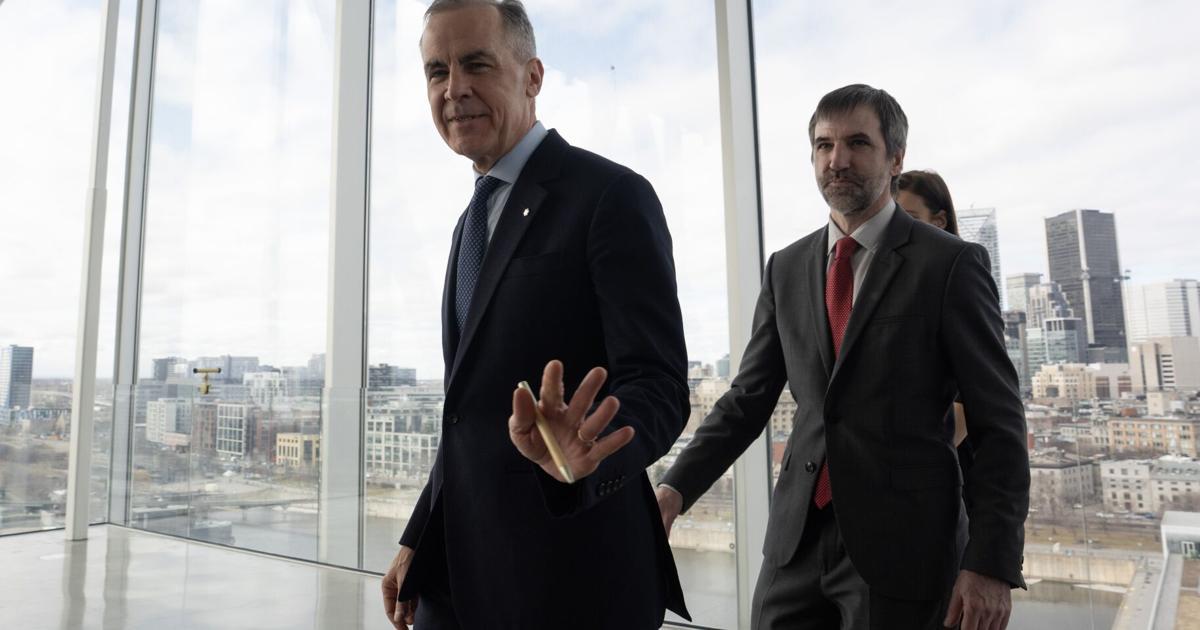
Mark Carney lost the minister who was the green conscience of his government. Here’s how it happened
Posted by IHateTrains123
Mark Carney lost the minister who was the green conscience of his government. Here’s how it happened
Posted by IHateTrains123
3 Comments
[The memorandum of understanding] had not been discussed at the cabinet table, nor had Liberal MPs been briefed in caucus. They’d been told the MOU required Alberta to beef up its industrial carbon pricing regime, build the Pathways carbon capture project, and obtain the consent of Indigenous Peoples and the government of British Columbia. Some felt that with B.C. and Indigenous opposition, Alberta would be forced to enact better climate laws in exchange for the promise of a pipeline that would never get built.
But now, the MOU appeared to go much farther than anything discussed. In the days that followed, the agreement Carney crafted with Alberta would lead to the resignation of Guilbeault, his popular Quebec lieutenant and an environmentalist many caucus members looked to for guidance. This is the story of how that resignation came about, based on conversations with numerous sources with knowledge of Guilbeault’s last days in cabinet, who spoke freely with the Star only on the condition that they be granted anonymity.
Giving Alberta a carve-out on clean electricity regulations — rules that were revised to address concerns from Alberta and Saskatchewan would set back Canada’s decarbonization efforts. If Alberta got a carve-out, why not Saskatchewan or Ontario? Just as Carney had warned when he criticized the carbon tax carve-out for home heating oil in 2023, a carve-out would lead to less certainty in the system, less investment, and ultimately undermine the effort.
Guilbeault, an environment activist before he was convinced to run for the Liberals in 2019, wanted a briefing. Carney’s chief of staff, Marc-André Blanchard, didn’t seem to understand what Guilbeault was upset about.
But on Tuesday afternoon, Guilbeault and his two chiefs of staff had that briefing with Blanchard, Environment and Climate Change Minister Julie Dabrusin, her chief of staff, the prime minister’s deputy chiefs of staff, Privy Council Clerk Michael Sabia and deputy clerk Chris Fox. There, Guilbeault saw a draft of the MOU for the first time.
Federal legislation already obliged Alberta to clean up its industrial carbon pricing system. Ottawa, he argued, did not need to trade away a suspension of the clean energy regulations to get it to do that.
He asked why the government was sacrificing a few hundred million tonnes of greenhouse gas emission reductions, reductions that couldn’t be achieved without the industrial carbon price reaching $400 to $500 per tonne.
“Is this true?” Blanchard asked. Fox confirmed Environment Canada analysis that suggested the price would have to be around $400 per tonne for equivalencies to be found. (That number was scoffed at Thursday by Alberta officials, who noted that the MOU states affordability and competitiveness must be design features.) Then Fox took on an aggressive tone, defending the agreement as necessary for Canadian unity and to combat separatism in Alberta.
Damn crazy how carney kind of is speed running the Trudeau path
It looks crazy to me how much of a 180 on environmental policy Canada has done without a change in the political party in goverment, it’s also shameful AND bad politics
In before people here support more fossil fuel infrastructure tho…