
“Educate the politicians and people of this country who do not even recognize Holy Mother Han (Han Hak-ja), who has her base in the United States.”
Han Hak-ja, the leader of the Family Federation for World Peace and Unification (commonly known as the Unification Church), which has sparked a major church–state collusion controversy in South Korean politics, made this remark last July—at a time when a special prosecutor was tightening the investigation into the church.
Observers note that the simultaneous reference to both “a base in the United States” and “this country’s politicians” underscores the interpretation that the Unification Church’s influence extends globally. Beyond owning vast real estate holdings, the Unification Church operates food and construction companies, cultural and arts organizations, educational institutions, and domestic and international media outlets, both directly and indirectly, while exerting political influence across the world.
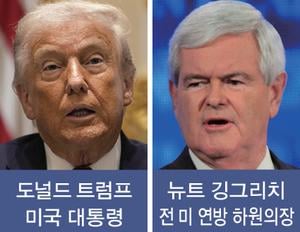
One of the most prominent figures connected to the Unification Church is U.S. President Donald Trump, one of the most powerful political leaders in the world. In fact, the Trump administration openly expressed concern and anger toward the South Korean government after a special prosecutor’s team investigating First Lady Kim Keon-hee conducted raids on the Unification Church.
Ahead of the U.S.–Korea summit last August, President Trump suddenly posted on social media explosive remarks about the South Korean government, claiming it had “brutally raided churches” and had even entered U.S. military bases to obtain information, adding that “a purge or revolution is taking place in Korea.” Although he later softened his stance during the summit, saying “it appears I was mistaken,” CNN reported that the church Trump was referring to was believed to be the Unification Church.
Newt Gingrich, a veteran conservative politician often described as President Trump’s “mentor,” openly criticized the Lee Jae-myung administration. Referring to the special prosecutor’s nine-and-a-half-hour questioning of Han Hak-ja in September over alleged violations of political fundraising laws, Gingrich stated that “Korea’s new left-wing government is attacking multiple religions,” adding that it seemed to harbor a “crazy intention to destroy ‘Mother Moon’ (Han Hak-ja).”
Mike Pompeo, who served as Secretary of State during Trump’s first term, also weighed in, claiming that “the deepening infringement on religious freedom violates the democratic principles that Korea should uphold.”
Critics argue that such statements stem from a longstanding relationship between the Trump camp and the Unification Church, and that the church has leveraged this relationship to exert influence over South Korean politicians.
President Trump also delivered two speeches at a Unification Church–hosted virtual event in September 2021, reportedly receiving $2 million in speaking fees. Former Japanese Prime Minister Shinzo Abe also appeared as a keynote speaker at the same event.
In July 2022, Abe was assassinated during an election campaign by Tetsuya Yamagami, who reportedly harbored resentment toward the Unification Church after his mother became deeply involved with the group. Yamagami is said to have committed the attack after learning that Abe had sent a congratulatory message to the church. Following the assassination, public outrage surged in Japan as allegations of collusion between the Unification Church and the ruling Liberal Democratic Party came to light.
Posted by Freewhale98
2 Comments
**Is Donald Trump Part of the Unification Church’s Global Right-Wing Network?**
South Korea’s investigation into the December 3rd insurrection and the broader corruption network linking shamans, the Unification Church (“Moonies”), and far-right evangelical forces has triggered an unexpected backlash from the United States.
In parts of American political discourse, anger has been directed not at the alleged corruption itself, but at the South Korean government for investigating the Unification Church. This reaction raises a central question:
Why did a domestic Korean investigation provoke such a strong response from U.S. political figures and what does it reveal about the Unification Church’s global influence?
This article examines that question by tracing the transnational church–politics network surrounding the Unification Church and its ties to right-wing power structures abroad.
This would be a really funny thing to bring him down lmao