what do you think globalism means? vibes? papers? essays? nothing but taco trucks?
no this is a great example of how globalism is developing food, culture and fahsion all of this is shapped by the globalization of Tv shows. it i think reflects how even in smaller parts of the world globalization can emerge. people in kashmir feel connections with turkish culture and its brillaint. this is globalization in action and its fucking amazing.
ewatta200 on
**Srinagar:** In Aasma’s home, the Turkish drama *Diriliş: Ertuğrul* plays on an endless loop, even when no one is watching. It’s become part of the furniture, a constant hum in the background – its swords, horses, and themes blending into the everyday noise of Kashmiri life.
What began as a binge-watch during the 2019 internet ban, when the Turkish saga and its two sequels spread via USB drives, has since become a cultural anchor for families in Kashmir across class and age.
For 30-year-old Aasma, a doctor at a government hospital in Srinagar, the nearly 800-episode saga gave Kashmiris a sense of resonance.
“For the first time, we saw something we could truly relate to,” Aasma said.
Kashmiris, she explained, have rarely recognised themselves in either Indian or Pakistani cultural portrayals on screen. Their sensibilities, she said, align more naturally with the Middle Eastern world, particularly Iran and Turkey.
“We aren’t modern yet. Even our youth is old school. In our households, there is a sense of men being superior and women are under their shadows, something which was also shown in *Ertuğrul*,” she said.
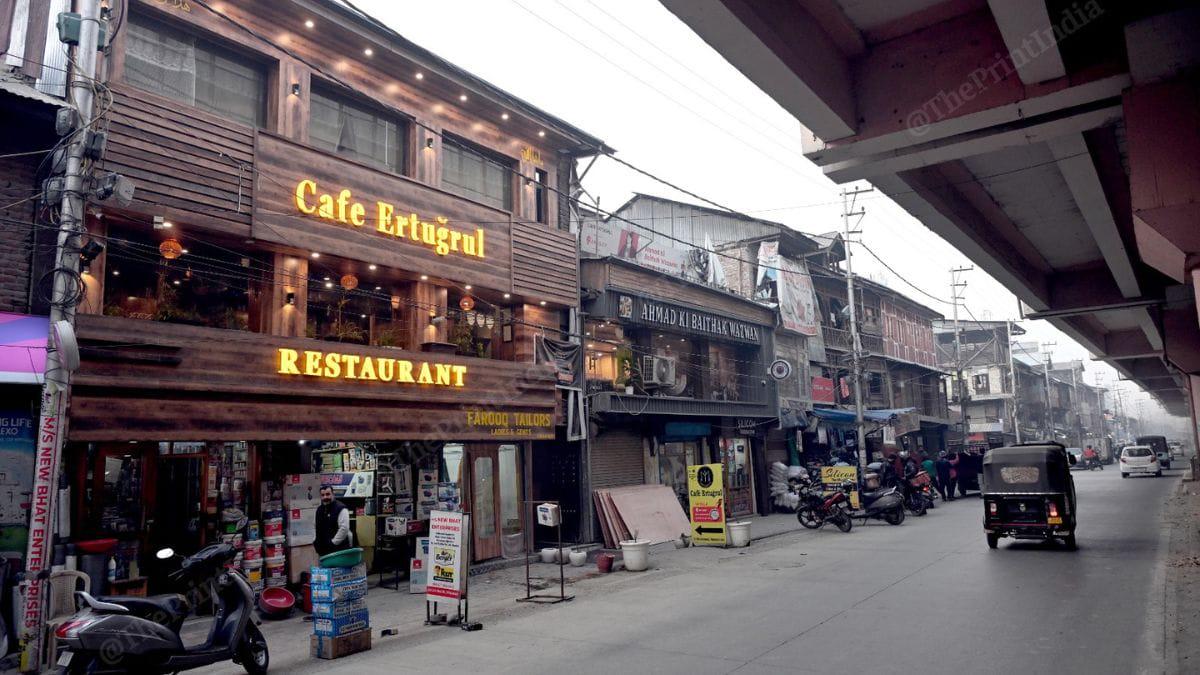
*Ertuğrul*, a show about the Ottoman Empire founder Osman I, landed with unusual force in a region looking for mirrors in two directions and finding none. As the series gained popularity, it slipped from screens into life. Its codes – modest costumes, honour-based storytelling, clan structures, aesthetics of craft – began appearing in how many Kashmiris dressed, imagined, decorated their homes and eventually, in how they built businesses. A cultural swell followed: Turkish-themed restaurants, decor lifted straight off the sets, menus attempting Ottoman dishes and even Ertuğrul-inspired clothing enveloped Srinagar.
But waves of culture don’t settle evenly. The Valley embraced the fantasy with enthusiasm but negotiated its terms carefully. Several restaurants tried to go all-in on Turkish cuisine and faltered. While Kashmiris are happy to eat under Ottoman-style arches, take pictures on medieval-inspired *takhts* (seats), and listen to Turkish music as ambience, the food met a more cautious response. Kashmir’s culinary life remains anchored in Wazwan, and for many diners, comparatively milder Turkish dishes like Adana kebabs and doner kebabs could not replace familiar flavours.

2 Comments
why is this important?
what do you think globalism means? vibes? papers? essays? nothing but taco trucks?
no this is a great example of how globalism is developing food, culture and fahsion all of this is shapped by the globalization of Tv shows. it i think reflects how even in smaller parts of the world globalization can emerge. people in kashmir feel connections with turkish culture and its brillaint. this is globalization in action and its fucking amazing.
**Srinagar:** In Aasma’s home, the Turkish drama *Diriliş: Ertuğrul* plays on an endless loop, even when no one is watching. It’s become part of the furniture, a constant hum in the background – its swords, horses, and themes blending into the everyday noise of Kashmiri life.
What began as a binge-watch during the 2019 internet ban, when the Turkish saga and its two sequels spread via USB drives, has since become a cultural anchor for families in Kashmir across class and age.
[](https://vdo.ai/contact?utm_medium=video&utm_term=theprint.in&utm_source=vdoai_logo)
For 30-year-old Aasma, a doctor at a government hospital in Srinagar, the nearly 800-episode saga gave Kashmiris a sense of resonance.
“For the first time, we saw something we could truly relate to,” Aasma said.
Kashmiris, she explained, have rarely recognised themselves in either Indian or Pakistani cultural portrayals on screen. Their sensibilities, she said, align more naturally with the Middle Eastern world, particularly Iran and Turkey.
“We aren’t modern yet. Even our youth is old school. In our households, there is a sense of men being superior and women are under their shadows, something which was also shown in *Ertuğrul*,” she said.
*Ertuğrul*, a show about the Ottoman Empire founder Osman I, landed with unusual force in a region looking for mirrors in two directions and finding none. As the series gained popularity, it slipped from screens into life. Its codes – modest costumes, honour-based storytelling, clan structures, aesthetics of craft – began appearing in how many Kashmiris dressed, imagined, decorated their homes and eventually, in how they built businesses. A cultural swell followed: Turkish-themed restaurants, decor lifted straight off the sets, menus attempting Ottoman dishes and even Ertuğrul-inspired clothing enveloped Srinagar.
But waves of culture don’t settle evenly. The Valley embraced the fantasy with enthusiasm but negotiated its terms carefully. Several restaurants tried to go all-in on Turkish cuisine and faltered. While Kashmiris are happy to eat under Ottoman-style arches, take pictures on medieval-inspired *takhts* (seats), and listen to Turkish music as ambience, the food met a more cautious response. Kashmir’s culinary life remains anchored in Wazwan, and for many diners, comparatively milder Turkish dishes like Adana kebabs and doner kebabs could not replace familiar flavours.