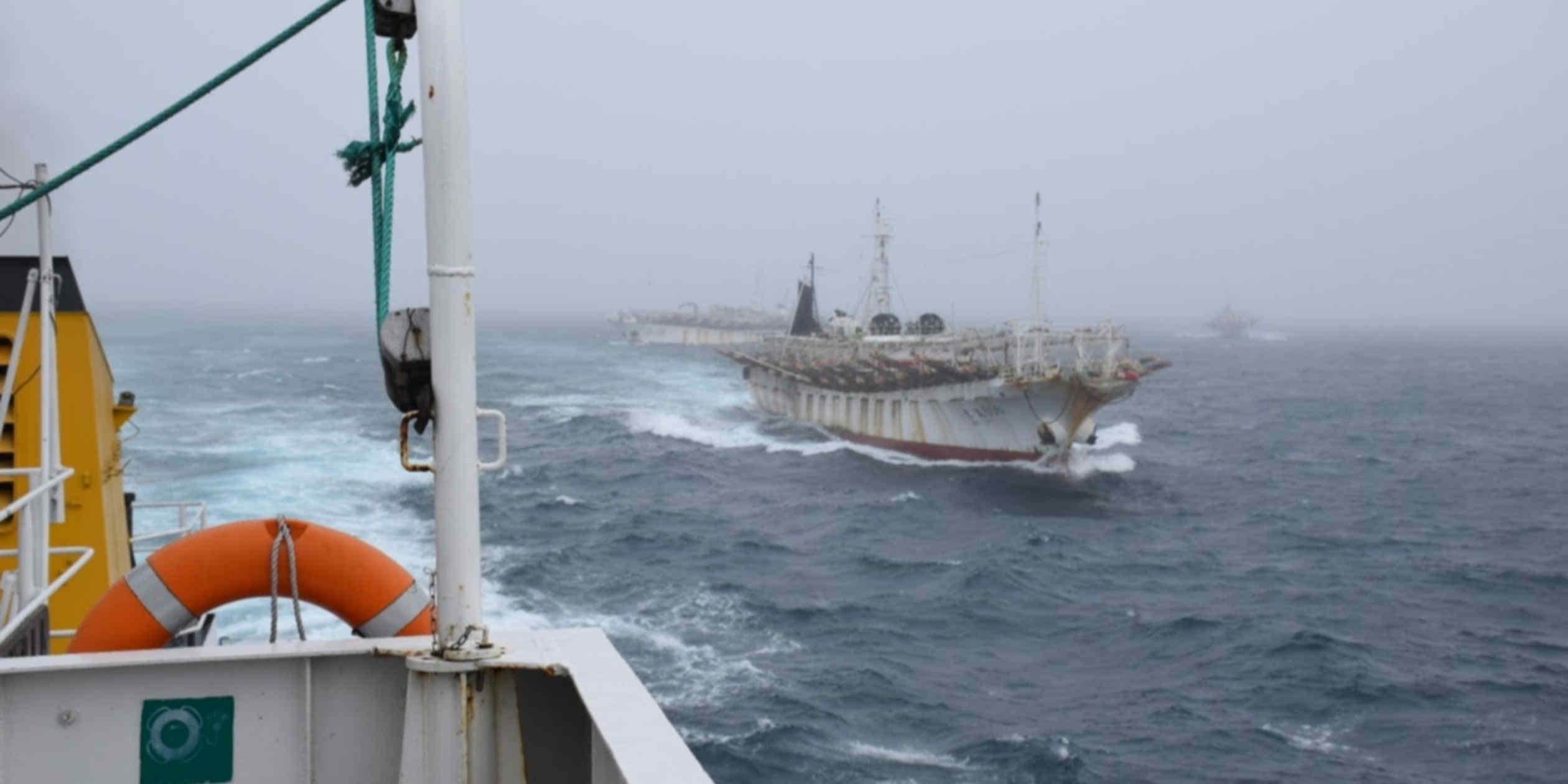
Japan plans to step up assistance to South American countries facing Chinese fleets illegally fishing in their waters, providing surveillance drones and other equipment to bolster maritime patrols. The Foreign Ministry has earmarked $1.9 million for the initiative, which includes plans for inflatable patrol boats and equipment that analyzes images taken by the drones to identify a ship’s registration, crew size and routes. Chinese fishing fleets are active in the waters around Ecuador’s Galapagos islands. With their GPS transponders apparently turned off, the fleets sail south off the shore of Peru. On the Atlantic side, Chinese fleet activity has been confirmed in the waters around Argentina and Uruguay. Japan is going to support Ecuador, Peru, Argentina and Uruguay.
According to Nikkei, the move potentially reflects Japanese efforts to reinforce relations with Southeast Asian countries. Concerns have been raised over potential human rights abuses involving workers on illegal fishing vessels in South America. They reportedly face long hours in grueling conditions on ships without temperature control. Many of the workers are from Southeast Asia, according to the Japanese foreign ministry.
dr_sloan on
What exactly happens when they come across a ship that’s fishing illegally? Do they confiscate their catch?

2 Comments
Submission:
Japan plans to step up assistance to South American countries facing Chinese fleets illegally fishing in their waters, providing surveillance drones and other equipment to bolster maritime patrols. The Foreign Ministry has earmarked $1.9 million for the initiative, which includes plans for inflatable patrol boats and equipment that analyzes images taken by the drones to identify a ship’s registration, crew size and routes. Chinese fishing fleets are active in the waters around Ecuador’s Galapagos islands. With their GPS transponders apparently turned off, the fleets sail south off the shore of Peru. On the Atlantic side, Chinese fleet activity has been confirmed in the waters around Argentina and Uruguay. Japan is going to support Ecuador, Peru, Argentina and Uruguay.
According to Nikkei, the move potentially reflects Japanese efforts to reinforce relations with Southeast Asian countries. Concerns have been raised over potential human rights abuses involving workers on illegal fishing vessels in South America. They reportedly face long hours in grueling conditions on ships without temperature control. Many of the workers are from Southeast Asia, according to the Japanese foreign ministry.
What exactly happens when they come across a ship that’s fishing illegally? Do they confiscate their catch?