
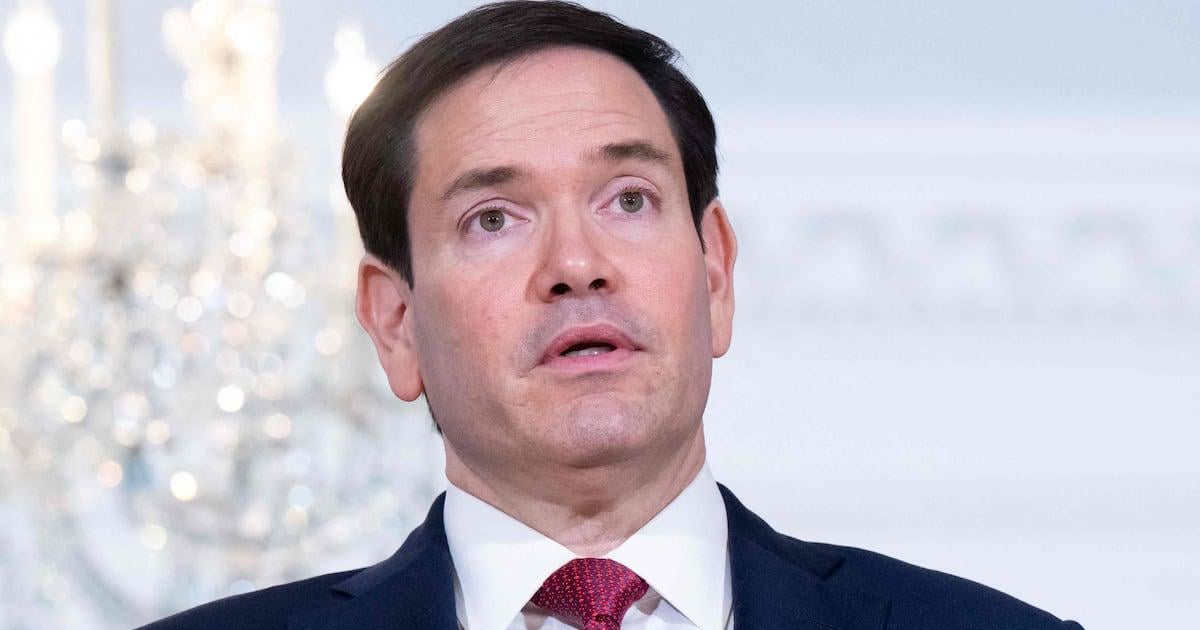
On the 15th, the U.S. Department of State stated that “foreign governments and international organizations are enacting laws and regulations that restrict fundamental rights such as freedom of expression, and these laws not only affect U.S. companies but could also target Americans at home and abroad.” It added, “Restricting freedom of expression for domestic political purposes is unacceptable. We will respond to such attempts using all appropriate means, including visa restrictions and financial sanctions.”
This position from the State Department comes amid growing concerns within the U.S. government and Congress regarding South Korea’s proposed amendments to the Information and Communications Network Act led by the Democratic Party, as well as the Online Platform Act being pursued by the Fair Trade Commission.
The State Department made these remarks in its “Agency Strategic Plan for Fiscal Years 2026–2030,” a document outlining its diplomatic strategy for the next five years. One of the six major objectives listed is “strengthening U.S. national sovereignty,” under which it states the principle that “all Americans will be guaranteed the ability to exercise their rights without foreign interference.” The document declares, “The U.S. government exists to protect the natural rights endowed by God to the American people,” including freedom of expression, freedom of religion and conscience, and the right to choose and influence their government. It goes on to criticize foreign governments and international organizations for enacting laws and regulations that restrict these rights, noting that under pretexts such as combating “hate speech,” promoting “trust and safety,” and countering “disinformation,” freedom of expression is being curtailed.
The State Department further stated that “foreign governments have imposed restrictions on freedom of expression for domestic political purposes, which is unacceptable from the U.S. perspective,” adding that this includes “forcing operating conditions on, or imposing fines against, technology and media companies operating within those countries.” The Trump administration has been extremely sensitive to foreign regulation of U.S. big tech companies. Although the State Department did not name specific countries, the U.S. government and Congress have recently raised strong objections to what they describe as “digital barriers” in South Korea and the European Union (EU). Last year, Under Secretary for Public Diplomacy Sarah Rogers commented on the proposed amendments to South Korea’s Information and Communications Network Act, saying they “effectively grant censorship authority to regulators and threaten U.S.–Korea technology cooperation.” At a House hearing on the 13th, some lawmakers labeled the bill a “censorship bill.”
Although a fact sheet released jointly by South Korea and the United States in November last year stated that both sides “commit to ensuring that U.S. companies are not discriminated against or subjected to unnecessary barriers in digital service–related laws and policies,” U.S. concerns have not subsided. As a result, this issue is expected to become a contentious point in follow-up negotiations scheduled for the first half of this year. The situation has been further complicated by a large-scale data breach involving Coupang.
Previously, the State Department took an unusually strong step against even its ally, the EU, by imposing new visa issuance and entry restrictions on five current and former senior officials, citing their role in leading big tech regulation. Antitrust policy experts and IT industry figures in Washington have expressed the view that regulations such as South Korea’s proposed Online Platform Act are “following the European model that targets U.S. companies.”
Against this backdrop, Chad Wolf—who served as Acting Secretary of Homeland Security during the first Trump administration—wrote an op-ed on Newsmax on the 16th regarding the Coupang case. He stated, “What happened in Seoul went beyond normal regulatory oversight and far exceeded what the United States and President Trump can expect from a trade ally.” He warned that “when politics interferes with enforcement, it becomes a fundamental problem not limited to a single corporate case, and the incentive is more likely to be retaliation than resolution.” Wolf, who is currently affiliated with the America First Policy Institute (AFPI), a pro-Trump think tank based in Washington, D.C., also criticized President Lee Jae-myung’s recent meeting with Chinese President Xi Jinping, in which Lee mentioned the “full restoration of South Korea–China relations.” Wolf argued that “at a time when allies should be cooperating against economic coercion and unfair trade practices, such asymmetry undermines trust,” adding that “if prerequisites such as fairness, transparency, and the rule of law are eroded, the foundation for cooperation on trade, technology, and geopolitical threats will collapse as well.”
Posted by Freewhale98
2 Comments
[Submission text]
1.Summary
The U.S. Department of State stated that “foreign governments and international organizations are enacting laws and regulations that restrict fundamental rights such as freedom of expression, and these laws not only affect U.S. companies but could also target Americans at home and abroad.” It added, “Restricting free speech for domestic political purposes is unacceptable. We will respond to such attempts using all appropriate means, including visa restrictions and financial sanctions.”
This position from the State Department comes amid growing concerns within the U.S. government and Congress regarding South Korea’s proposed amendments to the Information and Communications Network Act (Online Disinformation Act), as well as the Online Platform Act being pursued by the Fair Trade Commission to counter Coupang, American e-commerce giant, monopoly over Korean e-commerce market. This is a replication of EU digital platform regulation policy with ODA being the copy-paste of Digital Service Act of EU. This greatly angered Trump administration and they are threatening retaliation.
2. How is this related to the sub
(1) Trade Dispute: Digital Regulation on the US big tech is escalating into sanction wars.
3. My opinion
The US government is using its might to protect the interest of Big Tech. This is another example confirming that the US decisionmaking process has been taken over Big Tech oligarchs.
Sanctioning liberal democracies after the FCC tried to shut Kimmel down is a joke