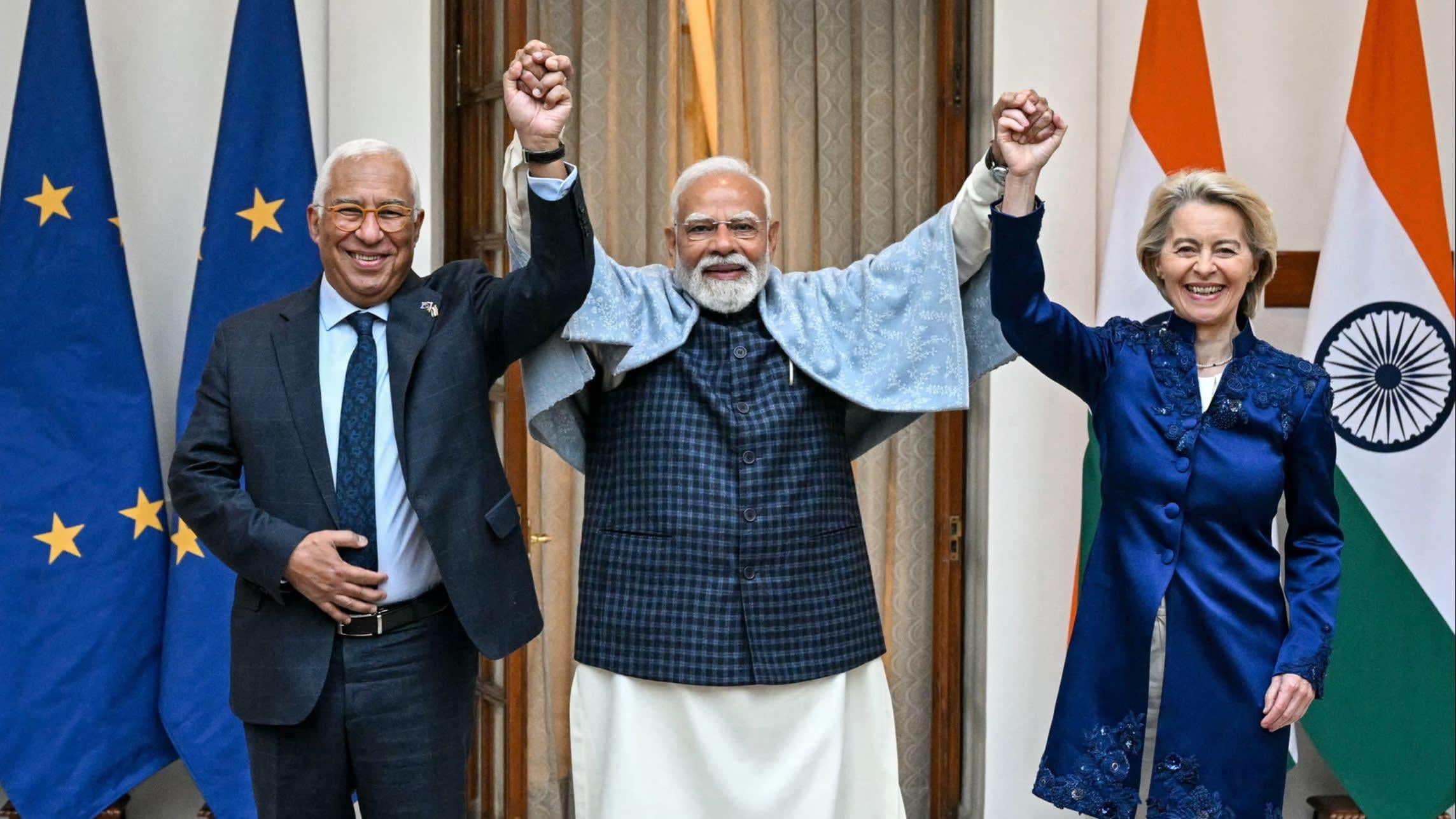
The EU hailed its trade deal with India as geopolitical muscle, but critics say it sacrifices substance for symbolism, argues Economist Alan Beatties. He points out that Brussels diluted its usual standards to secure the pact, limiting liberalisation in sensitive sectors. Tariff cuts on cars and goods are modest, with agriculture and electric vehicles largely excluded. The agreement sends a signal, but avoids politically painful reforms that would prove strategic resolve. Without bearing real economic costs, the EU’s trade diplomacy risks lacking geopolitical credibility, concludes Beatties.

1 Comment
The EU hailed its trade deal with India as geopolitical muscle, but critics say it sacrifices substance for symbolism, argues Economist Alan Beatties. He points out that Brussels diluted its usual standards to secure the pact, limiting liberalisation in sensitive sectors. Tariff cuts on cars and goods are modest, with agriculture and electric vehicles largely excluded. The agreement sends a signal, but avoids politically painful reforms that would prove strategic resolve. Without bearing real economic costs, the EU’s trade diplomacy risks lacking geopolitical credibility, concludes Beatties.