*White evangelical Protestants and Hispanic Protestants are most likely to hold Christian nationalist beliefs; Americans who frequently attend religious services, especially those who are white, are more likely to be Christian nationalists.*
The Hispanic Protestant part really shows how the evangelical outreach in South America has affected our politics here.
*Christian nationalist views predominate in the South and Midwest; support for Christian nationalism is strongly correlated in all 50 states with favorable views of President Donald Trump and the proportion of Republican representation in state legislatures.*
Also tracks. Thankfully the Trumpism-NatChris axis should be on the downslope after Trump is gone… right?
mythoswyrm on
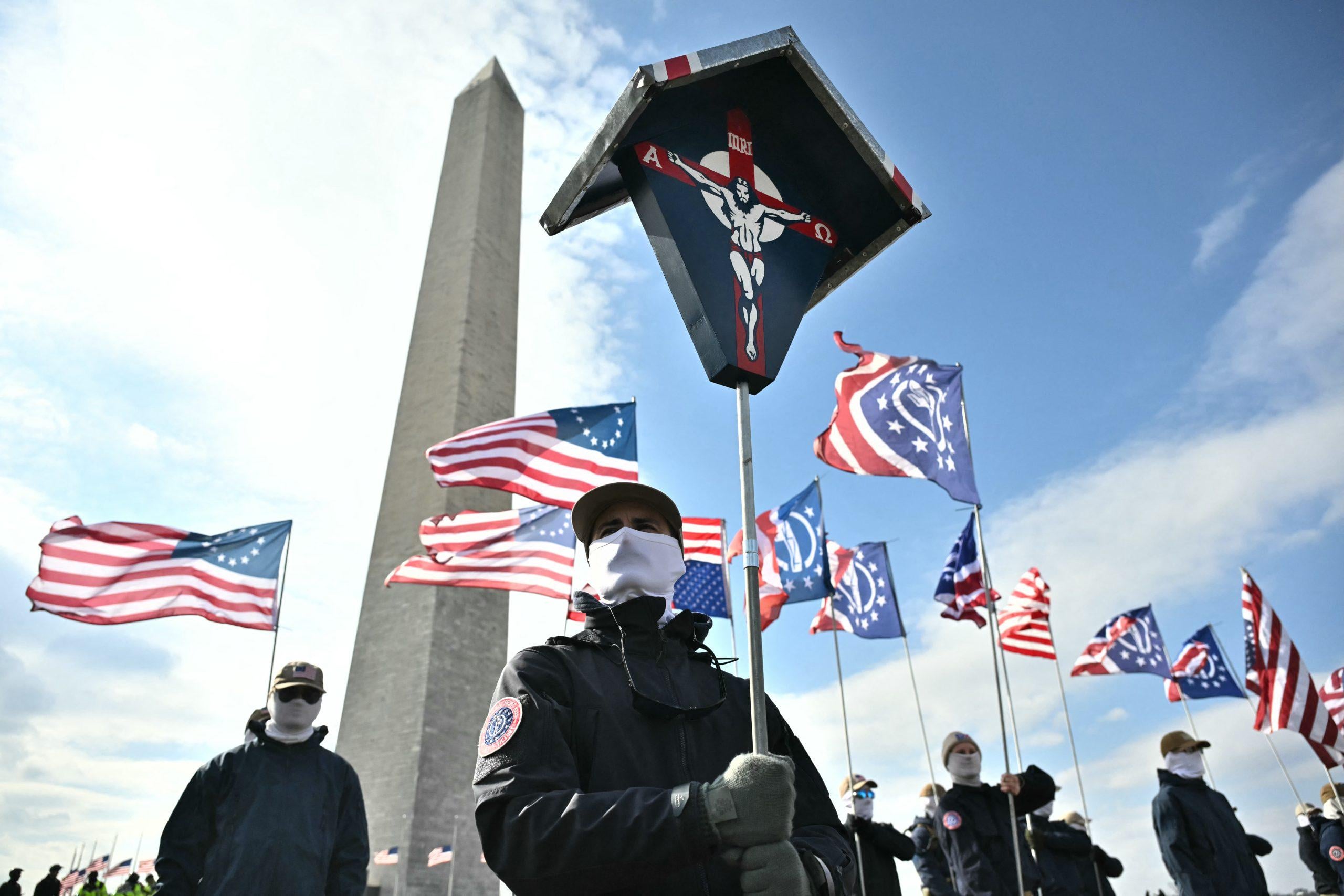
Rule XIII: Christian nationalism is a key part of the Trump agenda, especially among some of the more extreme members of his cabinet and advisors (I don’t think he cares much about it on a personal level). As neoliberals, it is important to understand this movement, the policies associated with this movement and how people feel about the movement and its policies. It is also important to understand how support for Christian nationalism correlates with other policy positions (if it does so at all) when we try to move from the world of ideal policies to the real world. PRRI has been tracking such opinions for about 3 years now, letting us view this movement in both space and time.
Also it is interesting data and we should be all about data.
Summary: The Trump presidency (at least through last summer) has had little impact on the ways Americans feel about Christian nationalism. Roughly 32% of Americans are Americans in support of or sympathetic to Christian Nationalism (ASCN). ASCNs tend to be republican, trump supporters and big fans of authoritarianism. Interestingly, race is pretty much orthogonal to being an ASCN. Americans overwhelmingly support mandatory vaccines for children and this hold true even for a majority of ASCN.
Commentary: I have my own issues with how PRRI defines Christian Nationalism (mostly boiling down to how people can interpret the questions differently). After all, anything that says that 17% of Buddhist Americans are sympathetic to Christian Nationalism should be considered a bit suspect. There’s some other strange things about their panel (like majorities of Oregonians and Vermonters supporting Trump) but this is the best we’ve got and PRRI has a wealth of other data about their panelists.
Also, the shift in support for violence among rejecters of Christian Nationalism is crazy, if I’m reading the graph correctly. Yes they’re still by far the lowest supporters of political violence, but support almost tripled between summer 2024 and fall 2025 (from ~6% to around 17%). That might be a coding error when making the graph though.

2 Comments
Fuck it I’ll do some statements
From the article:
*White evangelical Protestants and Hispanic Protestants are most likely to hold Christian nationalist beliefs; Americans who frequently attend religious services, especially those who are white, are more likely to be Christian nationalists.*
The Hispanic Protestant part really shows how the evangelical outreach in South America has affected our politics here.
*Christian nationalist views predominate in the South and Midwest; support for Christian nationalism is strongly correlated in all 50 states with favorable views of President Donald Trump and the proportion of Republican representation in state legislatures.*
Also tracks. Thankfully the Trumpism-NatChris axis should be on the downslope after Trump is gone… right?
Rule XIII: Christian nationalism is a key part of the Trump agenda, especially among some of the more extreme members of his cabinet and advisors (I don’t think he cares much about it on a personal level). As neoliberals, it is important to understand this movement, the policies associated with this movement and how people feel about the movement and its policies. It is also important to understand how support for Christian nationalism correlates with other policy positions (if it does so at all) when we try to move from the world of ideal policies to the real world. PRRI has been tracking such opinions for about 3 years now, letting us view this movement in both space and time.
Also it is interesting data and we should be all about data.
Summary: The Trump presidency (at least through last summer) has had little impact on the ways Americans feel about Christian nationalism. Roughly 32% of Americans are Americans in support of or sympathetic to Christian Nationalism (ASCN). ASCNs tend to be republican, trump supporters and big fans of authoritarianism. Interestingly, race is pretty much orthogonal to being an ASCN. Americans overwhelmingly support mandatory vaccines for children and this hold true even for a majority of ASCN.
Commentary: I have my own issues with how PRRI defines Christian Nationalism (mostly boiling down to how people can interpret the questions differently). After all, anything that says that 17% of Buddhist Americans are sympathetic to Christian Nationalism should be considered a bit suspect. There’s some other strange things about their panel (like majorities of Oregonians and Vermonters supporting Trump) but this is the best we’ve got and PRRI has a wealth of other data about their panelists.
Also, the shift in support for violence among rejecters of Christian Nationalism is crazy, if I’m reading the graph correctly. Yes they’re still by far the lowest supporters of political violence, but support almost tripled between summer 2024 and fall 2025 (from ~6% to around 17%). That might be a coding error when making the graph though.
Wish PRRI asked people about the housing crisis.