**The government extended mandatory military service and revamped reservist training in an effort to make Beijing think twice. But it’s already falling short.**
# —
>[…]
>
>It may be fiction [regarding the Taiwanese drama named [Zero Day](https://en.wikipedia.org/wiki/Zero_Day_(2025_TV_series))], but the show’s bleak assessment of Taiwanese readiness to fight touches upon a very real problem facing President [Lai Ching-te](https://archive.fo/o/IKgw2/https://www.washingtonpost.com/world/2024/01/13/taiwan-president-lai-ching-te/), who took office in May and whom Beijing considers a dangerous separatist.
>
>The threat from Beijing has intensified as Chinese leader Xi Jinping has declared China’s “reunification” with Taiwan inevitable. He has underscored his willingness to use force to achieve that goal by sending [rising numbers of warplanes and navy ships](https://archive.fo/o/IKgw2/https://www.washingtonpost.com/world/2023/11/13/china-biden-xi-meeting-apec-taiwan/) to probe the island’s defenses.
>
>Taiwan’s government has been trying to improve its defenses by [extending mandatory military service](https://archive.fo/o/IKgw2/https://www.washingtonpost.com/world/2022/12/27/taiwan-military-mandatory-service-china/) and revamping ongoing training for reservists as part of a broader shift in defense strategy designed to make Xi think twice before taking a gamble on use of force.
>
>But young Taiwanese are not answering the call, and Defense Minister Wellington Koo recently acknowledged a lack of equipment and instructors has slowed attempts to professionalize reservist training. “I must honestly say that we need to quickly strengthen [training] as there is still a lot of room for improvement,” he told the legislature in June.
>
>[…]
>
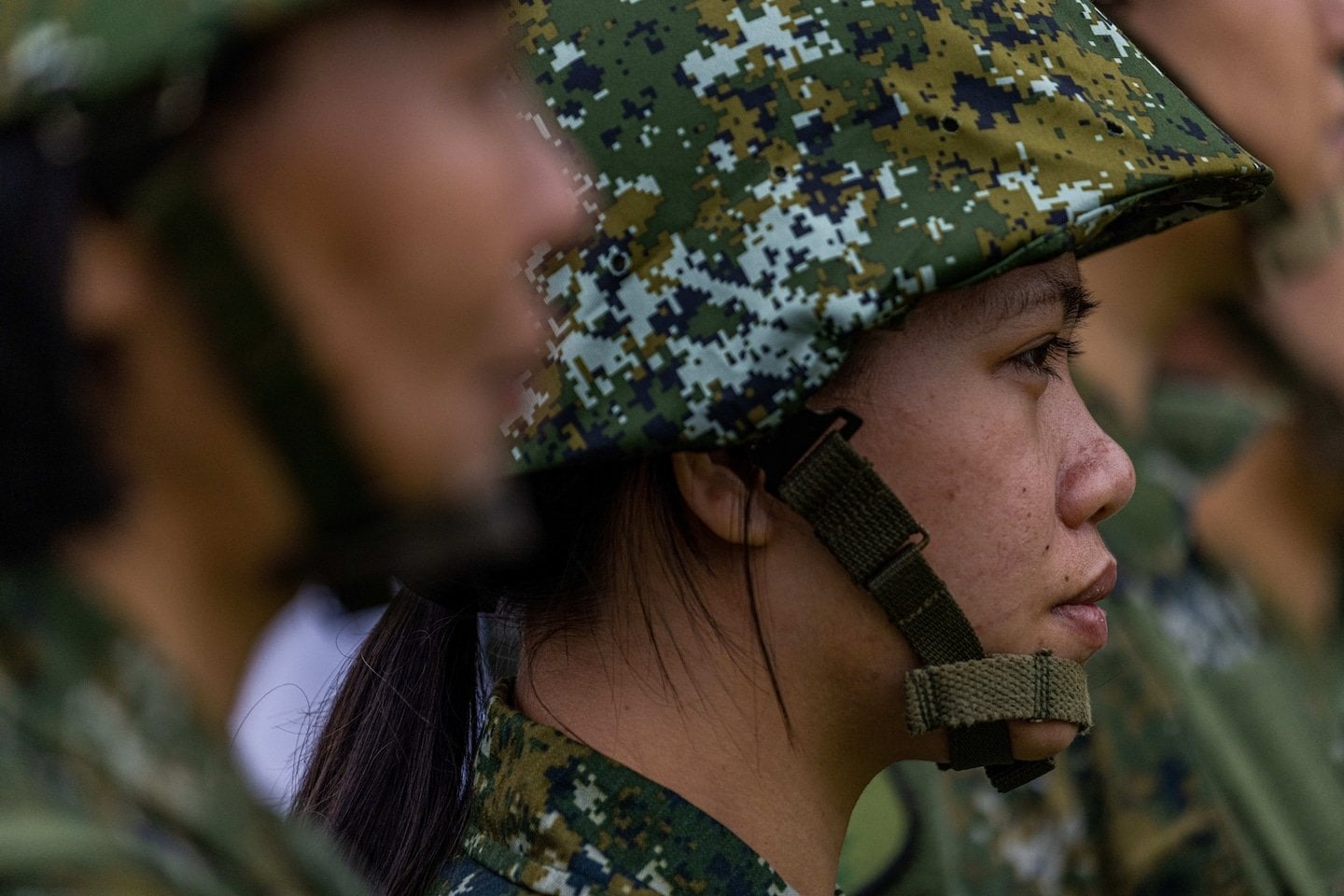
>Taipei wants to create a professional backup force to support 155,000 active-duty soldiers. All Taiwanese men born in or after 2005 are now required to enlist for a year of service, while some 2 million former soldiers are supposed to complete refresher training every two years.
>
>But officials have acknowledged being behind schedule with plans to teach reservists and draftees how to supplement front-line troops in the event of a war. Only 6 percent of eligible conscripts — 6,936 people — took part in the newly implemented 12-month program this year. Most deferred military service to first attend university, meaning the 2005-born intake cohort won’t be fully trained until 2027.
>
>Those doing military service this year are not undergoing the anticipated training. A select group of one-year conscripts were supposed to be learning to use drones, Kestrel antitank rockets and surface-to-air Stinger missiles but there were not enough trainees this year to begin the training, according to a Defense Ministry officer.
>
>Taiwan’s slow progress on boosting training concerns military experts in both Washington and Taipei, who are urging authorities to move faster to deter Xi and prevent a war.
>
>“The last thing that Taiwan wants is for Xi Jinping, as the key decision-maker in China, and for the United States, as the key ally of Taiwan, to doubt Taiwan’s commitments to its own defense,” said Matt Pottinger, who was U.S. deputy national security adviser in the Trump administration and is now a visiting fellow at the Hoover Institution.
>
>To do that, Pottinger said, Taiwan needs the political will and foresight to dedicate some of its best military officers to recruitment and instruction. “I’m really hoping that Taiwan makes these sacrifices,” he said.
>
>China’s military, the largest standing army in the world, has 2 million active personnel and recruits about 400,000 conscripts every year. Its defense budget of $230 billion was 13 times as large as Taiwan’s in 2023 and its military regularly trains to take the island in a sudden overwhelming assault.
>
>[…]
>
>While President Biden has [repeatedly said](https://archive.fo/o/IKgw2/https://www.washingtonpost.com/politics/2022/09/18/biden-taiwan-military-china-attack/) he would send the U.S. military to defend Taiwan, Trump has made no such promises. Asked what he would do in an [interview](https://archive.fo/o/IKgw2/https://www.bloomberg.com/features/2024-trump-interview/) last month, Trump said that Taiwan was “9,500 miles away” and should pay for American defense.
>
>Taiwan must be “mentally prepared” for a Trump victory in November — and the scrutiny that will come with that, said Mei Fu-hsing, director of the Taiwan Security Analysis Center, a New York-based research center.
>
>[…]
>
>Improved training is a key way for Taiwan to show it is taking military readiness seriously, analysts say. But new programs have continued to face shortages of funding, instructors and equipment, leading to regular complaints from attendees about the quality of instruction, according to reservists as well as official statements acknowledging setbacks.
>
>“It was a complete waste of time,” said Vincent Tsao, a 30-year-old scuba diving instructor who spent most of his five days of reservist training last week sitting idly inside being taught by retired soldiers who openly acknowledged they weren’t prepared to lead the program.
>
>Taiwanese men who completed mandatory service within the last 12 years are theoretically called back for refresher training every second year, although in practice many attend far less frequently. Only a fifth of the reservists who went through refresher training last year completed the newly extended two-week course, with the majority doing only five or seven days.
>
>Preparing 2 million reservists for “immediate combat readiness” as a second line of defense is “very important for defending Taiwan,” said Han Gang-ming, former director of Taiwan’s All-out Defense Mobilization Office, which oversees reservists.
>
>“Since the reserve force is not the primary combat unit, we are always placed last whenever budgets are allocated,” Han said.

1 Comment
Archived version: [https://archive.fo/IKgw2](https://archive.fo/IKgw2).
Summary:
**The government extended mandatory military service and revamped reservist training in an effort to make Beijing think twice. But it’s already falling short.**
# —
>[…]
>
>It may be fiction [regarding the Taiwanese drama named [Zero Day](https://en.wikipedia.org/wiki/Zero_Day_(2025_TV_series))], but the show’s bleak assessment of Taiwanese readiness to fight touches upon a very real problem facing President [Lai Ching-te](https://archive.fo/o/IKgw2/https://www.washingtonpost.com/world/2024/01/13/taiwan-president-lai-ching-te/), who took office in May and whom Beijing considers a dangerous separatist.
>
>The threat from Beijing has intensified as Chinese leader Xi Jinping has declared China’s “reunification” with Taiwan inevitable. He has underscored his willingness to use force to achieve that goal by sending [rising numbers of warplanes and navy ships](https://archive.fo/o/IKgw2/https://www.washingtonpost.com/world/2023/11/13/china-biden-xi-meeting-apec-taiwan/) to probe the island’s defenses.
>
>Taiwan’s government has been trying to improve its defenses by [extending mandatory military service](https://archive.fo/o/IKgw2/https://www.washingtonpost.com/world/2022/12/27/taiwan-military-mandatory-service-china/) and revamping ongoing training for reservists as part of a broader shift in defense strategy designed to make Xi think twice before taking a gamble on use of force.
>
>But young Taiwanese are not answering the call, and Defense Minister Wellington Koo recently acknowledged a lack of equipment and instructors has slowed attempts to professionalize reservist training. “I must honestly say that we need to quickly strengthen [training] as there is still a lot of room for improvement,” he told the legislature in June.
>
>[…]
>
>Taipei wants to create a professional backup force to support 155,000 active-duty soldiers. All Taiwanese men born in or after 2005 are now required to enlist for a year of service, while some 2 million former soldiers are supposed to complete refresher training every two years.
>
>But officials have acknowledged being behind schedule with plans to teach reservists and draftees how to supplement front-line troops in the event of a war. Only 6 percent of eligible conscripts — 6,936 people — took part in the newly implemented 12-month program this year. Most deferred military service to first attend university, meaning the 2005-born intake cohort won’t be fully trained until 2027.
>
>Those doing military service this year are not undergoing the anticipated training. A select group of one-year conscripts were supposed to be learning to use drones, Kestrel antitank rockets and surface-to-air Stinger missiles but there were not enough trainees this year to begin the training, according to a Defense Ministry officer.
>
>Taiwan’s slow progress on boosting training concerns military experts in both Washington and Taipei, who are urging authorities to move faster to deter Xi and prevent a war.
>
>“The last thing that Taiwan wants is for Xi Jinping, as the key decision-maker in China, and for the United States, as the key ally of Taiwan, to doubt Taiwan’s commitments to its own defense,” said Matt Pottinger, who was U.S. deputy national security adviser in the Trump administration and is now a visiting fellow at the Hoover Institution.
>
>To do that, Pottinger said, Taiwan needs the political will and foresight to dedicate some of its best military officers to recruitment and instruction. “I’m really hoping that Taiwan makes these sacrifices,” he said.
>
>China’s military, the largest standing army in the world, has 2 million active personnel and recruits about 400,000 conscripts every year. Its defense budget of $230 billion was 13 times as large as Taiwan’s in 2023 and its military regularly trains to take the island in a sudden overwhelming assault.
>
>[…]
>
>While President Biden has [repeatedly said](https://archive.fo/o/IKgw2/https://www.washingtonpost.com/politics/2022/09/18/biden-taiwan-military-china-attack/) he would send the U.S. military to defend Taiwan, Trump has made no such promises. Asked what he would do in an [interview](https://archive.fo/o/IKgw2/https://www.bloomberg.com/features/2024-trump-interview/) last month, Trump said that Taiwan was “9,500 miles away” and should pay for American defense.
>
>Taiwan must be “mentally prepared” for a Trump victory in November — and the scrutiny that will come with that, said Mei Fu-hsing, director of the Taiwan Security Analysis Center, a New York-based research center.
>
>[…]
>
>Improved training is a key way for Taiwan to show it is taking military readiness seriously, analysts say. But new programs have continued to face shortages of funding, instructors and equipment, leading to regular complaints from attendees about the quality of instruction, according to reservists as well as official statements acknowledging setbacks.
>
>“It was a complete waste of time,” said Vincent Tsao, a 30-year-old scuba diving instructor who spent most of his five days of reservist training last week sitting idly inside being taught by retired soldiers who openly acknowledged they weren’t prepared to lead the program.
>
>Taiwanese men who completed mandatory service within the last 12 years are theoretically called back for refresher training every second year, although in practice many attend far less frequently. Only a fifth of the reservists who went through refresher training last year completed the newly extended two-week course, with the majority doing only five or seven days.
>
>Preparing 2 million reservists for “immediate combat readiness” as a second line of defense is “very important for defending Taiwan,” said Han Gang-ming, former director of Taiwan’s All-out Defense Mobilization Office, which oversees reservists.
>
>“Since the reserve force is not the primary combat unit, we are always placed last whenever budgets are allocated,” Han said.